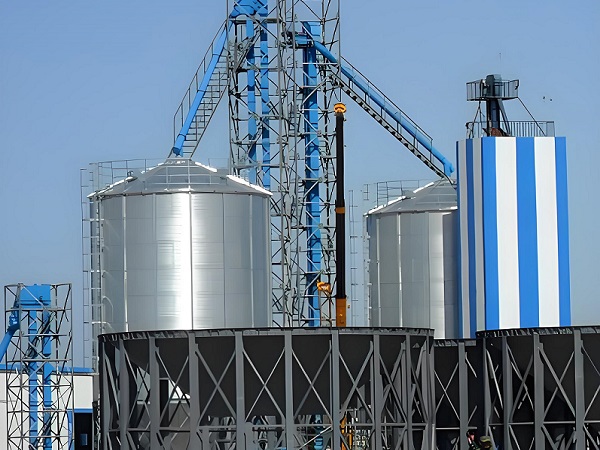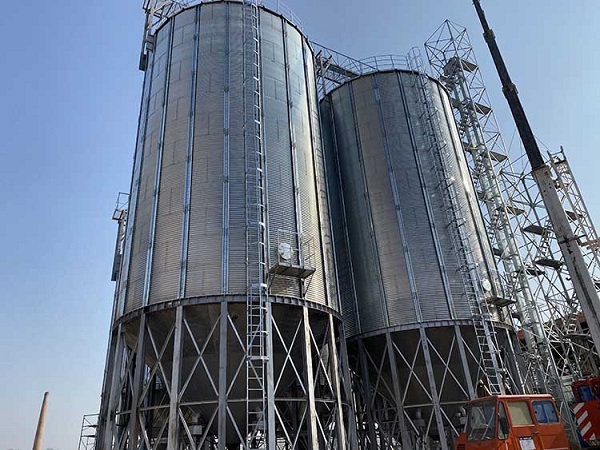

Soybean Grain Silo
COBAN grain silos are designed to ensure safe storage, stable ventilation, and long-term grain preservation under different climate conditions. Each silo system can be customized based on capacity, grain type, and project requirements for optimal storage performance and reliability.

Soybean Grain Silo
Storage Material:Soybeans, Maize, Wheat, Rapeseed & Other Grains
Silo Capacity:50–10,000+ Tons per Silo
Silo Type:Hopper Bottom or Flat Bottom
Main Systems:Aeration, Temperature Monitoring, Loading & Unloading
Construction Material:Galvanized Corrugated Steel
- Customized Capacity Design
- High Strength Galvanized Steel
- ISO Certified Manufacturing
- Global Installation Support
Applications
Corn Storage
Wheat Storage
Rice Storage
Soybean Storage
Feed Storage
Commercial Grain Storage
Product Details & Technical Information
A soybean grain silo is a bulk storage system designed for the safe storage and management of soybeans after harvesting, cleaning, and drying.
Soybeans are different from wheat and maize. Their relatively high oil content, rounded shape, and sensitivity to moisture and mechanical damage require more careful handling during storage. A suitable soybean storage system must not only provide enough capacity but also maintain stable storage conditions over time.
COBAN supplies soybean steel silos for farms, grain collection centers, soybean traders, oil processing plants, feed factories, and commercial grain storage facilities.
The complete system can include soybean cleaning, drying, conveying, aeration, temperature monitoring, storage, and unloading equipment according to the customer’s project requirements.
Why Soybean Storage Requires Special Attention
The most common mistake in soybean storage is treating soybeans exactly like ordinary grains.
The storage conditions of soybeans are affected by:
- Initial moisture content
- Storage duration
- Ambient temperature
- Relative humidity
- Soybean quality and variety
- Mechanical handling
- Required end use
For example, soybeans intended for an oil mill may have different storage requirements from soybeans intended for food processing or seed use.
The purpose of a soybean grain storage silo is therefore to provide a controlled environment while minimizing quality loss during storage.
Key Storage Risks for Soybeans
| Storage Risk | Possible Result |
|---|---|
| Excessive moisture | Mold, deterioration and reduced storage stability |
| Temperature increase | Localized heating and quality loss |
| Condensation | Moisture accumulation inside the silo |
| Rough handling | Cracked or damaged soybeans |
| Poor aeration | Uneven temperature distribution |
| Long storage time | Gradual quality deterioration |
The correct combination of cleaning, drying, aeration, temperature monitoring, and proper handling is more important than simply increasing the silo capacity.

Soybean Grain Silo Sales
Key Features of COBAN Soybean Grain Silo
1. Stable Storage Conditions for Soybeans
A properly designed soybean storage silo protects the stored soybeans from rain, external contamination, pests, and uncontrolled environmental conditions.
However, the silo itself cannot correct poor-quality incoming material.
Soybeans should be properly cleaned and, when necessary, dried before entering the silo. This helps reduce the risk of:
- Excessive moisture
- Foreign material
- Insect activity
- Localized heating
- Storage deterioration
A typical process is:
Receiving → Cleaning → Drying if Required → Cooling → Storage → Aeration → Processing or Shipment
2. Aeration System for Soybean Storage
A soybean silo with aeration system helps control the temperature of the stored soybeans.
Aeration is particularly important when:
- Soybeans are stored for several months
- The material enters the silo at a higher temperature
- The local climate is hot or humid
- The silo has a large storage capacity
- The customer needs long-term storage
The aeration system may include:
- Aeration floor
- Aeration ducts
- Ventilation channels
- Aeration fans
- Roof vents
The system should be designed according to the silo diameter, soybean storage capacity, local climate, and expected storage period.
Continuous aeration is not always necessary. In many projects, the fan is operated according to the temperature and moisture condition of the stored soybeans.
3. Temperature Monitoring for Long-Term Storage
Temperature is one of the most important indicators of soybean storage conditions.
A local temperature increase may indicate:
- Moisture migration
- Condensation
- Insect activity
- Biological activity
- Localized heating
For commercial soybean storage, temperature cables can be installed at different levels inside the silo.
This allows operators to monitor the stored material and identify abnormal temperature changes before the problem becomes widespread.
For large projects, the temperature monitoring system can be connected to a central control system.
4. Reduced Mechanical Damage During Handling
Soybeans are relatively large and rounded compared with many other grains. Excessive impact during conveying can cause cracking and damage.
For this reason, the conveying system should be selected according to:
- Required handling capacity
- Conveyor speed
- Drop height
- Transfer points
- Required handling distance
A soybean storage project may use:
- Belt conveyors
- Bucket elevators
- Chain conveyors
- Screw conveyors
The actual equipment combination depends on the complete plant layout.
For food-grade or high-value soybean storage, reducing unnecessary impact during transfer can help maintain product quality.
5. Galvanized Steel Construction
A galvanized soybean silo is normally constructed from corrugated galvanized steel sheets and reinforced with structural stiffeners.
The steel structure provides:
- Good structural strength
- Long service life
- Outdoor installation capability
- Easy expansion of storage capacity
- Convenient maintenance
The silo design must consider:
- Storage capacity
- Soybean bulk density
- Wind load
- Snow load
- Seismic conditions
- Foundation conditions
The final steel thickness and reinforcement arrangement are determined by the engineering design.
6. Efficient Loading and Unloading
A complete soybean steel silo system normally includes equipment for receiving, loading, unloading, and transferring the soybeans.
The loading system may include:
- Receiving hopper
- Belt conveyor
- Bucket elevator
- Chain conveyor
- Rotary distributor
The unloading system may include:
- Hopper outlet
- Slide gate
- Screw conveyor
- Chain conveyor
- Belt conveyor
The system should be designed to minimize unnecessary transfer points and avoid excessive damage to the soybeans.
Soybean Grain Silo Structure
A complete soybean storage silo includes more than the silo body itself.
Silo Body
The silo body is made from galvanized corrugated steel sheets and reinforced with vertical stiffeners.
It provides the main storage space for the soybeans.
The silo diameter and height are selected according to:
- Required capacity
- Site area
- Storage method
- Local structural conditions
Silo Roof
The roof normally includes:
- Galvanized roof panels
- Roof stiffeners
- Access manhole
- Inspection opening
- Ventilation openings
The roof should be designed to help protect the stored soybeans from rain and reduce the risk of condensation.
Aeration System
The aeration system may use:
- Aeration floor
- Aeration ducts
- Ventilation channels
- Aeration fans
The selection depends on the silo diameter and the required storage conditions.
Temperature Monitoring System
Temperature cables are installed at different positions inside the silo to monitor the temperature of the stored soybeans.
This is especially recommended for:
- Large soybean silos
- Long-term storage
- Commercial grain terminals
- Oil processing plants
Loading and Unloading Equipment
The equipment configuration depends on the plant layout.
A typical system may include:
Receiving Hopper → Cleaner → Dryer → Bucket Elevator → Silo
For unloading:
Silo → Bottom Outlet → Conveyor → Processing Line or Loading Area

Grain and oil storage project site
Hopper Bottom or Flat Bottom Soybean Silo?
The correct silo type depends mainly on the storage capacity and operating method.
Hopper Bottom Soybean Silo
Hopper-bottom silos are commonly used for small and medium-capacity soybean storage.
They are suitable when the customer needs:
- Frequent unloading
- Easy material discharge
- Reduced manual cleaning
- Flexible batch management
- Limited site area
The sloped bottom allows the soybeans to flow toward the discharge outlet by gravity.
For many projects with an individual capacity of 2,000 tons or less, a hopper-bottom soybean silo is a practical option.
Flat Bottom Soybean Silo
Flat-bottom silos are generally more suitable for large-scale storage.
They are commonly selected when:
- Individual silo capacity is large
- Soybeans will be stored for a long period
- The customer needs a lower storage cost per ton
- The silo will not be emptied frequently
- A mechanical unloading system is acceptable
A flat-bottom silo normally requires additional unloading equipment for removing residual soybeans from the floor.
For large commercial storage projects, however, the lower construction cost per ton can make the flat-bottom design more economical.
Soybean Silo Selection Guide
| Project Requirement | Recommended Silo Type |
|---|---|
| Small farm storage | Hopper bottom |
| 50–500 tons | Hopper bottom |
| 500–2,000 tons | Hopper bottom usually preferred |
| More than 2,000 tons per silo | Flat bottom generally more economical |
| Frequent unloading | Hopper bottom |
| Long-term bulk storage | Flat bottom |
| Limited site area | Hopper bottom |
| Large commercial storage center | Flat bottom |
The 2,000-ton reference is not an absolute technical limit. The final selection should also consider the project layout, foundation cost, unloading frequency, local steel prices, and the customer’s operating method.
Popular Soybean Storage Silo Capacities
COBAN can design soybean grain silos from small farm-scale units to large commercial storage facilities.
Common capacities include:
| Capacity | Typical Application |
|---|---|
| 50–100 tons | Small farms and local storage |
| 200–500 tons | Farms and soybean collection centers |
| 1,000 tons | Medium-sized storage facilities |
| 1,500–2,000 tons | Oil mills and commercial storage |
| 3,000–5,000 tons | Large soybean storage projects |
| 5,000–10,000 tons | Grain terminals and large processing plants |
| 10,000+ tons | Large-scale industrial storage |
For large projects, several medium-sized silos may provide better operational flexibility than one extremely large silo.
For example:
4 × 1,000-ton soybean silos
allow the customer to store different soybean batches separately according to:
- Moisture content
- Quality grade
- Supplier
- Harvest period
- Processing schedule
Soybean Grain Silo Technical Specifications
The actual storage capacity of a silo is determined by its internal volume and the bulk density of the stored soybean.
The same silo volume can hold different tonnages depending on the material being stored.
The following specifications are common reference configurations for soybean storage. Final dimensions should be confirmed according to the actual soybean bulk density and project requirements.
Hopper Bottom Steel Silo
| Capacity | Model | Diameter (m) | Total Height (m) | Approx. Volume (m³) |
|---|---|---|---|---|
| 50 tons | TCZK 03605 | 3.67 | 9.56 | 69 |
| 100 tons | TCZK 04507 | 4.58 | 12.53 | 150 |
| 150 tons | TCZK 05507 | 5.50 | 13.25 | 222 |
| 200 tons | TCZK 06406 | 6.42 | 12.85 | 273 |
| 300 tons | TCZK 07307 | 7.33 | 14.70 | 415 |
| 500 tons | TCZK 07313 | 7.33 | 21.42 | 699 |
| 1,000 tons | TCZK 11010 | 11.00 | 20.95 | 1,346 |
| 1,500 tons | TCZK 12811 | 12.83 | 23.51 | 2,039 |
Flat Bottom Steel Silo
| Capacity | Model | Diameter (m) | Total Height (m) | Approx. Volume (m³) |
|---|---|---|---|---|
| 1,000 tons | TCK 10014 | 10.08 | 18.69 | 1,335 |
| 1,500 tons | TCK 11915 | 11.92 | 20.34 | 2,009 |
| 2,000 tons | TCK 13715 | 13.75 | 20.87 | 2,701 |
| 2,500 tons | TCK 15514 | 15.58 | 20.30 | 2,467 |
| 3,000 tons | TCK 15518 | 15.58 | 24.78 | 4,145 |
| 5,000 tons | TCK 18321 | 18.33 | 28.60 | 6,693 |
| 8,000 tons | TCK 24718 | 24.75 | 26.99 | 10,879 |
| 10,000 tons | TCK 25621 | 25.67 | 30.60 | 13,484 |
Note: The actual tonnage depends on the bulk density and storage condition of the soybeans. Silo capacity should be confirmed according to the actual project requirements rather than using a single fixed density for every soybean variety and condition.
Typical Soybean Storage System Layout
Small Soybean Storage Project
Truck → Receiving Hopper → Cleaner → Dryer if Required → Hopper Bottom Silo → Conveyor → Processing or Loading
This arrangement is suitable for:
- Farms
- Small soybean traders
- Small oil mills
- Agricultural cooperatives
Medium-Sized Soybean Storage Project
Truck → Receiving Pit → Pre-cleaner → Dryer → Bucket Elevator → Several Soybean Silos → Conveyor → Oil Processing Plant
Multiple silos allow different soybean batches to be stored separately.
Large Soybean Processing Plant
Truck / Rail Receiving → Cleaning → Drying → Cooling → Bucket Elevator → Flat Bottom Silos → Bottom Conveyor → Processing Plant
The silo group can be connected with:
- Belt conveyors
- Chain conveyors
- Bucket elevators
- Rotary distributors
The final layout depends on the site conditions and required handling capacity.
When Does a Customer Need a Soybean Grain Silo?
A dedicated soybean storage silo is particularly useful in the following situations.
The Harvest Period Is Short
Soybeans may arrive at the collection center or processing plant much faster than they can be processed.
The silo provides temporary storage capacity and allows the customer to process the material gradually.
The Oil Mill Operates Throughout the Year
A soybean processing plant may need raw material beyond the harvest season.
A storage silo allows the customer to purchase and store soybeans during the harvest period for later processing.
Different Soybean Batches Need to Be Separated
Several silos are useful for managing soybeans according to:
- Moisture
- Quality
- Supplier
- Variety
- Harvest date
The Customer Wants to Reduce Immediate Sales Pressure
Farmers and traders do not always need to sell soybeans immediately after harvest.
Adequate storage capacity can provide greater flexibility in managing inventory and sales schedules.
Soybean Grain Silo Cost Considerations
The cost of a soybean storage silo depends on much more than its nominal capacity.
The main factors include:
- Silo type
- Storage capacity
- Steel thickness
- Galvanized coating
- Silo diameter
- Aeration system
- Temperature monitoring
- Conveying distance
- Loading capacity
- Unloading capacity
- Foundation requirements
- Installation location
A complete soybean storage project may include:
| System | Function |
|---|---|
| Steel silo | Bulk soybean storage |
| Cleaner | Removes foreign material |
| Dryer | Reduces excessive moisture |
| Aeration system | Helps control stored grain temperature |
| Temperature monitoring | Detects abnormal temperature changes |
| Bucket elevator | Vertical material transport |
| Conveyor | Horizontal material transport |
| Control system | Centralized equipment management |
For this reason, the cost of a complete soybean storage project is different from the price of the silo body alone.
A small hopper-bottom silo may have a higher cost per ton but easier unloading.
A large flat-bottom silo may have a lower storage cost per ton but require additional mechanical unloading equipment.
Why Choose COBAN for Soybean Storage?
COBAN provides customized soybean grain silo systems for different storage capacities and applications.
The project can be designed according to:
- Required soybean storage capacity
- Number of silos
- Initial moisture content
- Storage period
- Local climate
- Loading capacity
- Unloading capacity
- Processing plant requirements
- Available site area
The complete system may include:
Soybean Cleaning → Drying → Cooling → Storage → Aeration → Temperature Monitoring → Unloading → Processing
Whether the customer needs a small soybean steel silo for a farm or a large soybean storage system for an oil processing plant, the silo structure and handling equipment should be designed as one complete system.
Frequently Asked Questions
What is the best type of silo for soybean storage?
For small and medium-capacity storage with frequent unloading, a hopper-bottom silo is often the most convenient choice.
For large-capacity and long-term storage, a flat-bottom silo is generally more economical.
Can soybeans be stored in a standard grain silo?
Yes.
Soybeans can be stored in a galvanized grain silo, provided that the storage system is correctly designed for the material.
The key points are:
- Proper cleaning
- Moisture control
- Temperature monitoring
- Aeration
- Careful mechanical handling
Do soybean silos need an aeration system?
For commercial and long-term soybean storage, an aeration system is strongly recommended.
The final aeration design depends on the storage capacity, local climate, soybean condition, and expected storage period.
Do soybeans need to be dried before storage?
If the incoming soybeans contain excessive moisture, drying may be required before long-term storage.
The correct moisture target depends on the soybean variety, storage duration, temperature, and local storage conditions.
The dryer should be selected according to the initial moisture content and required processing capacity.
How large can a soybean grain silo be?
Soybean silos can be designed from small farm-scale capacities to large industrial storage systems.
Common capacities include:
50 tons, 100 tons, 500 tons, 1,000 tons, 2,000 tons, 5,000 tons, 10,000 tons and larger customized capacities.
Can the same silo store other grains?
Yes.
A soybean silo can also be used for suitable bulk materials such as:
- Maize
- Wheat
- Barley
- Rapeseed
- Sunflower seeds
- Oats
The silo should be cleaned properly before changing stored materials, particularly when different quality or food safety requirements apply.
What information is needed for a soybean silo quotation?
The following information helps determine the correct soybean storage silo:
- Required storage capacity
- Number of silos
- Soybean moisture content
- Required storage period
- Required loading capacity
- Required unloading capacity
- Project country
- Available installation area
- Whether cleaning and drying equipment are required
With this information, COBAN can recommend a suitable silo type, capacity, equipment configuration, and project layout.
Soybean Grain Silo for Safe and Efficient Bulk Storage
A good soybean storage system should do more than provide storage volume.
It should help the customer:
- Maintain soybean quality
- Control temperature
- Reduce moisture-related risks
- Minimize mechanical damage
- Store different batches separately
- Improve storage efficiency
- Connect with oil processing and feed production systems
For smaller projects, a hopper-bottom soybean silo can provide convenient unloading and flexible operation.
For large-scale storage, a flat-bottom soybean silo system can offer a more economical storage solution per ton.
The right choice depends on the complete project requirements.
Tell us your required soybean storage capacity, project location, storage period, and handling capacity. COBAN can help design a complete soybean grain storage silo system for your project.
Request A Quote
Tell us your capacity, grain type, and project location. We will design a turnkey solution for you.