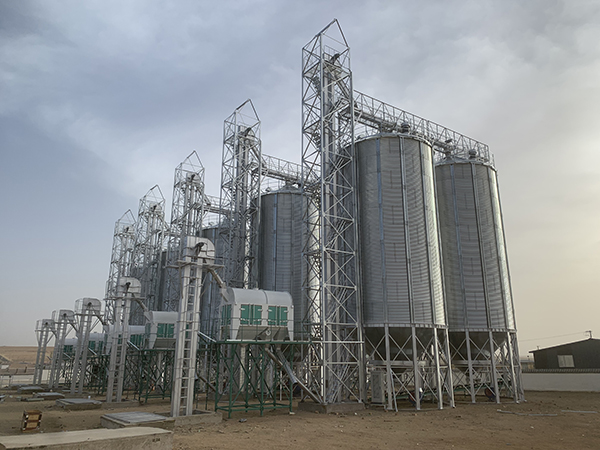

Rapeseed Steel Silo
COBAN grain silos are designed to ensure safe storage, stable ventilation, and long-term grain preservation under different climate conditions. Each silo system can be customized based on capacity, grain type, and project requirements for optimal storage performance and reliability.
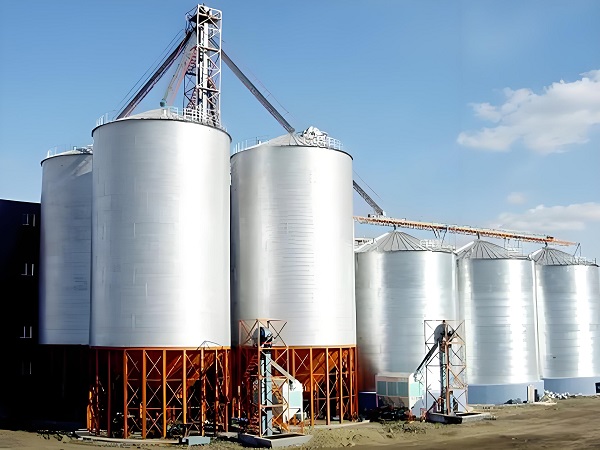
Rapeseed Steel Silo
Storage Material:Rapeseed, Canola, and Other Oilseeds
Silo Capacity:50–10,000+ Tons per Silo
Silo Type:Hopper Bottom or Flat Bottom
Main Systems:Aeration, Temperature Monitoring, Loading & Unloading
Construction Material:Galvanized Corrugated Steel
- Customized Capacity Design
- High Strength Galvanized Steel
- ISO Certified Manufacturing
- Global Installation Support
Applications
Corn Storage
Wheat Storage
Rice Storage
Soybean Storage
Feed Storage
Commercial Grain Storage
Product Details & Technical Information
A rapeseed steel silo is designed for the bulk storage of rapeseed, also known as canola in many markets. It provides a controlled storage environment for oilseed before crushing, pressing, refining, feed production, or further processing.
Compared with ordinary grain storage, rapeseed storage requires more attention to moisture content, temperature changes, aeration, condensation, and storage time. Rapeseed is an oil-rich seed, so poor storage conditions can quickly affect its quality and processing value.
COBAN provides galvanized steel silos and complete rapeseed storage silo systems for farms, oil processing plants, grain collection centers, agricultural cooperatives, and commercial grain terminals.
The silo can be designed according to the required storage capacity, site conditions, loading and unloading capacity, and the customer’s planned storage period.
Why Is Rapeseed Storage Different from Ordinary Grain Storage?
Rapeseed is not stored in exactly the same way as maize or wheat.
Its small seed size, relatively high oil content, and sensitivity to moisture and temperature changes mean that the storage system needs to be properly designed from the beginning.
| Storage Factor | Rapeseed / Canola | Maize | Wheat |
|---|---|---|---|
| Main storage concern | Moisture, heating and condensation | Moisture and insects | Moisture and insects |
| Typical storage sensitivity | High | Medium | Medium |
| Aeration requirement | Important | Important | Important |
| Discharge consideration | Small seed flow and bridging control | Relatively easy flow | Relatively easy flow |
| Long-term storage | Requires careful moisture and temperature control | Common | Common |
| Suitable silo type | Hopper or flat bottom depending on capacity | Hopper or flat bottom | Hopper or flat bottom |
For long-term oilseed storage, the target moisture content must be determined according to the local climate, storage duration, and the intended end use. Oilseed rape is commonly dried to approximately 7.5–8% moisture for prolonged stable storage, while excessive drying should also be avoided because overly dry seeds can suffer quality or handling problems.
The exact operating target should always be confirmed according to the customer’s local storage conditions and quality requirements.
Rapeseed Steel Silo Features
1. Designed for Moisture-Sensitive Oilseed Storage
Moisture is one of the main risks during rapeseed storage.
If wet rapeseed is placed directly into a storage silo, the problem is not solved simply by having a sealed steel structure. The material must first be properly cleaned and dried.
A complete rapeseed storage silo is therefore normally connected with:
- Rapeseed cleaning equipment
- Rapeseed dryer
- Bucket elevator
- Belt or chain conveyor
- Aeration system
- Temperature monitoring system
- Dust collection equipment
This creates a complete process:
Receiving → Cleaning → Drying → Cooling → Storage → Aeration → Discharge
2. Temperature Monitoring for Long-Term Storage
Rapeseed can continue to exchange moisture and heat during storage.
A local increase in temperature may indicate:
- Moisture migration
- Condensation
- Biological activity
- Insect activity
- Localized heating
For this reason, a rapeseed silo with temperature monitoring is strongly recommended for commercial storage.
Temperature cables can be installed at different levels inside the silo to help operators identify abnormal temperature changes before the problem spreads through the stored rapeseed.
This is particularly important for:
- Oil processing plants
- Large commercial storage centers
- Export terminals
- Seasonal storage facilities
- Silos storing rapeseed for several months
3. Aeration System for Rapeseed Steel Silo
A rapeseed silo with aeration system helps control the temperature of the stored material and reduce the risk of condensation.
The aeration system normally includes:
- Aeration fan
- Aeration ducts or floor
- Ventilation openings
- Air distribution structure
- Temperature monitoring system
The aeration system should be selected according to:
- Silo diameter
- Storage capacity
- Rapeseed moisture content
- Local climate
- Expected storage time
- Required cooling speed
The purpose is not simply to continuously blow air through the silo. The system should be operated according to the temperature and moisture condition of the stored rapeseed.
4. Galvanized Steel Construction
COBAN galvanized rapeseed silos are constructed from corrugated galvanized steel sheets.
The galvanized surface helps protect the steel against:
- Rain and humidity
- Outdoor atmospheric corrosion
- Temperature changes
- Long-term storage environment
The silo wall thickness, galvanized coating, structural reinforcement, roof design, and foundation requirements are selected according to the silo diameter, height, local wind conditions, and storage capacity.
5. Smooth Loading and Unloading
Rapeseed Steel Silo is a small, relatively free-flowing oilseed. However, poor silo design, excessive moisture, or unsuitable discharge equipment may still cause flow problems.
The silo system can be equipped with:
- Bucket elevators
- Belt conveyors
- Chain conveyors
- Screw conveyors
- Rotary distributors
- Bottom unloading systems
- Slide gates
- Motorized valves
The final equipment configuration depends on the required capacity and the customer’s material handling process.

Rapeseed Steel Silo price
Rapeseed Steel Silo Structure
A complete rapeseed grain silo is more than just a steel storage tank. It is a system made up of several parts working together.
1. Silo Body
The silo body is assembled from galvanized corrugated steel sheets.
It provides the main storage space and is designed according to:
- Storage capacity
- Silo diameter
- Silo height
- Material bulk density
- Wind load
- Snow load
- Seismic requirements
The silo body is supported by reinforced stiffeners to maintain structural stability.
2. Silo Roof
The roof normally includes:
- Roof panels
- Roof stiffeners
- Manhole
- Inspection access
- Roof ventilation
- Handrails and ladders where required
For oilseed storage, roof ventilation and moisture protection are important because condensation on the inner roof surface can create localized moisture problems.
3. Aeration Floor or Aeration System
Depending on the silo type and capacity, the aeration system may use:
- Full aeration floor
- Aeration ducts
- Ventilation channels
For larger silos, the aeration design should be calculated according to the silo diameter and material properties rather than simply selecting a fan based on silo capacity.
4. Temperature Monitoring System
Temperature sensors are installed at different heights inside the silo.
The monitoring system allows operators to check the temperature condition of the stored rapeseed and identify unusual temperature changes.
For large-scale storage, this system can be connected to a central control panel for easier management.
5. Loading System
Rapeseed is normally loaded into the silo through:
- Bucket elevator
- Belt conveyor
- Chain conveyor
- Screw conveyor
A rotary distributor may be installed on top of the silo to distribute the rapeseed more evenly.
This is particularly useful when the silo is used for commercial bulk storage.
6. Unloading System
The unloading system depends mainly on the silo bottom design.
A typical system may include:
- Hopper outlet
- Slide gate
- Screw conveyor
- Chain conveyor
- Belt conveyor
- Bucket elevator
For a hopper-bottom silo, gravity discharge is normally the main unloading method.
For a flat-bottom silo, the system may include a central unloading outlet and mechanical sweeping equipment for the remaining material.
Hopper Bottom or Flat Bottom Silo for Rapeseed?
This is one of the most important decisions when designing a rapeseed storage silo.
There is no single silo type that is best for every project.
The choice depends mainly on:
- Storage capacity
- Storage time
- Required unloading frequency
- Land conditions
- Investment budget
- Material handling system
Hopper Bottom Rapeseed Silo
For most projects with an individual silo capacity of 2,000 tons or less, COBAN generally recommends considering a hopper-bottom silo.
Why?
The conical bottom allows the stored rapeseed to discharge by gravity.
This reduces the need for:
- Manual cleaning
- Internal entry
- Mechanical sweeping
- Residual material removal
It is especially suitable for:
- Small and medium oil mills
- Agricultural cooperatives
- Rapeseed collection stations
- Seed processing facilities
- Farms
- Small commercial storage projects
Recommended Hopper-Bottom Layout
A typical layout can be designed as:
Truck Receiving → Cleaning → Dryer → Cooling → Bucket Elevator → Rapeseed Hopper Silo → Conveyor → Oil Pressing or Processing
For multiple silos, the layout can be arranged as:
Receiving Pit → Cleaner → Dryer → Bucket Elevator → Top Conveyor → Several Hopper Silos
Each silo can have an independent bottom outlet connected to a common conveyor.
This arrangement allows the customer to:
- Store different rapeseed batches separately
- Manage different moisture levels
- Discharge one silo without affecting others
- Send rapeseed directly to the oil processing line
When Is a Flat Bottom Rapeseed Silo Better?
For larger storage projects, a flat-bottom silo is usually more economical.
A flat-bottom silo is commonly selected when:
- Individual silo capacity is above approximately 2,000 tons
- The customer requires long-term bulk storage
- The silo will not be emptied frequently
- Large storage volume is required
- The customer wants to reduce the cost per ton of storage
- The facility has sufficient space for conveyors and discharge equipment
A flat-bottom silo can provide a lower construction cost per ton when the capacity becomes large.
The trade-off is that unloading is more complex than with a hopper-bottom silo.
A typical large-scale layout may be:
Truck Receiving → Cleaning → Rapeseed Dryer → Cooling → Bucket Elevator → Flat Bottom Silos → Bottom Conveyor → Bucket Elevator → Oil Mill
Rapeseed Silo Selection Guide
| Project Requirement | Recommended Silo |
|---|---|
| Up to 500 tons | Hopper-bottom silo |
| 500–2,000 tons | Hopper-bottom silo usually preferred |
| More than 2,000 tons per silo | Flat-bottom silo generally more economical |
| Frequent loading and unloading | Hopper-bottom silo |
| Long-term bulk storage | Flat-bottom silo |
| Limited land area | Hopper-bottom silo |
| Lowest cost per ton | Flat-bottom silo for large capacities |
| Small oil mill | Hopper-bottom silo |
| Large oilseed processing plant | Flat-bottom silo system |
The 2,000-ton threshold is a practical engineering reference rather than an absolute rule. The final choice should also consider foundation cost, steel price, local construction conditions, and the required unloading system.

Rapeseed Steel Silo flat-bottomed cone-bottomed comparison
Popular Rapeseed Silo Capacities
COBAN can design rapeseed storage silos according to the required capacity.
Common project capacities include:
| Silo Capacity | Typical Application |
|---|---|
| 50–100 tons | Small farms and small storage |
| 200–500 tons | Agricultural collection and small oil mills |
| 1,000 tons | Medium-sized processing plants |
| 1,500–2,000 tons | Commercial storage and oilseed processing |
| 3,000–5,000 tons | Large oil mills and grain storage centers |
| 5,000–10,000 tons | Large commercial storage facilities |
| 10,000+ tons | Large oilseed terminals and industrial projects |
For many customers, it is more practical to build several medium-capacity silos instead of one extremely large silo.
For example:
4 × 1,000-ton silos
may provide better operational flexibility than:
1 × 4,000-ton silo
because different rapeseed batches can be stored separately according to:
- Harvest date
- Moisture content
- Quality grade
- Supplier
- Variety
- Processing schedule
Where Are Rapeseed Steel Silos in High Demand?
Rapeseed is an important oilseed crop in several major producing and processing regions.
The main markets include:
- Canada
- China
- India
- Australia
- France
- Germany
- Poland
- Romania
- Ukraine
- Russia
Canada, the European Union, China, India, and Australia are among the world’s major rapeseed-producing regions. Recent production estimates place Canada, the EU, China, India, and Australia among the leading global producers.
Canada
Canada is one of the world’s largest canola-producing countries.
Demand is particularly relevant for:
- Farm storage
- Grain elevators
- Export terminals
- Oilseed crushing plants
The market usually uses the term Canola Storage Silo more commonly than Rapeseed Storage Silo.
China
China has a large rapeseed production base and a significant oilseed processing industry.
Typical applications include:
- Rapeseed collection centers
- Edible oil factories
- Oilseed processing plants
- Agricultural storage facilities
Both Rapeseed Steel Silo and Canola Steel Silo may be used as search terms depending on the target market.
India
India has strong demand for oilseed storage because rapeseed and mustard are important raw materials for edible oil production.
Typical customers include:
- Oil mills
- Agricultural cooperatives
- Grain traders
- Commercial warehouses
European Countries
The European rapeseed market includes countries such as:
- France
- Germany
- Poland
- Romania
- Czech Republic
- Hungary
Rapeseed is used for:
- Edible oil
- Animal feed
- Biodiesel production
Storage facilities in these regions often require higher levels of automation, temperature monitoring, and integration with existing grain handling systems.
Australia
Australia is an important canola-producing and exporting country.
The term Canola Storage Silo is widely used in the local market.
Typical applications include:
- Farm silos
- Grain storage centers
- Export facilities
- Oilseed processing plants
When Does a Customer Need a Rapeseed Storage Silo?
A dedicated rapeseed silo is usually considered when the customer has one or more of the following requirements.
1. The Harvest Season Is Short
Rapeseed is harvested within a limited period.
If the oil mill processes rapeseed throughout the year, a storage silo allows the customer to:
Buy or harvest → Clean → Dry → Store → Process gradually
This helps reduce dependence on immediate processing during the harvest season.
2. The Customer Wants to Buy Rapeseed at Harvest Time
Prices may change during the year.
A storage system allows agricultural companies and oil mills to purchase rapeseed during the harvest period and store it for later processing.
3. The Oil Mill Has Limited Processing Capacity
If the oil pressing line can process 100 tons per day but the harvest brings in several hundred tons per day, a silo system provides temporary storage capacity.
4. Different Quality Batches Need to Be Stored Separately
Several silos are useful when the customer needs to separate:
- Different moisture levels
- Different suppliers
- Different varieties
- Different quality grades
- GMO and non-GMO material where applicable
5. The Customer Is Expanding an Oilseed Processing Plant
A rapeseed silo can be installed as part of a complete oilseed processing project.
A typical process is:
Rapeseed Receiving → Cleaning → Drying → Storage → Crushing or Pressing → Oil Filtration → Oil Storage
Rapeseed Storage Silo Technical Parameters
The final dimensions depend on the required capacity and bulk density of the rapeseed.
The following table provides typical project reference values.
| Parameter | Typical Specification |
|---|---|
| Storage material | Rapeseed / Canola |
| Silo type | Hopper bottom or flat bottom |
| Capacity | 50–10,000+ tons per silo |
| Construction | Galvanized corrugated steel |
| Storage mode | Bulk storage |
| Loading method | Bucket elevator, belt conveyor or chain conveyor |
| Unloading method | Hopper outlet, conveyor or mechanical discharge |
| Aeration | Aeration fan and aeration floor/duct system |
| Monitoring | Temperature monitoring system |
| Roof | Galvanized steel roof with access and ventilation |
| Application | Oil mills, grain terminals, farms, cooperatives |
| Design | Customized according to project requirements |
Note: The final silo diameter, height, steel thickness, structural design, aeration capacity, and foundation design must be calculated according to the required storage capacity, rapeseed bulk density, local wind and snow loads, seismic conditions, and project layout.
Rapeseed Silo System Layout
A small or medium-sized rapeseed storage project may use the following process:
Option 1: Small Oil Mill
Truck → Receiving Hopper → Cleaner → Dryer → Hopper Bottom Silo → Screw Conveyor → Oil Press
Option 2: Medium-Sized Rapeseed Storage Project
Truck → Receiving Pit → Pre-cleaner → Dryer → Bucket Elevator → 2–6 Rapeseed Storage Silos → Conveyor → Processing Plant
Option 3: Large Oilseed Processing Plant
Truck / Rail Receiving → Cleaning → Drying → Cooling → Bucket Elevator → Flat Bottom Silos → Discharge Conveyor → Processing Plant
A multi-silo layout is usually preferred for larger projects because it provides greater flexibility than a single large storage bin.

Rapeseed Storage Silo Layout Diagram
How Much Does a Rapeseed Steel Silo Cost?
The price of a rapeseed steel silo cannot be accurately determined by capacity alone.
Two silos with the same nominal capacity may have significantly different project costs because of differences in:
- Silo type
- Steel thickness
- Galvanized coating
- Silo diameter
- Roof design
- Aeration system
- Temperature monitoring
- Conveyor length
- Loading capacity
- Unloading capacity
- Foundation conditions
- Local installation requirements
Main Cost Components
| Cost Item | Influence on Total Cost |
|---|---|
| Galvanized silo body | Main equipment cost |
| Hopper or flat bottom | Strong influence on structure |
| Aeration system | Depends on silo size and storage conditions |
| Temperature monitoring | Additional monitoring investment |
| Conveyors | Depends on layout and distance |
| Bucket elevators | Depends on handling capacity |
| Cleaning equipment | Required for quality control |
| Dryer | Required for wet harvested rapeseed |
| Foundation | Depends on local soil and engineering |
| Installation | Depends on project location and scope |
For a small project, the hopper-bottom silo may have a higher equipment cost per ton, but it can reduce unloading complexity.
For a large project, a flat-bottom silo normally provides a lower storage cost per ton, although additional unloading equipment may be required.
Therefore, the correct question is not simply:
“What is the price of a 1,000-ton rapeseed silo?”
A better question is:
“What is the total cost of storing and handling 1,000 tons of rapeseed in this project?”
This includes the silo, foundation, aeration, temperature monitoring, conveyors, elevators, installation, and other required equipment.
Why Choose COBAN for a Rapeseed Storage Silo?
COBAN Machinery designs and manufactures complete bulk storage systems for grains and oilseeds.
For a rapeseed project, we can help with:
- Rapeseed steel silo design
- Canola storage silo selection
- Hopper-bottom silo layout
- Flat-bottom silo design
- Silo capacity calculation
- Aeration system design
- Temperature monitoring
- Cleaning and drying equipment
- Conveying system
- Silo group layout
- Installation and commissioning
The project is designed according to the actual storage material, required capacity, local climate, processing flow, and future expansion plan.
A rapeseed storage system should not be designed by simply replacing the material name in a standard grain silo quotation.
The storage capacity, moisture condition, storage period, unloading frequency, and processing requirements all affect the final design.
Frequently Asked Questions
What is the best silo for rapeseed storage?
For an individual silo capacity of up to approximately 2,000 tons, a hopper-bottom silo is often a practical choice because it allows easier gravity unloading.
For larger storage capacities and long-term bulk storage, a flat-bottom silo is generally more economical per ton.
The final choice depends on the complete project design.
Can rapeseed be stored in a grain silo?
Yes.
Rapeseed can be stored in a galvanized grain silo, but the storage system should be properly designed for oilseed characteristics.
The main focus should be on:
- Moisture control
- Drying
- Aeration
- Temperature monitoring
- Condensation prevention
- Correct unloading design
What moisture content is suitable for storing rapeseed?
For prolonged storage, oilseed rape is commonly dried to around 7.5–8% moisture, depending on the storage conditions and local requirements. It should not simply be dried as if it were maize or wheat.
The final target should be confirmed according to the intended storage duration, temperature, local humidity, and quality standard.
Is a temperature monitoring system necessary for a rapeseed silo?
For small short-term storage, it may not always be necessary.
For commercial storage, long-term storage, and large silo projects, a temperature monitoring system is strongly recommended.
It helps operators identify abnormal heating and localized storage problems at an early stage.
Can the same silo store rapeseed and other grains?
Yes, in many cases.
The silo can also be used for:
- Canola
- Wheat
- Maize
- Soybeans
- Sunflower seeds
- Barley
- Oats
However, the silo should be cleaned properly before changing materials, especially when the stored products have different quality requirements.
How many tons can one rapeseed silo store?
COBAN can design rapeseed silos from small farm-scale capacities to large industrial storage projects.
Common capacities include:
100 tons, 200 tons, 500 tons, 1,000 tons, 2,000 tons, 3,000 tons, 5,000 tons, 10,000 tons and larger customized capacities.
What information is needed for a rapeseed silo quotation?
To recommend the correct rapeseed storage silo, the following information is useful:
- Required storage capacity
- Number of silos
- Rapeseed or canola variety
- Initial moisture content
- Required storage period
- Required loading capacity
- Required unloading capacity
- Local project country
- Available site dimensions
- Whether cleaning and drying equipment are also required
With this information, the silo structure, equipment configuration, and project cost can be estimated more accurately.
Rapeseed Steel Silo — A Practical Storage Solution for Oilseed Projects
A well-designed rapeseed steel silo should do more than simply hold rapeseed.
It should help the customer:
- Protect rapeseed quality
- Reduce moisture-related losses
- Control temperature
- Store different batches separately
- Improve loading and unloading efficiency
- Connect smoothly with an oil processing line
- Reduce long-term storage management costs
For smaller and medium-sized projects, a hopper-bottom rapeseed silo is often a convenient solution.
For large-scale storage, a flat-bottom rapeseed silo system can provide a more economical storage cost per ton.
The right choice depends on the complete project rather than the silo capacity alone.
Send us your required capacity, project country, storage period, and daily handling capacity. COBAN can help design a suitable rapeseed or canola storage silo system for your project.
Request A Quote
Tell us your capacity, grain type, and project location. We will design a turnkey solution for you.


