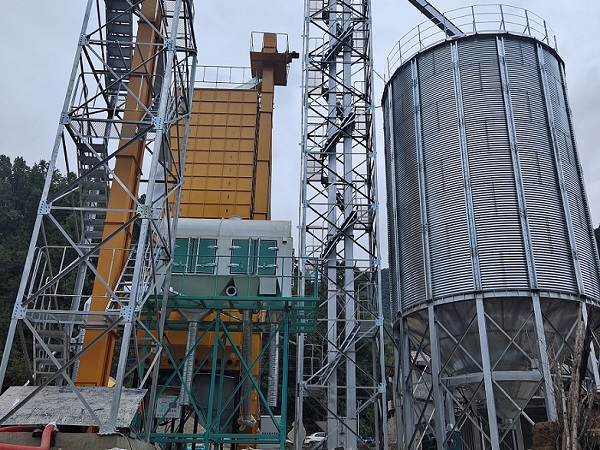
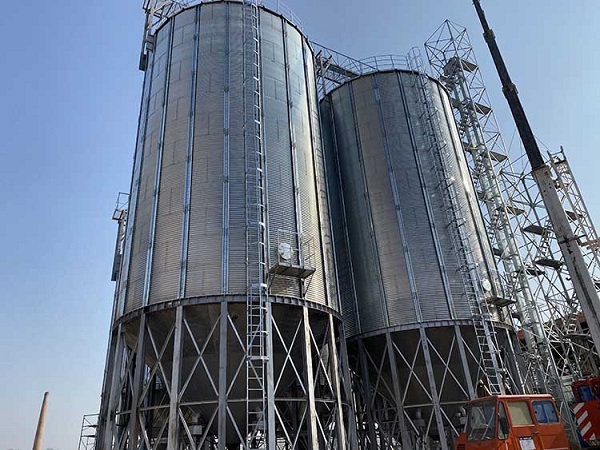
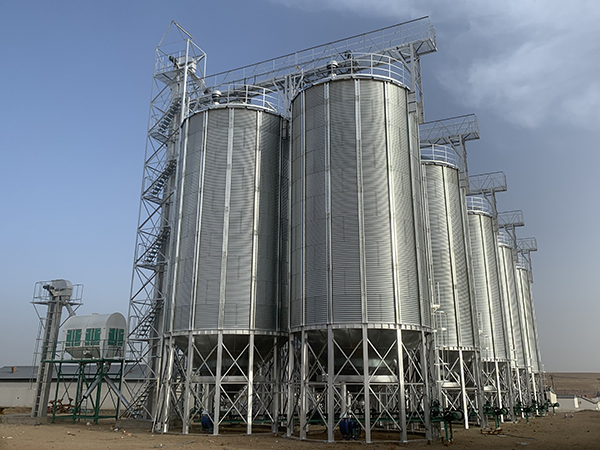
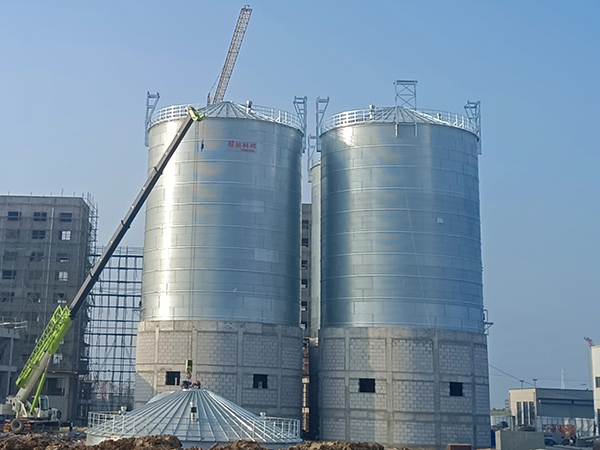
What Can a Peanut Silo Store
Peanut silos are highly versatile and can store a wide range of agricultural products:
Cereals: peanuts, wheat, corn, soybeans, sorghum
Oilseeds: rapeseed, sunflower seeds, and other seeds
The sealed environment maintains seed vitality, prevents mold, and preserves oil quality during long-term storage.
Types of Peanut Silos
| Feature | Flat-Bottom Silo | Cone-Bottom Silo |
|---|---|---|
| Design | Simple, easy to operate | Conical bottom, automatic discharge |
| Capacity | Small to medium | Medium to large |
| Maintenance | Easy access | Slightly harder access |
| Best Use | Small storage / local | Bulk storage / export projects |
Why Do Clients in Africa & Tropical Regions Trust Coban?
Building a silo in a dry climate is one thing; building one in the humid heat of Kampala or the salty winds of Port Louis is a completely different challenge. We’ve spent decades learning what actually works in these tough environments.
We Don’t Just Ship Parts, We Build Systems: You’re not just getting a pile of steel. We handle the heavy lifting—from mapping out your site and custom engineering to having our team support you during the actual installation on the ground.
Built to International (and Real-World) Standards: While our factory is ISO 9001 certified and our steel meets CE standards, we go further. We use high-tensile materials because we know your investment needs to last 20+ years, not just look good on paper.
Protection Against the Tropical Climate: Forget “one size fits all.” For coastal projects like those in Mauritius, we prioritize C5-M anti-corrosion coatings. For high-humidity areas in Uganda, we focus on aggressive ventilation to stop moisture from ruining your peanuts before you even open the door.
Your Harvest in Your Pocket: You shouldn’t have to guess what’s happening inside the silo. Our IoT sensor kit connects directly to your phone. If the temperature spikes or humidity rises, you’ll know immediately—whether you’re at the office or on the road.

Step-by-Step Construction Guide
| Step | Task | Key Points | Notes |
|---|---|---|---|
| 01 | Site Preparation & Foundation | Level ground, anti-moisture layers | Ensure proper drainage and stability to prevent uneven sinking. |
| 02 | Steel Structure Assembly | Bolted and welded steel panels | Check all bolts and welding points for structural integrity. |
| 03 | Roof & Ventilation Installation | Install roof and vents | Ensure proper airflow and heat removal to avoid the “Oven Effect.” |
| 04 | Electrical & Monitoring Systems | Install sensors, alarms, IoT | Test remote monitoring and ensure all heat sensors are calibrated. |
| 05 | Sealing & Final Inspection | Doors, unloading ports, joints | Final check for airtightness & stability before first load. |
Export-Ready Technical Specifications
Engineered for the real-world conditions of Uganda, Mauritius, and tropical Africa.
| Technical Parameter | Standard Range | Engineering Notes & Tropical Adaptation |
|---|---|---|
| Storage Capacity | 50 – 500 Tons | Scalable layouts available for multi-silo “battery” setups. |
| Wall Plate Gauge | 2 – 5 mm | Using S350GD/S550GD high-tensile steel for maximum structural integrity. |
| Anti-Rust Coating | 275 – 600g/m² | Recommend C5-M (Marine Grade) for 10km coastal radius (e.g., Mauritius). |
| Ventilation Tech | Forced Air System | Custom roof vents to stop “Silo Sweating” in high-humidity zones (e.g., Uganda). |
| Thermal Protection | 10°C – 15°C Shift | Prevents oil rancidity—critical for high-value oilseeds. |
| Live Monitoring | IoT Integration | 24/7 smartphone alerts for temperature spikes or fan failures. |
| Engineering Code | ISO / CE / Eurocode | Designed to withstand regional wind loads and seismic requirements. |
Designed for Uganda, Mauritius, and other tropical climates
Customized capacity, materials, and corrosion protection for export projects
Compliance with international quality standards (ISO, CE, or client requirements)
Efficient design supports bulk loading, unloading, and long-distance transport

Real-World Success: Our Projects in the Field
We don’t just deliver silos; we solve local storage challenges. Here is how our equipment performs in actual tropical conditions:
📍 Kampala, Uganda: Fighting the Lake Victoria Humidity
The Challenge: Constant high humidity. Our client was losing entire batches of peanuts to mold in under 90 days.
✅ The Result: Zero mold after 12 months; peanuts maintained at 9% moisture for premium export price.
📍 Port Louis, Mauritius: Defeating Salt-Air Corrosion
The Challenge: Salt air ate standard steel for breakfast. Silos were rusting out within 3-5 years.
✅ The Result: Zero corrosion after two seasons; pest incidence reduced by 95% without heavy chemicals.
📍 East Africa: Maintenance-Free Efficiency
The Challenge: Remote plant with no on-site specialized engineering team for daily maintenance.
✅ The Result: 30% increase in operational efficiency; maintenance limited to a simple annual inspection.
Peanut Storage: Your Questions Answered
Technical insights on preserving oilseeds in high-heat environments.
📚 Related Resources
Get Your Export Peanut Silo Today
Ready to protect your harvest with international-standard storage? Coban provides full-lifecycle support—from engineering and production to on-site installation.
 WhatsApp: +86 158 0105 4617
 Email: info@cobansilo.com
Note: Specifications mentioned are typical for export projects. For custom solutions or site-specific requirements (e.g., high-wind zones or unique soil conditions), please contact our engineering team.
Coban ensures your peanut storage meets global export standards—efficiently and reliably.