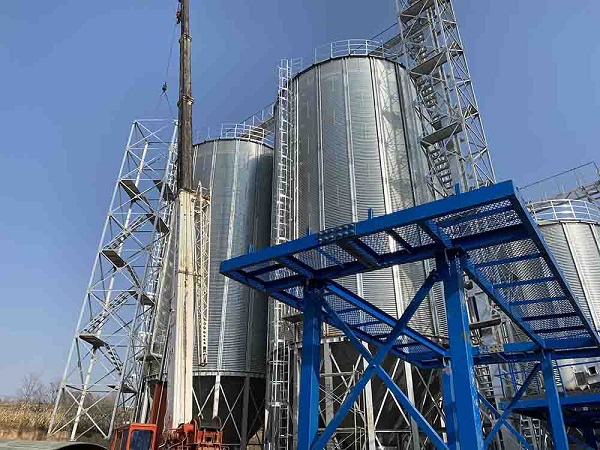
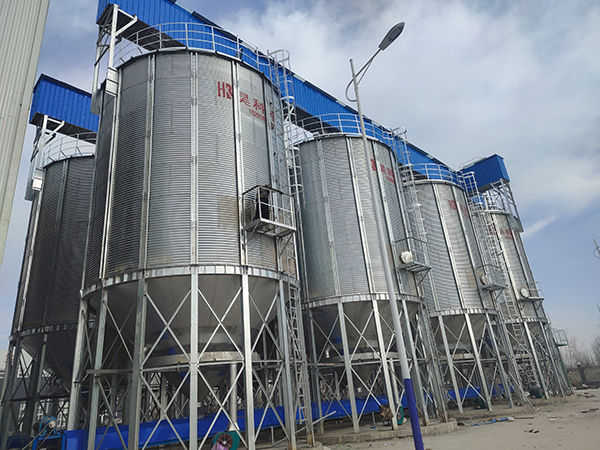
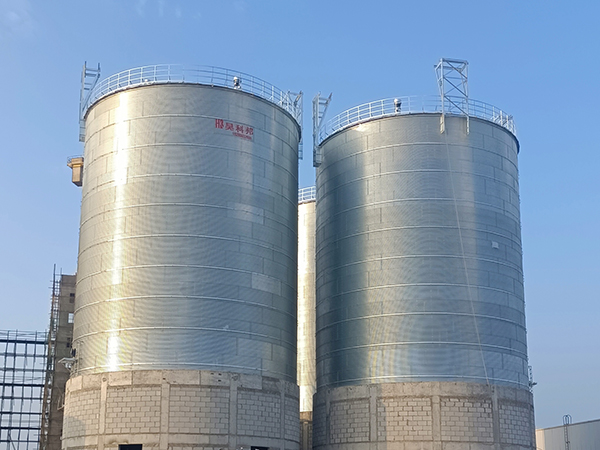
Core functions and necessity of corn silo
As the main form of modern granaries, silo were originally designed to solve the three major problems caused by traditional open-air stacking:
Biological loss control
When the moisture content of corn exceeds 14%, it is easy to breed mold (such as Aspergillus flavus). Silos can control humidity within a safe threshold through the airtightness of metal/concrete structures and mechanical ventilation systems.
Rodent protection
Compared with bungalow warehouses, silo entrances above 6 meters above the ground can reduce rodent damage by more than 90% (according to USDA data).
Spatial efficiency optimization
The conical bottom design makes the volume utilization rate of a single warehouse reach 85%, and the storage capacity is 3-5 times that of traditional stacking under the same floor area.

Technical realization of dynamic storage
Modern silos have developed into integrated management systems:
Temperature and humidity control
Equipped with a sensor network, when the grain temperature exceeds 20℃, the circulation fumigation system is automatically started to prevent insect eggs from hatching.
Quality traceability system
RFID tags are used to record data such as moisture and impurity rate when entering the warehouse to achieve batch management.
Intelligent discharging
The hydraulic unloading device can accurately control the discharging speed (usually 2-5 tons/minute) to avoid an increase in the breakage rate.
Economic benefit analysis
Take the 100,000-ton silo group in Northeast China as an example:
Loss comparison
The annual loss of the traditional method is about 3.8%, and the silos can be reduced to less than 0.7%, which is equivalent to an additional revenue of 460,000 yuan per 10,000 tons of corn (calculated at the average price in 2024).
Turnover advantage
A silos equipped with drying equipment can dry corn to meet trade standards (moisture ≤14%) within 48 hours. Compared with natural drying, this process is 7-10 days faster.

Future development trends
The new generation of silo is integrating IoT technology, such as:
AI-based mildew early warning system
Solar-driven low-power dehumidification module
Modular assembly structure reduces construction costs by 30%
These innovations will further strengthen the core position of silos in post-harvest grain loss reduction.