A grain trader from West Africa once asked our engineering team a question during a project discussion:
“We invested in a new storage facility two years ago. The structure is still in excellent condition, but every rainy season we experience grain quality problems. Should we replace the silo?”
At first glance, it sounded like a silo selection issue.
After reviewing the project, however, we found that the silo itself was not the main problem.
The real challenge was the environment surrounding the grain.
This situation is far more common than many people realize. Across tropical and coastal regions of Africa, grain storage projects often face conditions that are completely different from those found in dry agricultural regions. High humidity, seasonal rainfall, warm temperatures, and inconsistent grain drying practices can create storage risks even when the silo structure appears perfectly adequate.
That is why the question should not simply be:
“Which grain silo is better for humid Africa?”
A more useful question is:
“Which grain storage system can protect grain quality in a humid African climate?”
What We Often See in Humid African Grain Storage Projects
When customers contact COBAN about grain storage losses, the conversation usually begins with concerns about mold, insects, discoloration, or grain heating.
Many operators assume the storage structure has failed.
In reality, the issue often develops long before visible spoilage appears.
A maize storage silo may look normal from the outside. The roof is intact. The steel structure is strong. The unloading system works properly.
Yet inside the grain mass, conditions may be changing slowly.
As temperatures rise during the day and fall during the night, moisture moves through the stored grain. Over time, small pockets of warmer grain begin to develop. These areas attract moisture. Air circulation becomes uneven. Eventually, microorganisms and insects find favorable conditions to multiply.
The first signs are often subtle.
Operators may notice unusual odors, localized heating, or reduced grain quality during unloading.
By the time the problem becomes visible, losses have already occurred.
This is one reason why grain storage in Africa requires more attention to grain management than many first-time investors expect.

Why Humidity Changes Everything
A grain silo project that performs well in a dry inland region may not deliver the same results in a humid coastal environment.
We see this difference regularly when comparing projects in various parts of Africa.
In regions with relatively low humidity, grain can often remain stable with minimal intervention after storage.
In tropical climates, grain behaves differently.
The grain itself continues to respire. Temperature differences create air movement inside the storage mass. Moisture migration becomes more active. If conditions are not properly controlled, the risk of spoilage increases significantly.
This is particularly important for maize, which remains one of the most commonly stored crops across Africa.
Many storage losses attributed to poor grain quality actually originate from moisture management issues inside the storage system.
That is why selecting a grain silo for humid Africa should involve much more than comparing capacities or construction costs.
The Debate Between Flat Bottom and Hopper Bottom Silos
Many customers begin by comparing silo types.
Should the project use a flat bottom silo?
Would a hopper bottom silo perform better?
The answer depends largely on how the grain will be used.
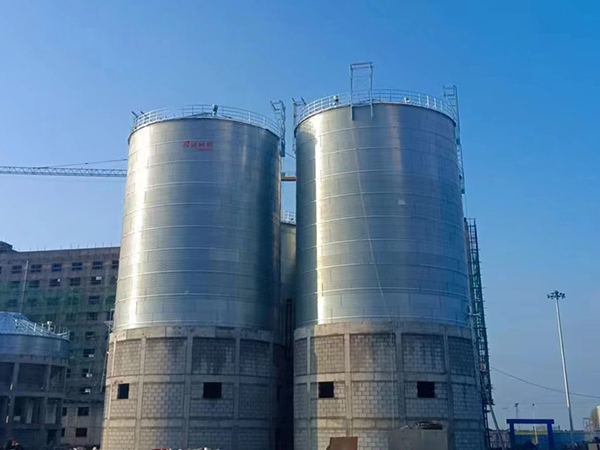
For large commercial grain storage systems, flat bottom silos are usually the preferred option. They offer excellent storage efficiency and lower investment costs per ton of grain.
For example, grain reserve projects, commercial grain terminals, and large maize storage facilities often rely on flat bottom steel grain silos because they provide economical long-term storage.
Hopper bottom silos serve a different purpose.
Feed mills, flour mills, and grain processing facilities often choose hopper silos because grain can be discharged quickly without mechanical sweeping equipment.
Neither design is automatically better for humid Africa.
The success of either option depends on how effectively moisture and temperature are managed after grain enters storage.
The Most Successful Projects Share One Common Feature
After reviewing numerous grain storage projects across developing agricultural markets, we have noticed one recurring pattern.
The best-performing facilities are rarely those with the largest silos.
They are usually the facilities with the best grain management systems.
One feature appears repeatedly in successful projects:
A properly designed grain silo with aeration.
Many investors view aeration as an optional upgrade.
Experienced grain operators tend to view it differently.
They consider aeration an essential component of grain preservation.
When airflow is distributed correctly through the grain mass, several important things happen:
Grain temperatures remain more stable.
Moisture migration is reduced.
Conditions become less favorable for mold growth.
Insect activity decreases.
Storage quality improves.
In humid climates, these benefits often have a greater impact on grain preservation than the choice between two silo models.
Why Modern Steel Grain Silos Continue to Gain Popularity
Years ago, many agricultural businesses relied primarily on warehouses for grain storage.
Warehouses still have their place in certain applications, but commercial operations increasingly prefer steel grain silo systems.
The reason is not simply storage capacity.
A modern steel grain silo provides operators with greater control.
Temperature monitoring systems can be installed throughout the grain mass.
Aeration systems can be integrated directly into the silo floor.
Loading and unloading operations become more efficient.
Storage conditions become easier to manage.
For agricultural investors planning long-term grain handling operations, this level of control often proves more valuable than the storage structure itself.
As grain volumes continue to increase across Africa, steel grain silos have become the foundation of many modern grain storage facilities.
A Maize Storage Project Tells the Story
One customer initially planned to increase storage capacity after experiencing repeated grain quality losses.
The assumption was simple:
More storage capacity would solve the problem.
After reviewing the operation, our engineering team identified a different issue.
The existing storage volume was already sufficient.
The facility lacked effective airflow management.
Instead of recommending additional storage immediately, we suggested upgrading the aeration system and introducing temperature monitoring.
The result was unexpected for the customer.
Storage performance improved without significantly increasing silo capacity.
This experience reinforces an important lesson.
The best grain storage solution for maize in Africa is not always the largest silo.
Often, it is the storage system that provides the greatest control over grain conditions.
Preventing Aflatoxin Starts Before Problems Appear
One topic that frequently concerns grain processors is aflatoxin contamination.
Once contamination becomes severe, corrective options are limited.
The more effective strategy is prevention.
Proper grain drying remains the first step.
Clean grain enters storage in better condition.
Consistent airflow helps maintain a stable environment.
Temperature monitoring provides early warning when conditions begin to change.
Combined together, these measures reduce the likelihood of mold development and help protect grain quality throughout the storage period.
For many maize storage silo projects, these preventive measures are just as important as the silo structure itself.
How COBAN Approaches Grain Storage in Humid Africa
At COBAN, we do not begin a project by asking how many tons of storage a customer wants.
We begin by asking how the grain will be managed.
A feed mill storing grain for several weeks has different requirements from a grain reserve storing maize for many months.
Before proposing a solution, our engineering team evaluates:
- Local climate conditions
- Annual humidity levels
- Grain varieties
- Expected storage duration
- Grain turnover rates
- Future expansion plans
Based on these factors, we design a complete grain storage system that may include:
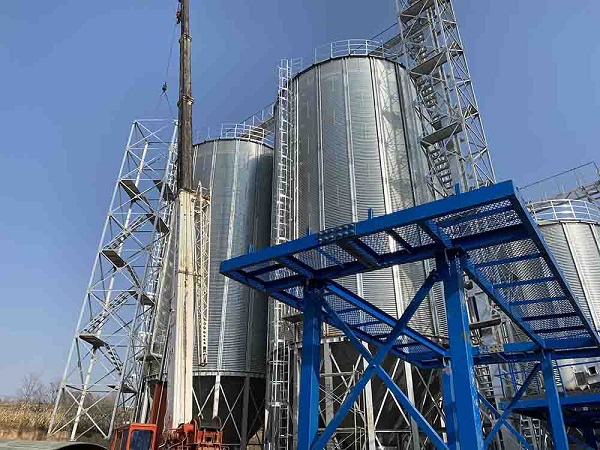
- Flat bottom steel grain silos
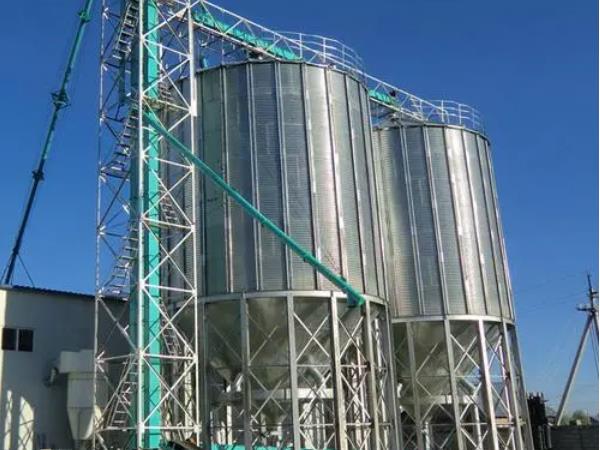
- Hopper bottom silos
- Grain silo aeration systems
- Temperature monitoring systems
- Grain cleaning equipment
- Conveying systems
- Grain drying solutions
The objective is not simply to store grain.
The objective is to preserve grain quality from the day it enters storage until the day it leaves.
Final Thoughts
When discussing grain storage in Africa, there is no universal silo that performs best under every condition.
The projects that achieve the lowest grain losses are usually those that focus on moisture control, airflow management, and continuous monitoring rather than silo size alone.
For most commercial applications in humid regions, a well-designed steel grain silo equipped with an effective aeration system will provide far greater protection than a storage facility built solely around capacity.
In our experience, successful grain storage is rarely determined by the silo people can see.
It is determined by how effectively operators manage the grain environment inside the silo throughout the storage season.