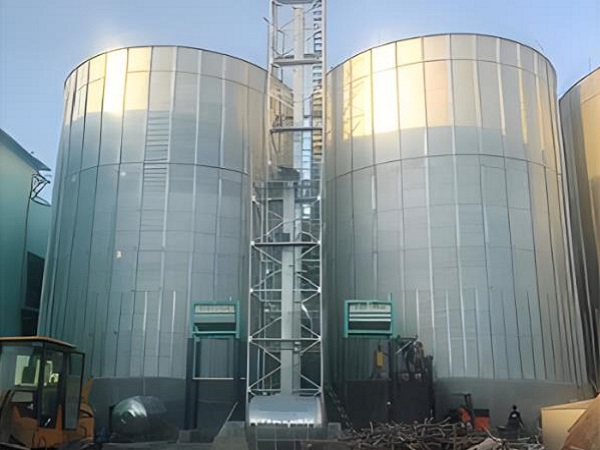
What is a metal grain silo?
A metal grain silo is a closed grain storage container constructed of metal (such as galvanized steel, stainless steel, or aluminum alloy). It is widely used for medium- and long-term storage of crops such as wheat, corn, soybeans, and rice. It is typically cylindrical in design with a conical top and a funnel-shaped or flat bottom to facilitate ventilation, grain discharge, and moisture protection.
Compared to traditional brick-concrete warehouses, metal grain silos offer greater space utilization and enhanced protection. In regions with fluctuating climates, their sealing and corrosion resistance can effectively reduce the risk of grain mold and pests.

Classification of Metal Grain Silo
Based on their material and structure, metal grain silos can be divided into the following types:
Galvanized Steel Silo
Galvanized steel silos are currently the most widely used type, featuring strong rust resistance and a high cost-effectiveness. The hot-dip galvanizing process creates a protective layer on the steel surface, effectively resisting moisture and corrosion.
Stainless Steel Silo
Stainless steel silos are suitable for grain processing plants or specialty crop storage that require high food-grade hygiene. While their corrosion resistance is superior to galvanized steel, they are relatively expensive and require a high initial investment.
Aluminum Alloy Silo
Aluminum alloy is lightweight and resistant to oxidation, making it commonly used in mobile grain storage systems where efficient loading and unloading is crucial. While its mechanical strength is slightly lower than that of steel, it offers significant advantages in specific scenarios.

Service Life of Metal Grain Silo
Generally speaking, metal grain silos have a service life of 20 to 30 years under reasonable conditions. High-quality materials and good installation techniques can even achieve continuous service of over 35 years. The following factors directly affect a silo’s lifespan:
Material
The thickness of the galvanized coating or the grade of stainless steel is crucial in determining its lifespan. High-purity stainless steel or thick galvanized coatings can significantly extend its service life.
Installation Quality
The stability of the foundation, the tightness of the sealing strips, and the reliability of the bolted connections all affect its safety and durability.
Environmental Factors
Silos exposed to high humidity, high salt levels, or acid rain are more susceptible to corrosion, shortening their lifespan. Conversely, silos in dry climates generally have a longer service life.
Frequency of Use
Long-term, high-frequency loading and unloading of grain will cause wear and tear on the silo’s interior, making regular inspection and maintenance essential.
How to Maintain a Metal Grain Silo?
Good maintenance measures not only extend the lifespan of a metal grain silo but also improve grain storage safety and management efficiency. Here are some key maintenance recommendations:
Regular Inspection and Cleaning
Inspect the silo’s seals, ventilation system, and floor annually or quarterly, and promptly remove any residue and dust to prevent insect infestation.
Rust Prevention and Repainting
If scratches or rust are found on the silo surface, promptly remove the rust and repaint it. Pay special attention to welded areas to prevent water seepage and corrosion expansion.
Ventilation and Dehumidification System Maintenance
Maintain good air circulation to prevent moisture accumulation in the silo. Check that the electric fan and ventilation ducts are unobstructed, and install dehumidification equipment if necessary.
Temperature and Humidity Monitoring
Equipped with an intelligent temperature control system, it can effectively monitor environmental changes within the silo, providing early warning of risks such as condensation and mold, thereby ensuring grain quality.
Summary: Proper use and maintenance extend the life of your silo.
Overall, as a modern grain storage facility, the service life of a metal grain silo depends not only on the material and manufacturing quality, but also on the operating environment and daily maintenance. Scientific selection, standardized installation, and regular maintenance are key to ensuring its maximum lifespan.
For organizations planning long-term agricultural or grain processing operations, investing in a metal grain silo is undoubtedly a cost-effective, stable, and reliable option. In the context of the continuous development of smart agriculture, metal grain silos will continue to play their advantages of efficient, safe and environmentally friendly storage.