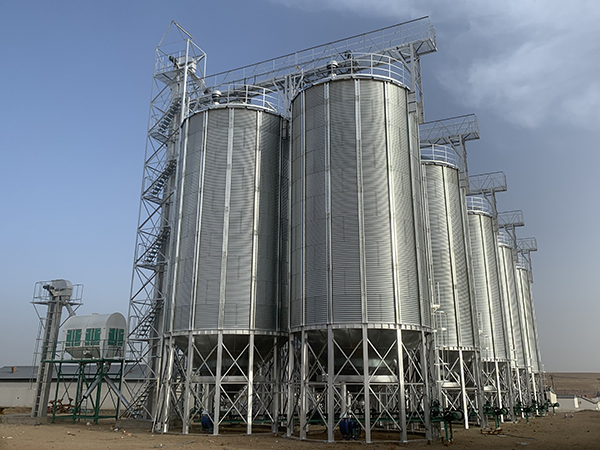
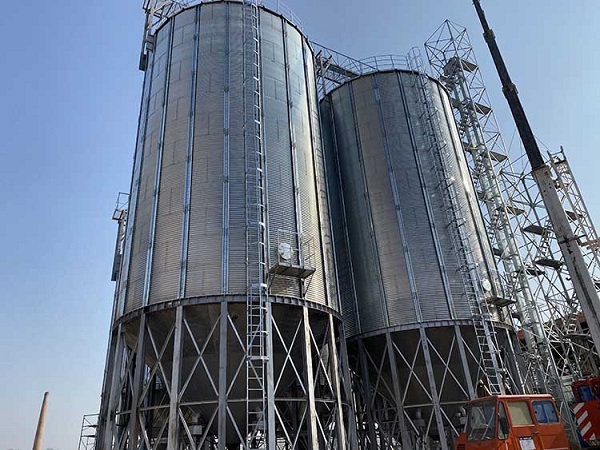
In the entire silo system, the structural design and material selection of the silo bottom directly determine the material flow efficiency, safety and overall operating cost. As a professional manufacturer of storage and conveying equipment, Coban is committed to providing high-performance silo systems and bottom design solutions to global customers, helping companies achieve efficient and intelligent material management.

Functions and Importance of the Silo Bottom
The bottom of the silo is not only the structural support part of the entire silo, but also a key area for material unloading and flow control. Reasonable bottom design can ensure the smooth flow of materials inside the silo under the action of gravity or machinery, avoid common problems such as “bridging” and “dead material”, thereby improving storage and unloading efficiency.
Main functions include:
Support and Load Bearing: The bottom bears the weight of the upper structure and internal materials of the silo, placing extremely high demands on the foundation design.
Discharge and Flow Control: The controllable discharge of materials is achieved through the discharge port at the bottom, the conveyor system or the screw taking device.
Sealing and Moisture Proof: The bottom structure must possess excellent sealing performance to prevent the intrusion of moisture, impurities, or pests, ensuring the quality of stored materials.
Structural Safety: A reasonable stress distribution and discharge angle design effectively prevent problems such as local collapse, blockage, and material stratification.
Common Types of Silo Bottom
Depending on material characteristics, application industries, and process requirements, silo bottoms are generally classified into the following types:
Flat Bottom Silo
Flat-bottomed silo are often used to store granular or powdery materials, such as grain, cement, feed, etc. Its bottom is matched with a mechanical reclaiming system (such as a screw conveyor or scraper conveyor) to achieve uniform discharging.
Advantages:
Large storage capacity, suitable for long-term storage;
Low maintenance costs;
Stable structure, suitable for large steel silos.
Cone Bottom Silo
Cone bottom silos have a cone or funnel-shaped bottom and are commonly used for materials requiring rapid gravity unloading.
Advantages:
Good material flowability, reducing residue;
Fast unloading speed;
Suitable for powders or highly flowable materials.
Generally, the cone bottom angle is set in the range of 40° to 65°, and will be appropriately optimized according to the friction coefficient and particle characteristics of the material.
Hopper Bottom Silo
Combining the advantages of flat and cone bottoms, hopper bottom silos improve unloading efficiency while maintaining storage capacity. They are widely used in the chemical, plastic pellet, and feed industries.

Key Design Elements of Silo Bottom
Discharge Angle and Flow Characteristics
The fluidity of the material determines the design angle of the silo bottom.
For granular materials with good fluidity (such as corn, soybeans), a cone angle of 40°–50°is usually used;
For easily bridging powdery materials (such as cement and flour), a larger angle of 55°–65°is required to prevent clogging.
Materials and Corrosion Resistance
The bottom of the silo is often made of carbon steel, stainless steel or galvanized steel. Coban uses hot-dip galvanizing process and epoxy coating technology in the design to ensure that the bottom structure is corrosion-resistant, moisture-proof, and wear-resistant, and extends the service life.
Unloading System Configuration
Depending on customer requirements, the bottom can be integrated with:
Screw Conveyor
Pneumatic System
Vibrating Feeder
Automatic Control Valves and Flow Monitoring Devices
These systems ensure efficient and controlled unloading of materials in an unattended manner.
Foundation Structure and Support System
The foundation design for the silo bottom includes a concrete foundation, steel supports, or a modular base.
Based on the site environment and geological conditions, Kebang customizes structural solutions for clients, ensuring uniform stress distribution and reliable safety.
Innovative Design Advantages of Kebang’s Silo Bottom
Intelligent Flow Optimization Design
Coban uses fluid mechanics simulation technology (CFD analysis) to accurately calculate the flow path of materials at the bottom, effectively avoiding dead corners and material blockage.
Modular Structure, Convenient Installation
The bottom of the silo is designed in a modular assembly form, which facilitates transportation and on-site assembly. It can significantly reduce construction time and reduce overall installation costs.
Applicable to Multiple Industries
Whether it is an agricultural granary, chemical raw material warehouse, ore storage warehouse or food processing warehouse, Coban can provide corresponding bottom structure solutions to achieve customized designs.
Global Standards and Certifications
Kebang’s silo systems comply with international standards such as ISO, CE, and ASME, meeting the stringent requirements of export markets and enjoying the trust of customers in Europe, Southeast Asia, the Middle East, and South America.
Kebang’s Global Service and Technical Support
As a professional silo equipment manufacturer, Kebang not only provides products but also complete storage system solutions. Our services include:
Silo bottom structure design and selection;
Material flowability testing and optimization;
On-site installation and commissioning guidance;
Regular maintenance and system upgrade services.
Coban’s engineering team with more than ten years of industry experience can provide economical, practical, long-term and reliable storage solutions based on customers’ specific needs and usage scenarios.
Conclusion: Choose Kebang for More Efficient Storage
Although the silo bottom is part of the entire structure, it determines the core efficiency of the system’s operation. Scientific design, high-quality materials and precise manufacturing processes are the keys to ensuring safe and efficient operation of silos.
With its extensive manufacturing experience, advanced technological capabilities, and international service system, Kebang has become a reliable partner for many companies in the silo system field. We are committed to helping customers achieve automated, intelligent, and sustainable storage, creating a more competitive production system.