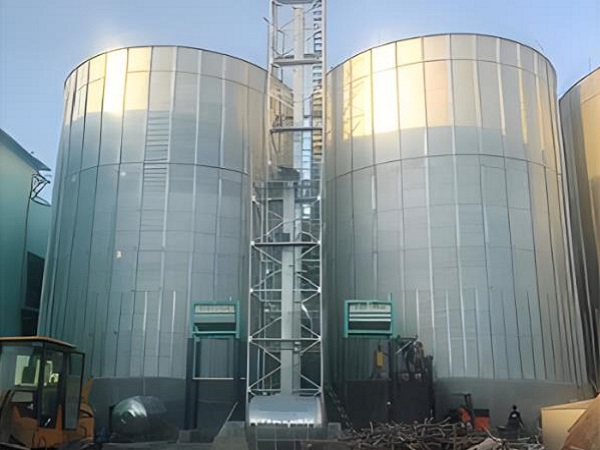
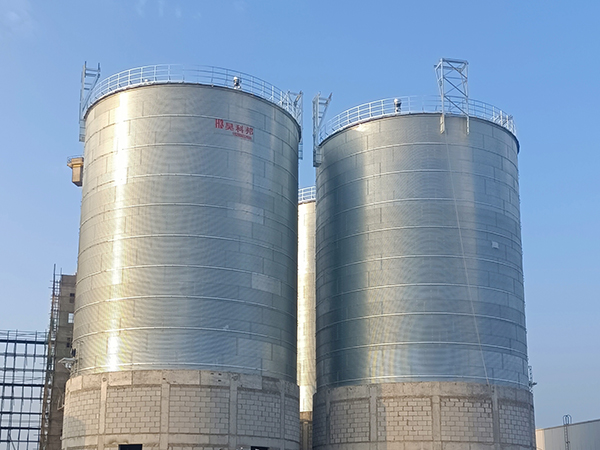
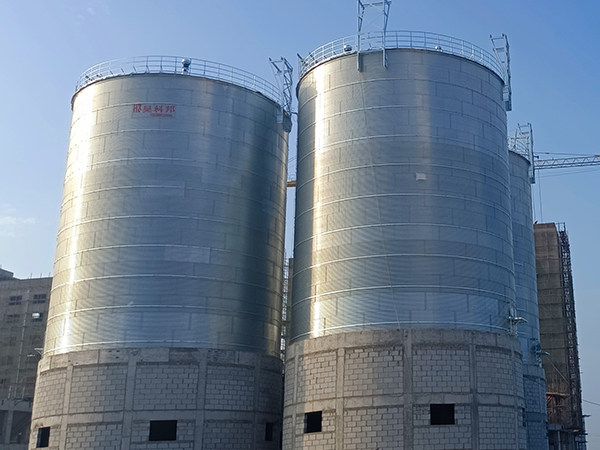
When buying a grain silo, one of the first questions buyers usually ask is:
“How much does the grain silo cost?”
It sounds like a simple question, but a complete grain storage project is rarely priced as one item.
The silo itself is only one part of the investment. Depending on the project, the quotation may also include silo accessories, aeration, temperature monitoring, conveying equipment, cleaning equipment, unloading equipment, electrical controls, transportation, installation, commissioning, spare parts, taxes, and other project-related costs.
This is why two quotations with seemingly similar silo prices can result in very different total project costs.
For a farm, grain trader, commercial grain depot, food processor, or government grain storage project, the better question is not:
“What is the price of one grain silo?”
It is:
“What is the total cost of putting this grain storage system into operation?”
This article explains the major cost components that buyers should examine when evaluating a grain silo quotation.
1. Start With the Total Project Cost, Not the Silo Price
A professional grain silo quotation should make it possible for the buyer to understand what is included in the proposed system.
A simplified project cost structure looks like this:
| Cost Component | Typical Content |
|---|---|
| Silo body | Steel silo shell, roof, stiffeners, manholes, ladders, platforms |
| Silo accessories | Roof vents, inspection doors, safety equipment, sealing components |
| Aeration system | Fans, ducts, floor aeration panels or channels |
| Temperature monitoring | Cables, sensors, junction boxes, monitoring equipment |
| Grain handling | Bucket elevators, belt conveyors, screw conveyors, drag conveyors |
| Grain cleaning | Pre-cleaner, cleaner, aspiration and dust collection |
| Unloading system | Hopper/cone discharge or flat-bottom unloading equipment |
| Electrical system | Control cabinet, sensors, cables, control components |
| Transportation | Inland freight, port handling and ocean freight where applicable |
| Installation | Mechanical installation and related labor |
| Commissioning | Testing, adjustment and operator training |
| Spare parts | Recommended commissioning and operating spares |
| Taxes & duties | Depending on Incoterms and destination country |
| Payment costs | Bank charges, payment-related fees where applicable |
Not every project needs every item.
The important point is that the buyer should know exactly which items are included in the quoted total and which are excluded.

2. The Grain Silo Body Is Only the Starting Point
The largest and most obvious part of the quotation is normally the silo itself.
For a steel grain silo, this generally includes the structural steel components required to form the storage vessel.
Depending on the design, the quotation may include:
- Galvanized steel silo sheets
- Roof structure
- Roof panels
- Stiffening ribs
- Bolts and fasteners
- Manholes
- Inspection doors
- Roof access
- Ladders
- Platforms
- Handrails
- Inlet and outlet openings
- Sealing components
- Foundation connection components
However, buyers should not assume that “silo price” automatically means a complete operating silo.
For example, one supplier may quote:
USD XX,XXX — 2,000 ton grain silo
while another supplier quotes:
USD XX,XXX — complete 2,000 ton storage system
Those two numbers may not be comparable.
The first quotation could cover mainly the steel silo body, while the second could include aeration, temperature monitoring, discharge equipment and other accessories.
Always ask:
What exactly is included in the silo body price?
This single question can prevent a major misunderstanding later.
3. Silo Capacity Also Affects the Price
The quotation is strongly influenced by the required storage capacity.
But capacity alone does not determine the final cost.
For example, a 1,000-ton silo and a 1,000-ton silo are not necessarily designed in the same way.
The price may change according to:
- Silo diameter
- Silo height
- Flat bottom or hopper bottom
- Steel thickness
- Roof design
- Structural reinforcement
- Grain density
- Wind and seismic requirements
- Local design standards
- Corrosion protection
- Operating conditions
For larger projects, buyers should therefore pay attention to the actual silo dimensions and design, rather than comparing capacity alone.
A quotation should ideally state the proposed:
diameter × cylinder height × storage capacity
so the buyer knows what is actually being purchased.
4. Flat-Bottom or Hopper-Bottom Silo Makes a Difference
The silo bottom design can have a noticeable effect on the project cost.
Flat-bottom silo
Flat-bottom silos are commonly used for larger grain storage capacities.
They normally require:
- Aeration system
- Unloading pit or discharge arrangement
- Sweep auger or other residual grain removal equipment
- Central discharge system
- Foundation structure
The initial equipment investment can be higher because unloading and aeration need to be properly designed.
Hopper-bottom silo
Hopper-bottom silos have a sloped bottom that allows grain to flow toward the discharge outlet.
They can reduce the need for some mechanical cleaning equipment and simplify unloading, but the supporting structure is more substantial.
Therefore, the question should not simply be:
“Which silo is cheaper?”
It should be:
“Which bottom design gives the lowest overall cost for this storage capacity and operating method?”
5. Aeration Is a Separate Cost That Should Not Be Overlooked
Aeration is one of the most important systems in grain storage.
A quotation may include:
- Aeration fans
- Air ducts
- Aeration channels
- Perforated floor sections
- Air distribution components
- Dampers
- Connecting pipes or ducts
The number and capacity of fans depend on factors such as:
- Silo diameter
- Grain type
- Grain depth
- Local climate
- Required airflow
- Storage duration
- Grain moisture
- Storage management strategy
A quotation that looks cheaper because it excludes the aeration system may not actually be cheaper once the complete system is purchased.
6. Temperature Monitoring Is Another Project Cost
For commercial grain storage, temperature monitoring is not simply an optional electronic accessory.
It provides information about temperature changes inside the grain mass and helps operators identify abnormal conditions early.
A temperature monitoring quotation may include:
- Temperature cables
- Temperature sensors
- Junction boxes
- Sensor connection components
- Control unit
- Monitoring software or display
- Communication components
The cost depends partly on the silo dimensions and the number of monitoring points required.
When comparing quotations, ask whether the quoted temperature monitoring system is:
included, optional, or excluded.
7. Grain Handling Equipment Can Become a Major Part of the Budget
A grain silo does not work alone.
Grain must be:
received → cleaned → conveyed → stored → monitored → discharged → conveyed out
This means the handling equipment can represent a substantial portion of the total project investment.
Typical equipment includes:
Bucket Elevator
Used for vertical grain lifting.
Belt Conveyor
Used for horizontal or inclined grain conveying over relatively long distances.
Screw Conveyor
Often used for controlled conveying, transfer, or unloading applications.
Drag/Chain Conveyor
Used where a robust enclosed conveying method is required.
The quotation should identify:
- Equipment type
- Capacity
- Quantity
- Motor power
- Conveyor length
- Elevator height
- Included accessories
A buyer should avoid comparing only the price of the silo while ignoring the cost of moving grain into and out of it.
8. Grain Cleaning Equipment May Be Part of the Project
If the project includes grain receiving and cleaning, additional equipment may be required.
Depending on the application, this could include:
- Pre-cleaner
- Grain cleaner
- Rotary cleaner
- Vibratory cleaner
- Aspirator
- Magnetic separator
- Dust collector
- Cyclone
- Feeding equipment
For a commercial grain storage facility, cleaning before storage can be important because foreign material, dust and fines can affect grain quality and storage performance.
Therefore, the grain cleaning system should be priced separately or clearly identified as part of the complete system quotation.

complete grain storage project cost
9. The Unloading System Needs to Be Clearly Defined
Storage is only half of the job.
Eventually, the grain must leave the silo.
For a flat-bottom silo, the unloading system may include:
- Center discharge outlet
- Bottom discharge gates
- Screw conveyor
- Sweep auger
- Discharge conveyor
- Unloading pit
- Supporting structures
For a hopper-bottom silo, grain can flow naturally toward the bottom outlet, but the system may still require:
- Discharge gates
- Flow-control equipment
- Screw conveyor
- Drag conveyor
- Bucket elevator or belt conveyor
The quotation should clearly explain how the grain is unloaded and what equipment is included.
10. Electrical and Control Systems Are Real Project Costs
Mechanical equipment cannot operate properly without the corresponding electrical and control system.
Depending on the project scope, this may include:
- Electrical control cabinet
- Motor starters
- Variable frequency drives
- Sensors
- Limit switches
- Level sensors
- Temperature monitoring connections
- Emergency stop systems
- Control wiring
- Cables
- Junction boxes
- PLC
- HMI
- Automatic control system
Some suppliers provide the control cabinet as part of the equipment package.
Others quote it separately.
This difference can make a quotation appear cheaper than it actually is.
11. Transportation Is Part of the Real Purchase Cost
This is one of the most frequently misunderstood parts of international equipment purchasing.
A factory quotation may not equal the final landed cost.
Transportation can include several stages:
Factory → domestic transport → export port → ocean freight → destination port → customs clearance → local transport → project site
Depending on the Incoterm, different costs may be paid by the supplier or buyer.
For example:
EXW
The buyer may be responsible for almost everything after collecting the equipment from the factory.
FOB
The supplier generally handles the export-side delivery up to the agreed port and loading point, while the buyer handles the main international freight and subsequent costs.
CIF
The supplier includes the ocean freight and insurance to the named destination port, while destination-side charges may still remain with the buyer.
DDP
The supplier takes responsibility for a much broader range of costs and procedures, subject to the specific agreement and destination requirements.
Therefore, never compare:
FOB quotation vs. CIF quotation
as if they were the same price.
They are not the same commercial scope.
12. Port Charges and Destination Costs Can Add Up
International buyers should also check destination-side costs.
These may include:
- Port handling charges
- Terminal charges
- Documentation fees
- Customs clearance
- Import duties
- VAT or local taxes
- Inspection fees
- Storage/demurrage if applicable
- Local trucking
- Delivery to the project site
These costs vary significantly from country to country.
For this reason, a supplier should clearly state the quotation’s Incoterm and named destination.
13. Installation Is Not Always Included
This is another area where buyers can misunderstand the total project cost.
A supplier may provide the complete equipment package but quote installation separately.
Installation costs can involve:
- Silo erection
- Mechanical assembly
- Conveyor installation
- Elevator installation
- Fan installation
- Electrical installation
- Welding or fabrication work where required
- Crane or lifting equipment
- Local labor
- Accommodation and transportation for engineers
For international projects, engineer travel expenses may also need to be considered.
A quotation should therefore state:
Installation included / excluded / optional
rather than leaving the buyer to guess.
14. Commissioning and Training Should Be Considered
After installation, the system needs to be tested.
Commissioning may include:
- Equipment inspection
- No-load testing
- Load testing
- Motor rotation checks
- Conveyor adjustment
- Sensor testing
- Temperature monitoring verification
- Control system testing
- System coordination
- Operator training
Professional commissioning reduces the risk of purchasing a system that is mechanically installed but not properly adjusted for operation.
Some suppliers include commissioning in their project price.
Others charge engineering service fees separately.
15. Foundation and Civil Construction Are Usually a Separate Budget
This is especially important when calculating the true project investment.
The silo supplier may provide the silo and equipment but not the civil works.
The buyer may need to budget for:
- Concrete foundation
- Reinforced concrete
- Unloading pit
- Equipment foundations
- Elevator foundation
- Conveyor supports
- Drainage
- Electrical room
- Control room
- Access roads
- Site preparation
Foundation requirements should be based on the actual silo design and local soil conditions.
Therefore, the silo quotation and the civil construction budget should normally be evaluated separately.
16. Payment Terms Also Affect Your Cash Requirement
The total contract value is not the same as the amount of money you need to pay immediately.
A typical international equipment contract may divide payment into:
- Deposit/down payment
- Production-stage payment
- Balance payment before shipment
- Final payment after commissioning, if agreed
For example, a contract could be structured around:
30% deposit + 70% balance before shipment
But payment terms vary by supplier, project size, equipment type and negotiation.
The important thing is to understand:
Contract value ≠ initial cash requirement
If the total equipment contract is USD 100,000, a 30% deposit means the initial payment is USD 30,000, while the remaining USD 70,000 becomes payable according to the agreed terms.
Buyers should therefore record both:
Total Contract Value
and
Payment Schedule
in their project budget.

grain silo equipment and installation cost
17. Spare Parts Should Be Included in the Budget
A new grain storage system should ideally have some recommended spare parts available.
Depending on the equipment, these may include:
- Bearings
- Belts
- Seals
- Sensors
- Electrical components
- Conveyor wear parts
- Bucket elevator buckets
- Bolts and fasteners
- Motor-related components
Spare parts may be inexpensive compared with the complete project, but having them available can reduce downtime when replacement is needed.
18. Warranty and After-Sales Service Have Economic Value
Warranty itself may not appear as a separate line item on the quotation, but it is part of the value of the purchase.
A professional quotation should clarify:
- Warranty period
- What the warranty covers
- Which components are covered
- Whether replacement parts are supplied
- Technical support method
- Remote troubleshooting
- Engineer service
- Commissioning support
The buyer should not evaluate suppliers based on price alone.
A slightly higher quotation can sometimes represent a lower operating risk if it includes stronger technical support and a more complete scope.
19. Taxes, Duties and Local Fees Must Be Checked
Depending on the destination country and contract terms, the project may be subject to:
- Import duty
- VAT
- Sales tax
- Customs fees
- Inspection charges
- Certification fees
- Local administrative fees
These costs are often outside the manufacturer’s factory quotation.
Therefore, when preparing a project budget, buyers should separate:
Supplier Contract Cost
from
Local Government / Import Cost
and
Local Construction Cost.
20. A Practical Way to Calculate the Real Grain Silo Investment
For a preliminary budget, I recommend looking at the project in six major layers.
Layer 1 — Storage Equipment
- Grain silos
- Silo accessories
- Aeration
- Temperature monitoring
- Unloading system
Layer 2 — Grain Handling
- Bucket elevators
- Belt conveyors
- Screw conveyors
- Drag conveyors
- Receiving equipment
Layer 3 — Grain Cleaning
- Pre-cleaner
- Cleaner
- Aspirator
- Dust collection
Layer 4 — Electrical & Automation
- Control cabinet
- Motors
- Sensors
- Cables
- PLC/HMI
- Monitoring system
Layer 5 — Logistics & Engineering
- Inland transportation
- Ocean freight
- Insurance
- Installation
- Commissioning
- Training
- Spare parts
Layer 6 — Local Project Costs
- Foundation
- Civil construction
- Crane
- Local labor
- Customs
- Import taxes
- Site utilities
This gives the buyer a much more realistic picture of the total investment.
21. Example: Why Two “Silo Prices” May Be Very Different
Imagine two suppliers quote a 2,000-ton grain silo.
Supplier A
Silo body: USD 30,000
Supplier B
Complete silo system: USD 45,000
At first glance, Supplier A appears USD 15,000 cheaper.
But after checking the quotation, you discover that Supplier A’s price excludes:
- Aeration fan
- Temperature monitoring
- Unloading equipment
- Electrical control
- Some accessories
After adding these items, the final cost might look completely different.
This is why the correct comparison is:
Total comparable project scope vs. total comparable project scope
—not simply:
Silo price vs. silo price
22. What Should a Professional Grain Silo Quotation Show?
For a serious project, I recommend asking the supplier for a quotation structured roughly like this:
| Section | What to Check |
|---|---|
| Silo | Capacity, diameter, height, quantity, material |
| Aeration | Fan quantity, fan capacity, ducts/floor system |
| Monitoring | Temperature sensors, cables, control unit |
| Conveying | Equipment type, capacity, quantity, length/height |
| Cleaning | Cleaner, pre-cleaner, aspiration, dust collection |
| Unloading | Bottom discharge, sweep auger, conveyors |
| Electrical | Control cabinet, motors, sensors, cables |
| Engineering | Drawings, technical design, installation support |
| Logistics | Incoterm, port, freight, insurance |
| Installation | Included or excluded |
| Commissioning | Included or excluded |
| Spare parts | Quantity and price |
| Payment | Deposit and balance terms |
| Warranty | Period and coverage |
| Taxes | Included or excluded |
| Exclusions | Clearly stated |
This structure makes supplier-to-supplier comparison much easier.
23. The Most Important Question: “What Is Excluded?”
Buyers often spend too much time asking:
“What is included?”
There is another question that is equally important:
“What is NOT included in this price?”
Ask the supplier to provide a written exclusion list.
For example:
- Civil foundation excluded
- Local electrical installation excluded
- Import duty excluded
- Destination port charges excluded
- Local transportation excluded
- Crane excluded
- Installation excluded
- Commissioning excluded
A clear exclusion list is extremely valuable because it prevents unexpected costs after the order has already been placed.
24. Don’t Compare Quotations by Price Alone
A grain silo project is a long-term investment.
When comparing suppliers, I recommend evaluating at least these five factors:
1. Equipment scope
Are you receiving the same equipment?
2. Technical specification
Are the silo dimensions, steel thickness, capacity and equipment capacities comparable?
3. Commercial terms
Are the Incoterms, payment terms and warranty conditions similar?
4. Project service
Does the supplier provide drawings, installation guidance, commissioning and training?
5. Final landed cost
After freight, customs, local transportation and construction, which proposal actually costs less?
Only after these five points are clear does a price comparison become meaningful.
25. A Grain Silo Quotation Should Answer Three Questions
Before placing an order, the quotation should allow you to answer three basic questions.
What am I buying?
You should know the exact equipment, quantity, capacity and technical specification.
How much will I pay the supplier?
You should know the complete contract value, payment terms and Incoterm.
How much will the complete project cost?
You should have a reasonable estimate covering transportation, installation, civil works, taxes and other local expenses.
If a quotation cannot help you answer these three questions, it is probably not detailed enough for final project evaluation.
Final Thoughts: Look at the Complete Investment
The price of a grain silo is only one number inside a much larger project budget.
For a complete grain storage project, the buyer should think in terms of:
Silo + Aeration + Temperature Monitoring + Grain Handling + Cleaning + Unloading + Electrical & Control + Transportation + Installation + Commissioning + Spare Parts + Civil Works + Taxes and Local Costs
The final number is what matters.
At COBAN, when preparing a grain storage proposal, we recommend defining the project from the grain receiving point to the storage silo and then to the final discharge point, rather than pricing the steel silo independently and leaving the buyer to calculate the rest.
The exact quotation depends on the storage capacity, grain type, number of silos, silo design, required handling capacity, automation level, destination country, shipping terms and installation scope.
For this reason, a good quotation should not simply tell you “how much a grain silo costs.”
It should help you understand how much the complete grain storage project will cost and exactly what you are paying for.