This article provides a systematic analysis of this modern warehousing technology, covering its definition, manufacturing process, core characteristics, and how it compares to other silo types.

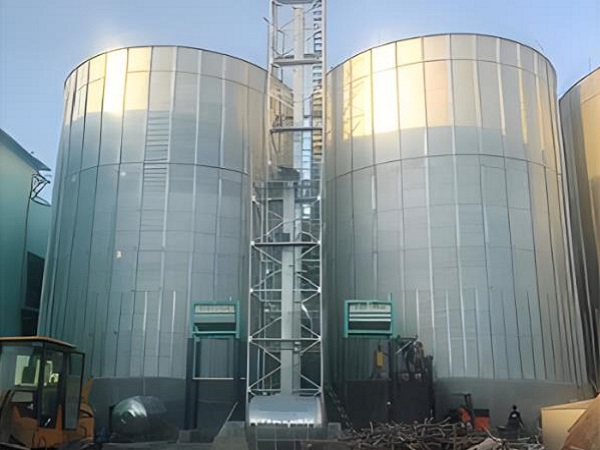
Reliable storage solutions: A multi-silo installation designed for long-term material protection and high-efficiency logistics.
Definition of Spiral Steel Silo
So, what exactly is a spiral silo? Imagine taking a continuous coil of steel and “winding” it upward. We use a specialized machine to bite the edges together into a five-fold thick seam. There are no bolts and no welding on the silo body—just one solid, interlocked steel structure that’s incredibly stable.
The most prominent structural feature is the helical undercut process. During construction, the steel plate is bitten into a spiral bead with a width of 30mm–40mm and a thickness five times that of the base material. This creates a highly integrated “bolt-free” structure that provides exceptional strength and stability.

The specialized five-layer biting technology ensures a 100% airtight structure without any bolts or welds.
Professional Manufacturing Process
Unlike traditional silos that are prefabricated and shipped, spiral steel silos are manufactured on-site. This significantly reduces transportation costs and ensures a seamless fit.
The SM30 and SM40 Technology
The manufacturing process is highly automated, utilizing specialized rolling units. At Coban Silo, we utilize two primary specifications to meet different project scales:
SM30 Unit: Suitable for silos with diameters ranging from 3 to 8 meters.
SM40 Unit: Designed for larger requirements, covering diameters from 6 to 18 meters.
Key Production Steps:
Material Preparation: Selecting high-quality coils (Q235B, galvanized, or aluminized zinc).
Helical Biting: The rolling machine bends and bites the plates into a continuous spiral rising structure.
Top & Bottom Integration: The silo top is assembled with radial trusses, while the foundation is customized (conical or flat) based on the material properties.

Our bolted silos use 10.9 grade high-strength bolts and specialized sealing strips, ensuring a modular structure that is easy to maintain and ship internationally.
What really makes the Spiral Silo stand out?
If you’ve dealt with traditional silos before, you know the common headaches: leaking seams, rust at the bolt holes, or construction delays that hold up your whole project. Here is how the spiral (Lipp) technology actually solves those problems on the ground.
It’s basically one solid piece: Unlike bolted silos that have thousands of “weak spots” (the bolt holes), the spiral silo is bitten together in one continuous strip. We call it “five-fold biting.” This means there is nowhere for dust or air to leak out. If you are storing cement or doing fumigation for grain, this airtight seal is the only way to go.
Natural “Skeleton” Strength: Those spiral ribs you see on the outside? They aren’t just for show. They act as a continuous reinforcement frame. Because the silo is “wound” like a spring, it handles the internal pressure of bulk materials much better than a flat-wall silo. In regions with high winds or seismic activity, this integrated structure is simply safer.
No more “logistics nightmares”: One of the best things is that we bring the machine (the SM40 unit) to you. We don’t ship huge, empty tanks. We ship compact steel coils. We roll the silo right where it’s going to stand. It’s fast—sometimes 3 to 5 times faster than welding—and it saves a fortune on shipping costs.
Galvanized protection that actually stays on: In welded silos, the heat often burns off the anti-rust coating at the seams. With our cold-folding process, the galvanized layer stays perfectly intact. You’re looking at a 30-year-plus lifespan even in humid or coastal environments. However, for maximum corrosion resistance in high-humidity areas, many engineers now prefer factory-controlled bolted plates where the coating is never stressed by on-site machinery. [Check the durability comparison here.]
Comparison: Spiral Silo vs. Bolted Assembly Silo
Choosing the right technology depends on your specific project needs. While Spiral silos are known for their seamless build, Bolted Assembly Silos (our flagship solution) offer much higher flexibility for international shipping and long-term maintenance.
| Feature | Bolted Assembly Silo (Recommended) | Spiral Steel Silo (Lipp) |
| Best For | Grain, Feed, and Heavy Industrial use | Fine Powders & Liquid storage |
| Flexibility | High. Can be disassembled, moved, or expanded. | None. Once built, it is permanent. |
| Shipping | Cost-Effective. Fits completely in standard containers. | Higher Cost. Specialized machines must be shipped. |
| Maintenance | Simple. Replace a single plate if damaged or rusted. | Complex. Hard to repair individual sections. |
| Lifespan | 30+ years with easy-to-replace components. | 30+ years (Permanent structure). |
| On-site Work | High-precision assembly, less heavy machinery. | Requires specialized rolling units on-site. |
Looking for technical specifications? Check out our detailed Spiral Steel Silo Product Page for capacity charts and engineering drawings.
Where can you actually use these silos?
The beauty of the spiral design is that it’s completely sealed, so it works for just about any bulk material that needs to stay dry and safe. Here is where we usually install them:
In the Grain Business: This is the most common use. Whether you’re storing corn, wheat, or soybeans, you need to keep moisture and pests out. Because these silos are airtight, they’re perfect for fumigation.
For Heavy Construction Materials: We do a lot of work with cement, fly ash, and slag powder. These materials are like dust—they find every tiny crack to leak out of. Our “bite-edge” seams make sure nothing leaks.
Chemical & Food Processing: If you’re handling plastic pellets, salt, sugar, or even chemical additives, you can’t afford contamination. The smooth inner walls of our silos mean no material gets stuck or goes bad.
Waste Management: More recently, we’ve been setting these up for sludge drying and solid waste storage. It’s a tough environment, but the anti-corrosive coating handles it well.

Versatility in action: From heavy industrial cement storage to airtight grain protection, our silos are customized for different material densities and properties.
FAQ: What Most Buyers Ask Us
Q: Why choose a spiral silo instead of the standard bolted ones?
A: The big difference is the seams. A bolted silo has thousands of holes where leaks or rust can start. Our spiral tech uses a machine to “lock” the steel together into one solid piece. It’s like a giant, reinforced spring. You get a much stronger structure—roughly 40% tougher—and it’s 100% airtight. If you’re storing fine powder that can’t get damp, this is the way to go.
Q: Is it true these silos last 30+ years?
A: Honestly, 30 years is a conservative estimate. Think about it—the biggest enemy of a silo is rust. In a bolted silo, rust starts at the bolt holes. In a welded one, the high heat destroys the zinc coating. Since we just “fold” the metal, the galvanized protection stays 100% intact. We’ve seen these things stand through decades of nasty weather and scorching sun without the structure even flinching. You just don’t have to mess with them as much as the old-style welded tanks.
Q: Can I use the same silo for grain and then later for cement?
A: You can. We’ve had clients use them for corn, wheat, and then switch to industrial materials like fly ash. The inside wall is smooth and doesn’t trap material, and the seal is tight enough that you can even do fumigation for pests without the gas leaking out.
Q: Does it actually cost less?
A: Usually, yes—especially on the labor and shipping side. We bring the rolling machine to your site in a few containers. Instead of paying a huge crew to spend weeks bolting plates together, our SM40 unit “rolls” the silo up in a few days. You save a significant amount of labor time and get your facility running much faster.
Q: Should I choose a Spiral Silo or a Bolted Assembly Silo?
A: A Spiral Silo is a permanent ‘sunk cost’ on your land. In contrast, a Bolted Silo is a movable asset that can be relocated or expanded as your business grows. For a detailed breakdown of why this matters for your ROI, read our [Spiral vs. Bolted Technical Analysis].
Let’s wrap this up
Look, if you want a silo that stays bone-dry and won’t start leaking at the seams after a few seasons, the spiral (Lipp) design is the smartest way to build. It saves you a massive headache on shipping because we roll it on-site, and it’s built to outlast almost anything else on the market.
It’s simple: you get your facility running faster and you don’t have to worry about maintenance every six months. Ready to start your project? Explore our full range of Spiral Steel Silos or contact our team for a customized storage solution.
Need some numbers for your project? Just send us a message. We’ve done this all over the world and can help you figure out exactly what size and setup you need.
WhatsApp: +8615801054617
Email: info@cobansilo.com
Web: www.cobansilo.com