What is a Silo?
While the term ‘silo’ covers everything from cement to coal, the internal engineering changes based on the material. Industrial units for minerals focus on heavy-duty wear resistance and structural pressure. However, modern storage has moved beyond passive containment. It is now an active system that integrates sensors and automated controls to track inventory levels, cutting down on manual inspections and guesswork. [Is it time to give up on concrete? Learn why steel silos are taking over the grain industry here.]
What is a Grain Silo?
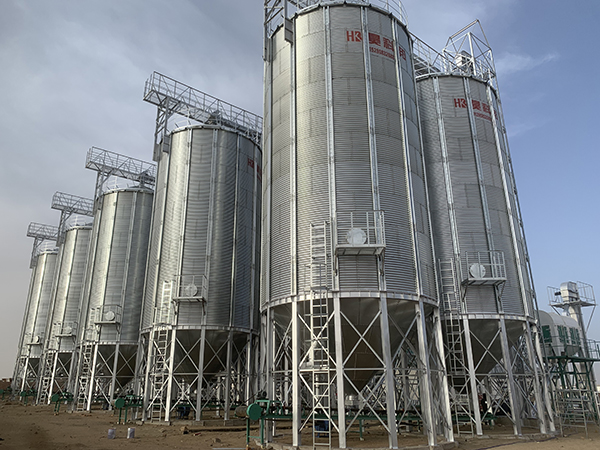
Unlike a standard industrial bin, a grain silo is a specialized, climate-controlled environment. Because grain is a living biological material, it requires a specific internal atmosphere to stay in peak condition. These structures use galvanized corrugated steel to reflect solar heat, paired with integrated aeration to prevent the “hot spots” that lead to spoilage and pest infestations.
2026 Industry Update: In modern grain logistics, a silo is no longer just a passive container. At COBAN, we define a high-performance silo by its ability to maintain grain quality for over 12 months using advanced aeration and sub-degree temperature monitoring.

Common Types of Silos & Grain Storage Bins
Flat-Bottom Silos
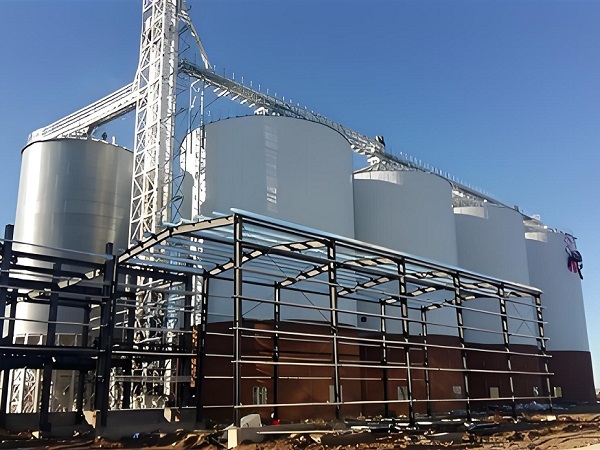
These are for the biggest jobs. When you need to store massive tonnages long-term, flat floors are the most cost-effective route. You’ll need a mechanical sweep auger to handle the unloading, but for large agricultural hubs, the capacity you get is worth it.
Hopper Bottom Silos
The steep, tapered base lets gravity do most of the heavy lifting. We see these most often in processing plants where you’re moving grain in and out constantly. They clear out completely, so you aren’t stuck with manual cleanup or leftover “carryover” between batches.
Galvanized Steel Silos
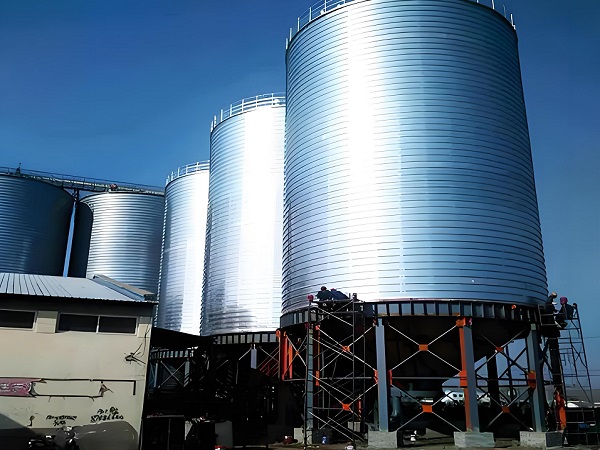
We build these with high-strength steel to stop corrosion before it starts. They’re the standard for ports and feed mills because they don’t give in to harsh weather. If durability is your main concern, this is the backbone of the site.
Feed Silos
These are airtight bins made specifically for livestock operations. The goal here is simple: block moisture and mold to keep the feed clean. We usually add automatic weighing systems so you know exactly what’s being dispensed without having to eyeball it.
Not sure if you actually need a dedicated Silo or if a standard Grain Bin fits your farm better? Check out our head-to-head comparison of Grain Bins vs. Silos here to see which setup aligns with your harvest speed and labor requirements.
How to Calculate Silo Volume (Quick Formula)
To estimate your storage capacity for a standard flat-bottom silo, use the following:
Formula: V=π×r2×h
V: Total internal volume in cubic meters (m³)
r: Radius of the silo base (meters)
h: Eave height (meters)
Practical Tip: For wheat, use a density of 0.75 – 0.80 tonnes/$m^3$. For corn, remember to account for a 1.2% packing factor if the silo height exceeds 20 meters.

Main Functions of a Grain Silo
Quality Preservation
Grain silos prevent rot. You have to move the air and control the heat, otherwise the crop spoils. This keeps the grain in good condition from the time you harvest it until you sell it.
Pest and Mold Protection
We seal the bins tight. The fumigation setup stops bugs from getting in. It’s simple: if the seal holds, the grain stays clean for months.
Beat Market Fluctuations
You don’t have to sell the moment you harvest. With enough storage, you can hold the grain until the price goes up. It’s about not getting stuck with low harvest-time prices.
Intelligent Management
Sensors check the heat and moisture 24/7. If the bin gets too hot, the fans turn on by themselves. It fixes the temperature before the grain starts to spoil.
What we actually build
Size it how you want: Forget standard catalogs. Whether it’s 50 tons or 50,000, we build the capacity to fit your site, not the other way around.
Air that moves: Grain rots when air sits still. Our ventilation is designed to flush out heat and dampness before mold even gets a chance to start.
Built for the long haul: This is high-strength bolted steel. It’s made to shrug off rust and brutal winds for 25+ years without needing constant repairs.
Grain Silo Workflow
Loading: Skip the manual pile-ups. We use integrated elevators and conveyors that distribute grain evenly to prevent “hot spots” from the start.
Management: It’s not just sitting there. Built-in fans and sensors track temp and humidity 24/7. If the heat climbs, the aeration kicks in automatically.
Unloading: Use gravity or mechanical sweeps. Whether it’s a hopper-bottom for quick discharge or a flat-bottom for bulk tonnage, the grain moves out without clogging.
Comparison: General Silo vs. Specialized Grain Silo
| Feature | General Industrial Silo | Specialized Grain Silo |
|---|---|---|
| Primary Materials | Cement, Coal, Fly Ash | Wheat, Corn, Rice, Soybeans |
| Structure Design | Welded Steel or Concrete | Galvanized Corrugated Steel |
| Key Focus | Pressure & Wear Control | Ventilation & Quality Preservation |
| Monitoring | Level Sensors | Temp/Humidity Sensors & Aeration |
| Pest Control | Not Required | Integrated Fumigation Systems |
Bottom line: You need a silo that keeps grain dry and stays standing.
At Coban, we don’t waste time on slogans. We just build heavy-duty steel systems that handle the weather and the workload for 25+ years. From custom ventilation to full automation, we’ll spec the equipment to fit your site’s footprint. If you’re ready to stop worrying about spoilage and start moving grain more efficiently, send us your requirements. We’ll skip the sales pitch and give you a quote that makes sense.
Frequently Asked Questions (FAQ)
Q: What is the average lifespan of a galvanized steel grain silo?
A: You’re looking at a 25-year lifespan here, easy. We use Z275/Z600 galvanization to keep the rust away, especially in high-humidity environments.
Q: How do I choose between a Hopper Bottom and a Flat-Bottom Silo?
A: Go with flat-bottom bins for heavy-duty, long-term storage (usually 1,000T+). If you’re in a processing plant with constant unloading, hopper bottoms make more sense as they gravity-drain without manual cleanup.
Q: How does a grain silo prevent spoilage?
A: It’s all about stopping heat. Sensors catch temperature spikes early, so the fans kick in before things get ugly. By keeping the air moving, you keep the mold out.