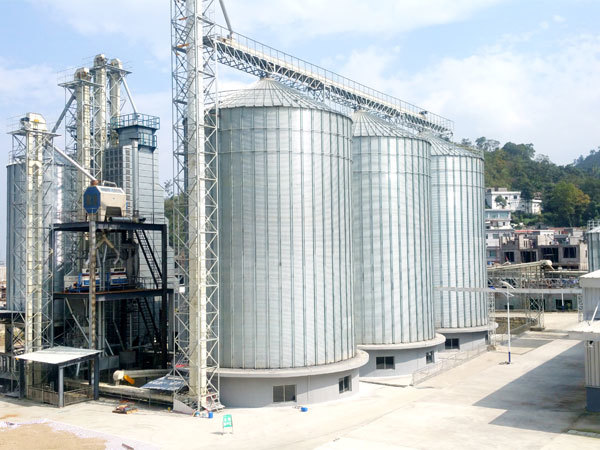
Definition of seed storage silo
Seed storage silo are vertical storage equipment dedicated to storing crop seeds, usually made of steel plates or galvanized plates. Its main purpose is to extend the storage time of seeds and maintain their germination rate and activity under the premise of controlling temperature and humidity and isolating external pollution. Compared with ordinary grain storage silos, seed storage silos have higher standards in structural sealing, ventilation system and insect and mildew prevention design.

Basic structure composition
A standard seed storage silo is mainly composed of the following parts:
Cylinder structure
The cylinder is the main structure, usually cylindrical, and the material must have corrosion resistance and strong sealing performance to prevent the invasion of air, water vapor and bacteria.
Top and bottom design
The top is equipped with a feed inlet and a safety ventilation device, and the bottom is equipped with a conical discharge port and a control valve to ensure smooth seed discharge without residue.
Ventilation system
Equipped with a forced ventilation device and a temperature and humidity control system, it helps to maintain the stability of the internal environment of the silo.
Monitoring system
High-end seed storage silos are equipped with temperature probes, humidity sensors and automatic early warning systems to monitor internal environmental data in real time.
Sealing protection device
Including closed doors, sealing rings, insect-proof nets, etc., to ensure that the seeds in the silo are not invaded by pests.

The core function of the seed storage silo
The function of the seed storage silos is not only physical storage, but its more important mission is to provide an ideal storage environment for the long-term quality preservation and survival of seeds. The main functions include:
Temperature and humidity control
Precisely control the temperature and humidity parameters of the silo, which can effectively inhibit seed mildew, pest breeding and abnormal germination.
Pest and rodent prevention
The sealed structure combined with the physical barrier device effectively prevents the invasion of pests and rodents.
Batch management
It is convenient to store by variety and harvest batch to meet the needs of scientific management.
Extended shelf life
Under ideal conditions, the seed shelf life can be effectively extended to 6 months or even more than 1 year.
Advantages of seed storage silo
Compared with traditional sacks, warehouse piles and other methods, the use of seed storage silos has multiple advantages:
High space utilization
Three-dimensional design greatly saves land area.
Easy to operate
Equipped with a mechanical feeding and discharging system to reduce manual intervention.
Strong storage safety
The storage system has excellent moisture and mildew resistance, which can effectively inhibit pest and rodent infestation while meeting strict fire safety standards.
High degree of automation
Some models support intelligent monitoring and remote control to improve management efficiency.
Reduce seed loss
Scientific storage conditions reduce loss rate and improve economic benefits.
Main application scenarios
Seed storage silos are widely used in the following scenarios:
Seed enterprise storage center
Used for batch storage of hybrids and selected seeds.
Large family farms
Used for classified storage of self-retained seeds and preparation for sowing next year.
Agricultural research institutions
Store experimental samples or breeding materials for easy tracking and reuse.
Agricultural machinery cooperatives or cooperative farms
Collective purchase and shared use to improve resource allocation efficiency.
Purchase and maintenance recommendations
The selection of seed storage silo needs to be systematically evaluated in combination with key indicators such as seed characteristics, storage scale, regional climate conditions, investment costs and intelligent needs to ensure the rationality and economy of the storage plan. In addition, daily maintenance is also crucial, including:
Regularly check the ventilation system and temperature and humidity equipment;
Clean and disinfect the inside of the silo before each entry;
Seasonal inspection of the sealing structure to prevent aging and damage;
Establish a regular rotation mechanism to avoid overdue storage of seeds.
Frequently Asked Questions (Q&A)
Q1: What is the best temperature to control when seed are stored in silo?
A: It is generally recommended to maintain it at 5 to 15 degrees Celsius. If the temperature is too high, the respiration of seeds will increase and their vitality will decline more quickly. Therefore, low temperatures are more conducive to maintaining their lifespan.
Q2: What range should the air humidity inside the silo be maintained within?
A: Generally, the relative humidity is controlled at around 45% to 55%. Too high humidity can easily cause mold and may also attract pests.
Q3: What is the appropriate moisture content for seeds when they are stored in the warehouse?
A: The suitable moisture content for most crop seeds is approximately 8% to 13%. There may be slight differences among different varieties, but the basic idea is “the drier, the safer”, but it should not be dried to the extent that it affects the activity of the seeds.
Q4: How to prevent pests in silos?
A: Usually, it starts from several aspects:
Keep the air circulating and avoid high temperature and moisture accumulation
Ensure the cleanliness of the environment and equipment before storage
Regularly check the activity of pests
When necessary, fumigation should be carried out in accordance with the regulations or physical control measures should be taken
These are all basic practices to prevent the spread of pests in storage Spaces.
Q5: How to determine whether a batch of seeds can still be stored?
It can be judged from the following factors:
Whether the moisture content meets the standard
Whether the temperature and humidity inside the silo are stable
Has the germination rate decreased
Check for any abnormalities such as mold spots or discoloration on the appearance
Whether there are live insects or remnants of pests
All these can reflect whether the storage condition of the seeds is good or not.
Q6: What automated systems are usually required for a seed storage silo?
Common ones include:
Automatic monitoring of temperature and humidity
Automatic risk control device
Grain condition detection probe (Multi-point temperature measurement)
Automatic conveying devices for inbound and outbound operations
Monitoring and alarm system
The function of these systems is to reduce manual inspections and promptly detect abnormal conditions.
Project Case
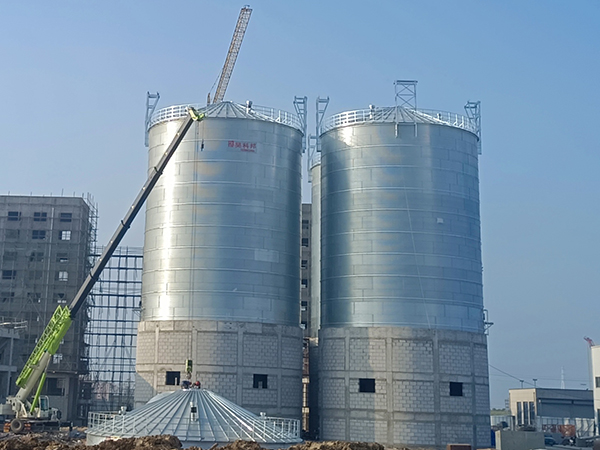
The four newly-built 1,000-ton seed silos of Wen County Ping ‘an Seed Industry were installed and constructed by Kebang. The project, from the initial design, material processing to on-site assembly, was all completed by the Kebang team. The silo adopts a welded steel plate structure with good sealing performance, which can effectively prevent seeds from getting damp and meet the long-term storage requirements of seeds.
During the construction process, Kebang reasonably arranged the procedures based on the on-site conditions, ensuring the construction progress and quality. Each silo is equipped with ventilation and temperature control devices to keep the seeds in good condition during storage. The silo also reserves expansion and renovation interfaces, facilitating the enterprise’s future upgrade of automated devices. After the delivery of this project, Ping An Seed Industry’s warehousing capacity has been enhanced, and its operation has become more stable. Kebang has also won the recognition of customers with its meticulous and reliable construction

Q7: What are the obvious differences between seed silo and grain silo?
| Item | Seed Storage Silo | Grain Silo |
|---|---|---|
| Storage Purpose | Maintain seed vigor and germination ability | Keep grain safe in storage and minimize losses |
| Environmental Requirements | Stricter conditions, usually low temperature and low humidity | Relatively easier to manage |
| Incoming Inspection | Focus on germination rate, moisture content and related seed-quality indicators | Mainly check impurities and moisture level |
| Daily Management | Requires more frequent monitoring | Generally lower management workload |
The storage standards for seed are much stricter than those for ordinary grains because they will be used for sowing later.
Conclusion
In modern agriculture, seed storage silo are not only a storage tool, but also an important infrastructure to ensure the smooth implementation of agricultural planting plans. Its scientific structural design and efficient environmental control capabilities provide a solid guarantee for seed quality and survival. In the future, with the development of smart agriculture, seed storage silos will continue to optimize in the direction of higher automation, stronger environmental protection and smarter monitoring.