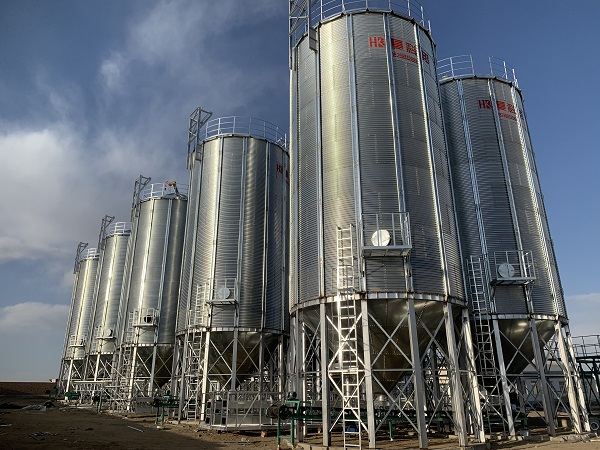
Advantages and Development Trends of Metal Silo
Metal silos are the most representative form of modern grain storage. Compared with traditional storage structures, metal silos offer significant advantages in sealing, durability, construction cycle, degree of automation, and maintenance costs.
In the international grain trade and processing industry chain, metal silos, due to their high strength, ease of maintenance, and scalability, have become the preferred grain storage equipment for grain and oil processing plants, port transfer stations, feed mills, and farms.
Coban’s metal silos utilize high-quality galvanized steel, combined with advanced processing techniques and intelligent supporting systems. They enable digital management of the entire grain storage process, from feeding, ventilation, drying, temperature measurement, to discharging. This highly efficient grain storage method not only significantly improves grain storage safety, but also effectively reduces energy consumption and extends the storage life of grain. Knowing the basic concept is just the start. To see how these advantages are physically built into the structure, explore the [Key Components of Metal Silo]
Types and Applications of Metal Silo
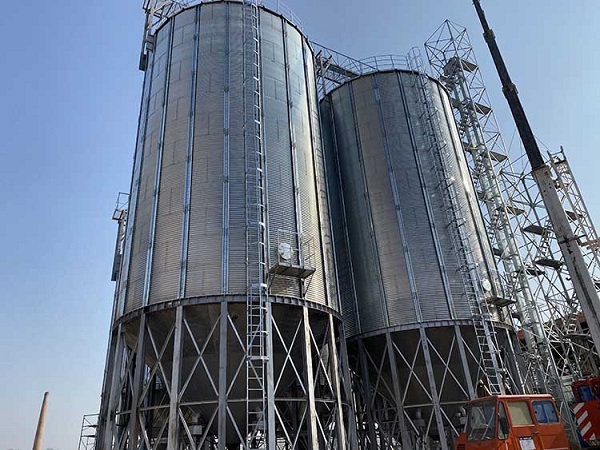
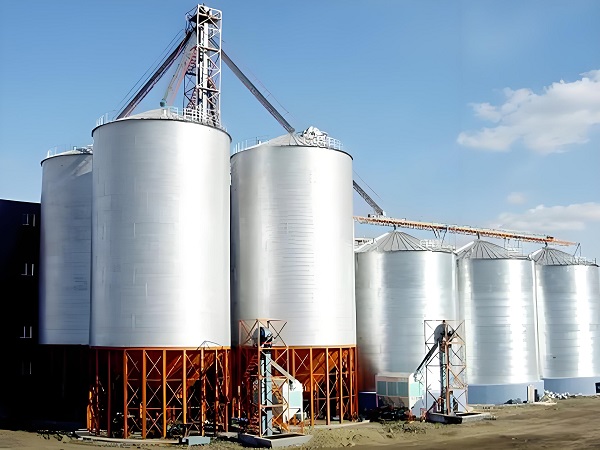
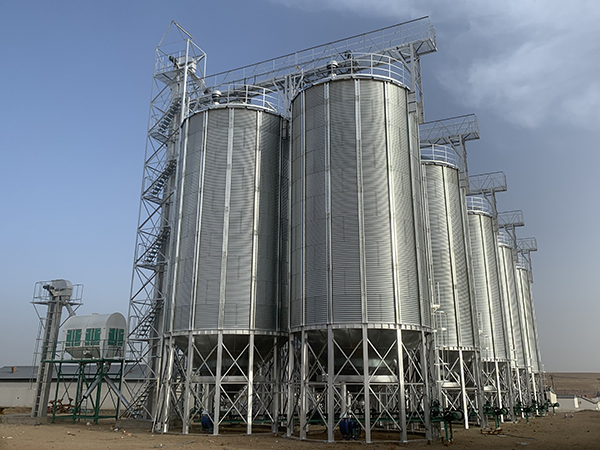
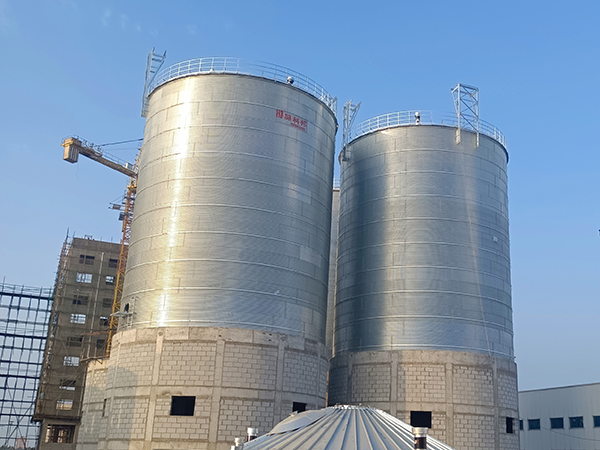
According to different structural forms and construction methods, metal grain silos are mainly divided into three major types: galvanized corrugated steel silos, spiral steel silos (Lipu silos) and welded steel silos.
coban has extensive technical experience in the design and manufacture of these three types of silos and can provide customized solutions tailored to individual customer needs and application environments.
Galvanized Corrugated Steel Silo (Bolt-Assembled)
Galvanized corrugated steel silo, also called bolt-assembled steel silo, is a metal granary structure widely used internationally. It adopts a modular design, which is easy to install, flexible to transport, has a short construction period, and is not restricted by seasons or climatic conditions. Each component of the warehouse body is configured in a standardized manner to facilitate later replacement and maintenance.
This type of silo can be flexibly adjusted in height and diameter to suit needs, making it ideal for large grain storage facilities, oil processing plants, and feed storage projects.
Spiral Steel Silo (Lip Silo)
The spiral steel silo adopts advanced double curling forming technology, with strong integrity and good sealing performance. It is suitable for storing all kinds of granular and powdery grains, such as corn, wheat, soybeans, rice, sorghum, sunflower seeds, etc.
Lip Silos offer a compact and durable structure, enabling automated loading and unloading and ventilation control, making them ideal for modern, mechanized grain storage. kebang’s spiral steel silos offer excellent sealing and corrosion resistance, allowing for customized storage capacity and configuration to suit different grain types.
Welded Steel Silo
Welded steel silos are commonly used in coastal ports and large grain and oil processing plants due to their high strength, excellent sealing, and large storage capacity. Their walls are welded from thick steel plates, offering excellent corrosion resistance and long-term stable operation in high-humidity and high-salt environments.
Welded silos are suitable not only for storing solid grains, but also for storing powdered materials or non-corrosive liquids. Although their construction period is relatively long and their costs are high, their long-term operational efficiency and safety are highly competitive in large-scale projects.


How much does it cost to build a metal silo
There is no fixed standard for the cost of metal (galvanized) silos. It mainly depends on the capacity (in tons or cubic meters), the thickness of the steel plates used and the galvanizing grade. Foundation and concrete work, transportation and installation, ventilation and drying systems, unloading devices, and various supporting equipment will widen the price difference. In addition, labor costs, construction requirements and approval costs in different regions will also cause considerable fluctuations in the total price. Generally based on industry experience, there will be a rough price range when it only includes conventional equipment and does not include special customized parts.
Small agricultural silos (≈5-50 tons) : ¥6,000 – ¥20,000 (or approximately US$1,000-3,000). The source is the small-sized quotations from multiple manufacturers.
Medium (≈100 tons) : ¥20,000 – ¥100,000 (approximately US$3,000-15,000), depending on whether the foundation and installation are included.
Large (≈500-1,000 tons) : ¥100,000 – ¥400,000 (approximately US$15,000-50,000 or more). The quotation for the entire set of solutions from large factories can fall within this range.
The commonly used simplified pricing method in the industry: Steel silos are approximately US$25-45 per ton of capacity (only for the steel main body). Concrete silos are more expensive, approximately US$50-100 per ton (for the same capacity). This “unit price per ton” can quickly calculate the cost of the main materials, but does not include the foundation, equipment, transportation and installation, etc.
Additional costs that need to be considered
Foundation and concrete (steel silos need to bear/anchor) : Usually ranging from several thousand to hundreds of thousands of RMB, depending on the soil quality and scale.
Hoisting and installation labor: Depending on the height, local labor and equipment, it can account for a significant proportion of the total price.
Ventilation/drying/conveying/unloading systems (fans, conveyors, dryers, electronic scales, etc.) : If a complete set of equipment is to be operated, the cost may range from several thousand to several hundred thousand RMB.
Transportation costs and import tariffs: The cross-regional transportation costs for large silo plates or complete sets of equipment are high.
Design/Wind and Snow resistance/Seismic reinforcement and permission: Conducting structural design in accordance with local standards will increase costs, especially in areas with high snow loads or high earthquakes.
Parameters of metal silo
| Most Popular Hopper Bottom Steel Silo Technical Specifications | ||||||||
| Capacity | 50Ton | 100Ton | 150Ton | 200Ton | 300Ton | 500Ton | 1000Ton | 1500Ton |
| Model | TCZK 03605 | TCZK 04507 | TCZK 05507 | TCZK 06406 | TCZK 07307 | TCZK 07313 | TCZK 11010 | TCZK 12811 |
| Diameter(m) | 3.667 | 4.584 | 5.500 | 6.417 | 7.334 | 7.334 | 11.000 | 12.834 |
| Total Height(m) | 9.56 | 12.53 | 13.25 | 12.85 | 14.70 | 21.42 | 20.95 | 23.51 |
| Volume(m³) Density:0.75ton/m³ | 69 | 150 | 222 | 273 | 415 | 699 | 1346 | 2039 |
| Most Popular Flat Bottom Steel Silo Technical Specifications | ||||||||
| Capacity | 1000Ton | 1500Ton | 2000Ton | 2500Ton | 3000Ton | 5000Ton | 8000Ton | 10000Ton |
| Model | TCK 10014 | TCK 11915 | TCK 13715 | TCK 15514 | TCK 15518 | TCK 18321 | TCK 24718 | TCK 25621 |
| Diameter(m) | 10.084 | 11.918 | 13.750 | 15.584 | 15.584 | 18.334 | 24.751 | 25.668 |
| Total Height(m) | 18.69 | 20.34 | 20.87 | 20.30 | 24.78 | 28.60 | 26.99 | 30.60 |
| Volume(m³) Density: 0.75ton/m³ | 1335 | 2009 | 2701 | 2467 | 4145 | 6693 | 10879 | 13484 |
Structural Components and Technical Features of Steel Silo
The structural design of Coban’s metal silos is scientific and well-organized, consisting primarily of six components:
Roof Structure: Includes safety guardrails, skylights, and an inspection platform to facilitate equipment maintenance and safe operations;
Roof System: Equipped with a feed inlet, ventilation, and dust removal system, it ensures safe and efficient loading and unloading;
Wall System: Utilizes high-strength galvanized steel sheets and features doors, ladders, and an inspection platform, ensuring both aesthetics and practicality;
Floor System: Supports multiple discharge methods (gravity, mechanical, or pneumatic) to meet diverse usage scenarios;
Support Structure: Ensures silo stability and uniform load distribution;
Foundation Structure: Utilizes a reinforced concrete foundation to ensure overall durability and earthquake resistance.
In addition, Coban’s intelligent grain silo system can be equipped with the following optional automated equipment: loading and unloading systems, cleaning systems, dryers, ventilation and temperature control systems, material level monitoring systems, fumigation devices, and electrical control systems, enabling comprehensive digital management of grain conditions.
Storage Life and Maintenance Key Points for Metal Silo
The storage life of grain in metal silos depends on the silo’s performance, grain variety, and storage and management conditions. Generally speaking, with the assistance of Coban’s intelligent monitoring system, grain can be safely stored for over a year. For bulk grain storage at ports for short-term transit, the storage period is approximately 2-3 months, while in grain and oil processing plants, the storage period is typically 1-2 months.
Key factors affecting storage life include temperature and humidity, ventilation effectiveness, pest control, and grain condition monitoring.
Coban’s silo system is equipped with high-precision temperature and humidity sensors and an automatic ventilation system that intelligently adjusts ventilation and cooling based on real-time data, effectively delaying grain aging and preventing mold and pests.
Energy Saving, Environmental Protection, and Economic Benefits
Compared with traditional grain storage methods, metal silo have obvious advantages in energy saving and environmental protection. The warehouse body has good sealing performance, which can effectively reduce dust leakage; when used with a dust removal device, it can reduce the impact on the surrounding environment. Its compact structure and small footprint not only save construction space, but also facilitate later expansion and relocation.
From an economic perspective, the construction and maintenance costs of Kebang metal grain silos can be reduced by approximately 30%-40% compared to traditional warehouses. The introduction of automated control systems further reduces labor input and improves operational efficiency. This cost-effective grain storage system has become a key tool for international agricultural companies and grain and oil processing plants to enhance their competitiveness.


Project Case
Recently, our company successfully completed the installation project of two 120-ton metal silos in Dubai. This project was carried out by a professional team from design, transportation to on-site construction. The silos are made of high-strength galvanized steel plates and reinforced structures to ensure long-term stable operation in the high-temperature and strong wind environment of the desert. The equipment has been put into use at present and has received good feedback from customers. This cooperation further demonstrates our company’s manufacturing and installation capabilities in the international market.
Kebang – A Trusted Metal Silo Partner
As the world’s leading steel silo manufacturing and solution provider, Kebang takes technological innovation as its core and quality and service as its lifeline.
The company has a complete design, manufacturing, installation and after-sales system, and can provide full-process services from scheme design to construction implementation according to the customer’s regional environment, grain storage varieties and project scale. Kebang products have been exported to Southeast Asia, Africa, South America, the Middle East and other countries and regions, and are widely trusted by customers.
We have always believed that food security is the foundation of the country. Choosing kebang means choosing professionalism and trust. kebang will continue to use technological innovation as the driving force to promote global grain storage to a new stage of intelligence and efficiency.
Common Questions and Answers about Metal Silo
The service life of metal silo
Under the conditions of conforming to design specifications, taking reliable anti-corrosion measures and maintaining good maintenance, the service life of metal silos can usually reach 20 to 30 years. High-grade galvanized coating, reasonable structural design and regular inspection are important factors to ensure service life.
How do metal silo ensure the quality and safety of grain
The metal silo blocks external water vapor through a closed structure, and uses systems such as ventilation, temperature measurement, and circulation fumigation to regulate temperature and humidity and monitor grain conditions in real time, thereby reducing the risk of mildew, insect damage, and condensation and ensuring the safety of long-term grain storage.
The installation difficulty of metal silo
Modern prefabricated metal silos are mainly connected by bolts, with a high degree of standardization, short installation period and moderate overall construction difficulty. However, a professional team is required to complete the foundation construction, panel wall assembly and equipment debugging to ensure the stability and safety of the structure.
Common faults of metal silo
Typical problems include wall corrosion, aging of sealing strips, increased ventilation resistance, sensor failure and stuck unloading system. Operational risks can be significantly reduced through regular maintenance, calibration of instruments and timely repair of corrosion points. Looking for a specialized solution for crops like corn or wheat? Check out our dedicated section on the [Metal Grain Silo] for professional agricultural storage.
Website: https://www.cobansilo.com/metal-silo.html
Mobile: +8615801054617
Email: william@cobansilo.com