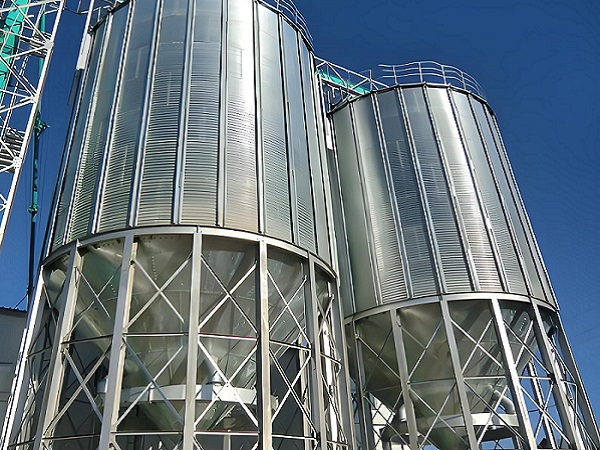
Key Features of Hopper Bottom Silo
Conical Bottom Design
The most distinctive feature of a hopper bottom silo is its conical bottom. This design allows stored material to flow naturally to the bottom outlet, where it is discharged by gravity. Compared to flat-bottom silos, cone-bottom silos significantly reduce material carryover, reducing the workload for manual cleaning and maintenance, while maintaining material quality and sanitation.
Emission Control Systems
The silo at the bottom of the hopper is generally equipped with several different feeding devices, such as sliding doors, screw conveyors or belt conveyor systems. These devices can control the material flow more accurately, avoid falling too quickly at one time, not only reduce waste, but also protect the equipment from damage. Moreover, these devices are convenient for automated operations and improve work efficiency.
Materials and Structure
The silos at the bottom of the hopper are generally made of galvanized steel or stainless steel, and fiberglass is also used in some special occasions. This is both anti-corrosion and durable. The structure of the silo is usually a top cylinder and a lower conical base, which is welded or bolted to make the entire silo stable.
Support and Foundation
To facilitate material discharge, the silo at the bottom of the hopper is usually raised with a leg or a steel frame. This not only facilitates the approach of vehicles or feeding equipment, but also allows materials to fall into the container or conveying system smoothly. The foundation of the silo is very important and is generally poured with concrete to ensure stability and safety during long-term use.

Advantages of Hopper Bottom Silo
Efficient Discharge
Thanks to their conical bottom design and gravity-assisted operation, hopper bottom silos achieve rapid and uniform material discharge. Compared to traditional flat-bottom silos, these silos are easier to operate, require less mechanical intervention, and significantly reduce labor costs.
Reduced Carryover
The silo adopts a tapered bottom design, allowing the material to flow smoothly to the outlet along the direction of gravity, preventing the accumulation of flat bottoms or corners to cause residue, improving material utilization, and maintaining hygienic standards of the storage environment. It is suitable for the food, chemical and pharmaceutical industries.
Versatile Storage
This cone-bottom silo is suitable for storing a variety of bulk materials, including grain, feed pellets, powders and chemical raw materials. Its flexible configuration method allows enterprises to customize designs according to process or capacity requirements.
Easy Cleaning and Maintenance
The silo is made very smooth and the bottom is tapered, so it is very convenient to clean. It is easy to maintain and can avoid contamination between different materials. It is very suitable for storing food and medicines with high hygiene requirements.

Applications
Agriculture
Hopper-bottom silo is mainly used in agriculture to store bulk materials such as grains, corn, soybeans, seeds and feed. Its efficient emissions and residue reduction characteristics make food management more convenient.
Food Processing
In the production of flour, sugar, milk powder and other granules or powdered foods, the silo at the bottom of the hopper can achieve smooth storage and transportation of raw materials while maintaining high levels of hygiene standards.
Chemical and Pharmaceutical
Suitable for storing powders, granular chemicals and drug raw materials, ensuring that the materials are not contaminated during storage and processing, and at the same time facilitating automated production operations.
Construction Industry
Used for the storage and supply of bulk building materials such as cement, sand and gravel, and aggregate. The cone bottom design ensures uniform discharge of materials and facilitates the extraction of materials on demand on construction sites.
Example Dimensions
The size of hopper bottom silos can vary greatly depending on your needs:
Small silo: It has a diameter of about 3-5 meters (10-16 feet) and a height of about 6-10 meters (20-33 feet) and is suitable for small farms or experimental purposes.
Large silo: This silo can be 6–12 meters in diameter and about 15–30 meters in height. It is often used in large grain warehouses or factories.
Design and Operation Considerations
Material Flow Matching
The design of silo needs to comprehensively consider the material flow characteristics to prevent blockage, bridges and uneven emissions. The particle size, moisture content and density of the material have a direct impact on fluidity.
Capacity Selection
According to storage needs, site space and transportation conditions, the silo capacity is reasonably selected to ensure that it can meet production needs without causing waste of land.
Installation and Foundation
Silo installation requires solid foundation and professional construction. Especially large silos, involving steel structure support, anchoring and safety specifications, are usually recommended for installation by a professional team.
Maintenance and Cleaning
The discharge ports, control devices and silo surfaces should be checked regularly to keep them clean to extend the use of the equipment and avoid contamination of materials.
Conclusion
The bottom silo at the hopper is popular for its conical base, high discharge efficiency and multi-functional storage. It is a commonly used storage facility in the agriculture, food, chemical and construction industries. Understanding its characteristics and usage precautions will help enterprises better control costs and improve efficiency. Whether it is a small farm or a large factory, the rational use of the bottom silo at the hopper can improve material management and improve production efficiency.