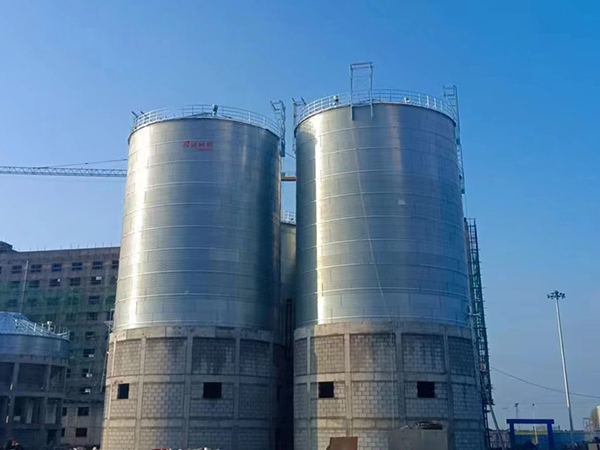
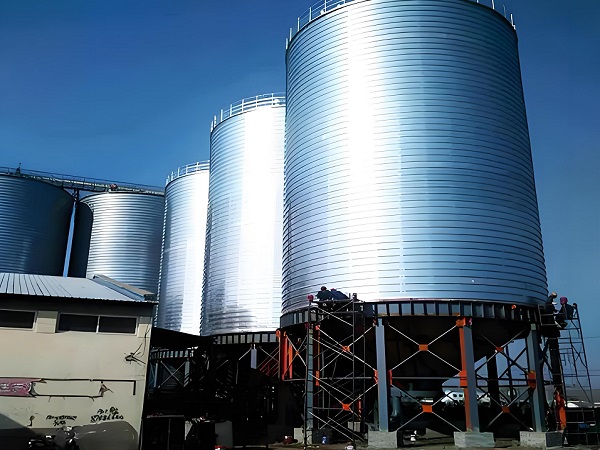
Definition of feed silo
Feed silo, also known as feed storage barrels, are large vertical containers for storing granular, powdered feed raw materials or finished products. Its main function is to provide a stable and safe feed storage environment for farms or feed processing plants to prevent feed from moisture, deterioration, pollution or waste.
In modern breeding systems, feed silos are widely used in pig farms, poultry houses, dairy farms, aquatic bases and other scenes, and have become an important tool for improving automation and reducing labor costs.

Structural composition of feed silo
Standard feed silos usually consist of the following parts:
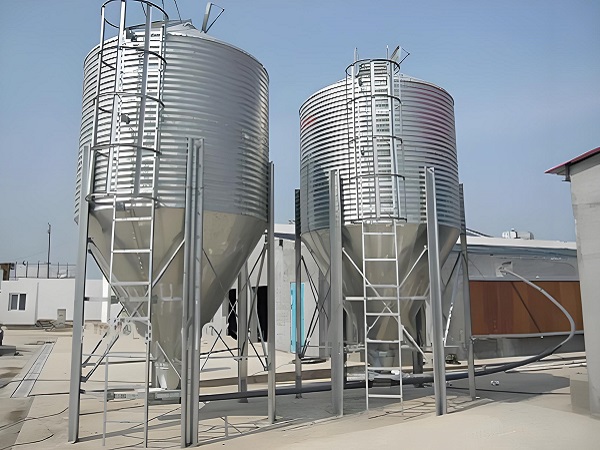
Barrel
Mainly bears the weight of feed, mostly made of galvanized steel plates or stainless steel, with anti-corrosion and anti-rust properties.
Top cover
The silo top cover adopts EPDM rubber sealing ring, with a waterproof grade of IPX4, which can effectively block the intrusion of precipitation and solid particles with a diameter of ≥2mm.
Feeding port
Connect to conveying equipment, such as screw conveyor or pneumatic conveying system, to achieve quantitative discharging.
Observation window and level meter
Convenient for users to monitor the feed balance in real time.
Ventilation system
Ensure air circulation inside the silos to prevent feed from mold.
Common classification of feed silo
According to different needs and usage scenarios, feed silos can be divided into the following categories:
Classification by material
Galvanized steel silo:
This product has excellent durability and excellent corrosion resistance. It can operate stably for a long time in complex environments and effectively extend its service life.
Fiberglass silo:
Lightweight and high-strength, suitable for areas with higher requirements for environmental protection.
Stainless steel silo:
The price is relatively high and is mostly used in high-end feed projects.
Classification by capacity
Three specifications: small (5-10 tons), medium (10-30 tons) and large (more than 30 tons), which can be freely selected according to the scale of breeding.
Classification by discharging method
Gravity feeding:
simple structure, suitable for granular feed.
Screw conveyor discharging:
suitable for powdered or mixed feed, with more precise flow control.
Main functions and effects of feed silo
Improve storage efficiency
Using feed silos, 24-hour uninterrupted feeding can be achieved, avoiding manual handling and improving work efficiency.
Ensure feed quality
Silos with double-layer sealing structure have air tightness reaching IP65 standard, which can block more than 90% of ambient humidity (RH≤65%) and storage pest invasion, so that the mildew rate of feed is controlled below 0.3% during the 6-month storage period.
Reduce operating costs
High degree of automation can reduce manual operation and management expenses. Especially in large-scale farms, centralized control of multiple feed silos systems can significantly reduce logistics costs.
Convenient for refined management
Through the level sensor and intelligent control system, the feed usage can be accurately grasped and replenished in time to avoid feed shortage or waste.
Actual application scenarios of feed silo
In a pig farm with an annual output of 10,000 pigs, 3-5 feed silos with a capacity of 10-15 tons are usually required. These silos are centrally distributed by feed trucks or directly connected to the automatic feeding system, realizing the closed-loop control of the entire process from feed factory transportation, storage to feeding.
In feed processing enterprises, silos are not only used to store raw materials, but also to store intermediate products and finished products in stages, further improving logistics scheduling efficiency.
Installation and maintenance recommendations
To ensure the stable operation of the feed silo, it is recommended that:
The silo should be built on a solid concrete foundation to avoid foundation settlement;
Regularly check key components such as the level meter and discharge port to prevent jamming or failure;
Install lightning protection devices, especially for high-level silos, to ensure equipment safety;
Perform internal cleaning once a quarter to keep the feed clean and free of residue.
Conclusion: Feed silo are the “granaries” of modern farming
On the whole, feed silos are not only containers for feed storage, but also key facilities for realizing automation and standardization of the farming industry. Whether in improving feed utilization, reducing operating costs, or ensuring feed safety, silos play an irreplaceable role. With the accelerated development trend of scale and intelligence in the farming industry, investing in high-quality feed silos will become an important step for farms to improve their overall benefits.