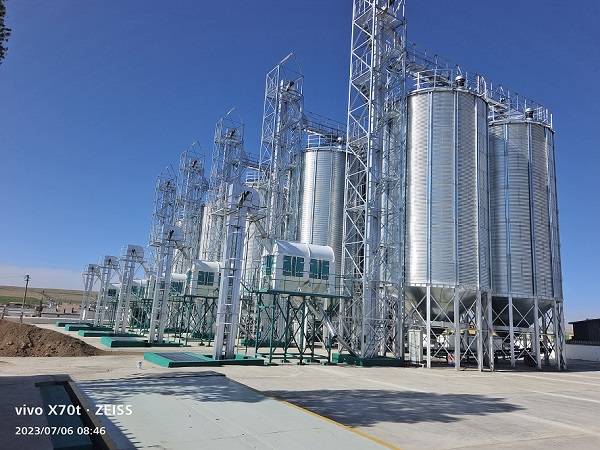
When discussing grain storage silos, especially in North America, you will often see storage capacities described in bushels rather than tons or cubic meters. For example, a grain silo may be listed as having a capacity of 50,000 bushels, 100,000 bushels, or even 1 million bushels.
But what exactly does bushel mean, and why is it commonly used for grain storage?
What Is a Bushel?
A bushel (bu) is a traditional unit of measurement used mainly in the United States and Canada to measure the volume and weight of agricultural products such as corn, wheat, soybeans, barley, and other grains.
Originally, a bushel was a measurement of volume. Today, in the grain industry, it is mainly used as a standard weight measurement because different grains have different densities.
For grain storage silos, bushel capacity refers to how much grain a silo can store based on standard grain weight.
How Many Tons Is One Bushel of Grain?
The conversion between bushels and tons depends on the type of grain being stored.
Common grain conversion examples:
| Grain Type | 1 Bushel Equals Approximately |
|---|---|
| Wheat | 27.22 kg (60 lb) |
| Corn (Maize) | 25.40 kg (56 lb) |
| Soybeans | 27.22 kg (60 lb) |
| Barley | 21.77 kg (48 lb) |
| Oats | 14.52 kg (32 lb) |
For example:
- A 100,000 bushel corn silo can store about 2,540 tons of corn.
- A 100,000 bushel wheat silo can store about 2,722 tons of wheat.
Therefore, when selecting a grain storage silo, it is important to know the grain type before converting bushels into tons.

Why Are Grain Silo Capacities Measured in Bushels?
The use of bushels in grain storage comes from agricultural practices in North America. Farmers, grain elevators, and storage facilities have used bushels for many years because it provides a convenient way to estimate grain inventory.
Several reasons explain why bushels remain popular:
1. Easy Grain Trading Calculation
Grain markets in countries such as the United States and Canada commonly use bushels for buying and selling.
For example:
- Corn price: USD/bushel
- Wheat price: USD/bushel
- Soybean price: USD/bushel
Because grain storage capacity and grain trading use the same unit, farmers can easily calculate:
- How much grain is stored
- Expected sales volume
- Storage requirements
2. Convenient for Large Storage Facilities
Large grain storage projects often involve millions of bushels of grain.
Typical storage capacities include:
| Storage Facility | Capacity Range |
|---|---|
| Farm grain bin | 5,000–100,000 bushels |
| Commercial grain silo | 100,000–1,000,000 bushels |
| Large grain terminal | Several million bushels |
Using bushels makes it easier for grain companies and farmers to compare storage capacity.
3. Standardized Grain Storage Design
When designing steel grain silos, engineers need to calculate:
- Grain weight
- Silo diameter
- Silo height
- Roof load
- Wall pressure
- Foundation requirements
The bushel capacity helps engineers design the correct silo size for different grains.
For example:
A 50,000-bushel corn silo and a 50,000-bushel wheat silo may have similar storage volumes, but the actual grain weight and structural requirements can be different.
Bushel vs Tons: Which Unit Is Better for Grain Silos?
Both bushels and tons are widely used, but they serve different markets.
| Measurement Unit | Common Usage | Advantage |
|---|---|---|
| Bushel | USA, Canada grain industry | Convenient for grain trading |
| Metric Ton | Africa, Asia, South America, Middle East | Easy international comparison |
| Cubic Meter | Engineering calculations | Useful for silo volume design |
For international grain storage projects, many manufacturers provide silo capacity in both:
- Bushels
- Metric tons
- Cubic meters
This helps customers select the right grain storage solution regardless of location.

How much is 1 Bushel
How to Convert Grain Silo Capacity from Bushels to Tons?
The basic formula is:
Tons = Bushels × Standard weight per bushel ÷ 1,000
Example:
A silo with a capacity of 200,000 bushels of corn:
200,000 × 25.4 kg = 5,080,000 kg
5,080,000 ÷ 1,000 = 5,080 metric tons
So a 200,000-bushel corn silo stores approximately 5,080 tons of corn.
Common Grain Silo Sizes in Bushels
In North America, common steel grain silo capacities include:
| Silo Capacity | Approximate Storage Volume |
|---|---|
| 10,000 bushels | Small farm storage |
| 50,000 bushels | Medium farm grain bin |
| 100,000 bushels | Commercial grain storage |
| 250,000 bushels | Large grain facility |
| 500,000+ bushels | Industrial grain storage |
For large grain storage projects, multiple silos are usually combined to create a complete grain storage system.
Factors Affecting Actual Grain Storage Capacity
The actual amount of grain stored in a silo may vary because of several factors:
1. Grain Density
Different grains have different weights.
For example:
- Corn is lighter than wheat per bushel.
- Barley and oats have lower bushel weights.
2. Moisture Content
Higher moisture grain weighs more and may require different storage calculations.
3. Filling Level
Manufacturers usually calculate silo capacity based on a standard filling height. Actual storage may change depending on:
- Safety requirements
- Grain flow characteristics
- Aeration system design
4. Silo Design
The diameter, height, roof angle, and hopper structure all affect usable storage capacity.
Bushel Capacity in Modern Grain Storage Silos
Today, bushel measurement is still widely used for:
- Farm grain bins
- Commercial grain elevators
- Corn storage silos
- Wheat storage facilities
- Soybean storage systems
However, for international grain storage projects, metric tons are becoming more common because they provide a universal measurement standard.
A professional grain silo manufacturer can convert between bushels, tons, and cubic meters to design the most suitable storage solution according to:
- Grain type
- Storage capacity
- Climate conditions
- Loading and unloading requirements
- Future expansion plans
Conclusion
In grain storage silos, bushel is a standard unit used to describe grain storage capacity, especially in the United States and Canada. Although it originally measured volume, today it represents a standard grain weight measurement.
Understanding bushel capacity helps farmers, grain traders, and storage project owners choose the correct silo size and compare different grain storage solutions.
For international projects, converting bushels into metric tons is essential to ensure accurate silo design and efficient grain storage management.