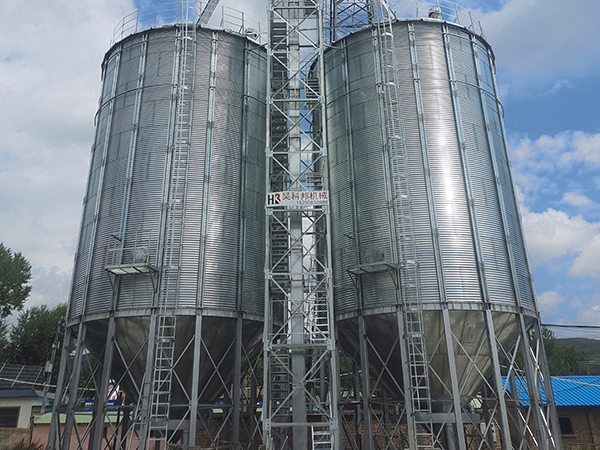
Two 500-ton grain silo and 35-ton/batch grain dryer in Rwanda
This project showcases a complete grain silo storage system designed and installed by COBAN engineering team. It demonstrates our capability in delivering safe, efficient, and durable grain storage solutions for global agricultural projects.

Engineering Project
Project Data
Key engineering parameters & system configuration
Country
Rwanda
Material
corn silo
Capacity
500-Ton
Installation
Engineers provide on-site guidance for installation
Engineering Highlights
- Turnkey grain storage solution
- Integrated feed processing system
- High-efficiency automated operation
- Global installation & commissioning support
Project Overview
With the acceleration of agricultural modernization in central Africa, the improvement of post-harvest grain processing capacity has become a focus of attention for governments and enterprises around the world. As one of the fastest-growing agricultural countries in the region, Rwanda has long been confronted with problems such as insufficient storage capacity, outdated drying equipment and high post-harvest loss rates in the purchase and storage of corn, beans and rice. To enhance food security and stabilize the agricultural product supply chain, a certain agricultural cooperative in Rwanda launched the “High-Efficiency Grain Storage and Drying Integrated Construction Project” in 2025, and chose to build two 500-ton steel silo and 35-ton/batch circulating grain dryer. This project is led by our side as the core equipment supplier and technical integrator, who are fully responsible for equipment selection, foundation design, installation guidance and system commissioning.
This article will comprehensively present this representative grain storage and drying project case in East Africa from aspects such as project background, design plan, construction process, equipment parameters and commissioning effect.

Project Background: It is extremely urgent to solve the problem of high water content corn storage and purchase
In the high-altitude areas of Rwanda, the corn harvest period is mostly concentrated around the rainy season. The average moisture content of the grain stored is generally between 18% and 22%. If not dried in time, the risk of mold is extremely high, and the annual average loss rate can even reach over 12%. In the process of expanding the global market supply capacity, local cooperatives urgently need:
Stable and reliable large-capacity grain storage facilities
Mechanical drying equipment that can ensure the quality of grains
Energy-saving systems suitable for local climate and power conditions
A sustainable and scalable intelligent management model
After a comprehensive assessment of equipment supply plans from different countries, the cooperative ultimately chose our silo and drying system. The core reasons lie in its high structural strength, low system energy consumption, and easy maintenance, which are particularly suitable for the long-term operational needs in East Africa.

Overall Project Design Plan
To meet the current grain purchase volume and future expansion plans of the cooperative, we have tailored the following system composition for it:
Grain storage system: 2 × 500-ton steel plate prefabricated grain silo
Diameter: 8.2 meters
Silo height: 22.5 meters
Effective reserve: 500 tons per warehouse (calculated based on a corn bulk density of 0.75 tons per cubic meter)
It adopts galvanized steel plate of Z600 grade, and its corrosion resistance can last for more than 20 years
It is equipped with circulation fans, gravity discharge cone bottoms, temperature monitoring cables and ventilation ducts
Meet the working conditions with relatively high annual average humidity in the local area
Drying system: 35-ton/batch circulating corn dryer
Processing capacity per batch: 35 tons
Average drying speed: It takes approximately 4 to 6 hours to reduce the moisture content from 20% to 14.5%
It uses a dual-fuel system of LPG or diesel to adapt to local supply conditions
The automatic humidity control system (AMCS) can monitor and adjust the exhaust air temperature and drying time in real time
The fully enclosed hot air path design enhances thermal efficiency and reduces dust overflow
Auxiliary system
Two sets of 15-meter hoists
Three sets of 20-meter belt conveyors
Electrical control cabinet and remote monitoring program
The on-site steel structure and foundation concrete design were completed under the guidance of our engineers
The complete system is laid out in accordance with the process of “storage – drying – cleaning – transportation” to minimize energy consumption and labor costs as much as possible.

Construction and Installation Process
Foundation construction stage
We will provide the basic drawings and electrical layout drawings simultaneously during the equipment production cycle. The local construction team completed the circular foundation of the silo, the foundation platform of the dryer and the equipment support structure within 45 days. At this stage, we arranged for two engineers to provide remote and on-site guidance to ensure that the flatness and load-bearing capacity of the concrete meet international standards.
Equipment arrival and installation stage
All the equipment was transported to Kigali in container form and then went through customs clearance and transportation for 7 days before reaching the construction site. The installation team completed it using local mechanical equipment:
Silo steel plate assembly and top truss installation
Fan system, unloading system and temperature probe layout
Installation of the main unit of the dryer, hot blast stove and circulating elevator
Debugging of the conveyor line frame, belt and protective cover
The entire installation process was completed in 28 days.
System debugging and training
After the installation was completed, our engineers conducted item-by-item debugging on the combustion parameters of the hot air furnace of the dryer, the air volume distribution of the silo, the speed of the conveyor, etc. And systematic training was provided for 12 operators of the cooperative, including:
Drying process operation
Grain safety management in cylinder storage
Key points of daily maintenance
Fault diagnosis and handling methods
Operational Results after Production Starts
Since the project was put into operation in July 2025, the results have been remarkable:
The rate of grain loss has been significantly reduced
The loss rate, which was previously 10% to 12% due to high humidity, dropped to 2.1% after the production started, effectively reducing economic losses.
Postpartum efficiency has increased by three times
In the past, the cooperative could only process about 70 to 80 tons of high-moisture corn per day. Now, it can achieve a drying and storage capacity of over 200 tons per day during peak seasons.
The quality of grain is stable
Thanks to the silo temperature monitoring system, the quality of the grain remained good after three months of storage, and the mold index was far lower than the average level in East Africa, which enhanced the export competitiveness of the products.
Labor costs are reduced by 40%
Automated conveying equipment has significantly reduced the demand for manual handling, cutting monthly operating costs by approximately $2,500.
The system is scalable
The pipelines, conveying routes and control systems of this project all reserve expansion interfaces, which can be expanded to a storage capacity of 4,000 tons and a drying capacity of 50 tons per batch in the future.
Project Significance and Regional Influence
This project not only significantly enhanced the grain processing capacity of the cooperative, but also became a demonstration project for agricultural mechanization in Rwanda. Its successful experience has been reported by local media and has attracted agricultural enterprises from neighboring countries such as Burundi and the Democratic Republic of the Congo to visit and inspect.
For the entire region, the significance of this project lies in:
Promote the extension of the grain processing industrial chain
Enhance the regional capacity for food security reserves
Ensure stable acquisition channels for farmers
Drive employment and the growth of agricultural product exports
The person in charge of the cooperative said, “This system not only solves the problem of high-moisture grain risk that has plagued us for many years, but also greatly enhances the competitiveness of the cooperative in domestic and international markets.”
Conclusion
The 2× 500-ton silo and 35-ton circulating dryer project in Rwanda is a typical case of the modernization level improvement of grain storage and drying in central Africa. Through scientific design schemes, reliable equipment systems and standardized construction techniques, this project has successfully achieved the goal of “efficient processing, high-quality grain storage and low energy consumption operation”, laying a solid foundation for the development of the local grain industry.
Engineering Process
1. Project Consultation
2. System Design
3. Equipment Manufacturing
4. Installation
5. Commissioning
6. Operation Support
Client Benefits
Lower Labor Cost
Higher Storage Safety
Improved Efficiency
Automated Operation
Faster ROI
Global Support
Request A Quote
Tell us your capacity, grain type, and project location. We will design a turnkey solution for you.