Main types of grain silo
Grain silo can be divided into the following categories according to their structure and function:
Bolted Steel Plate Silo
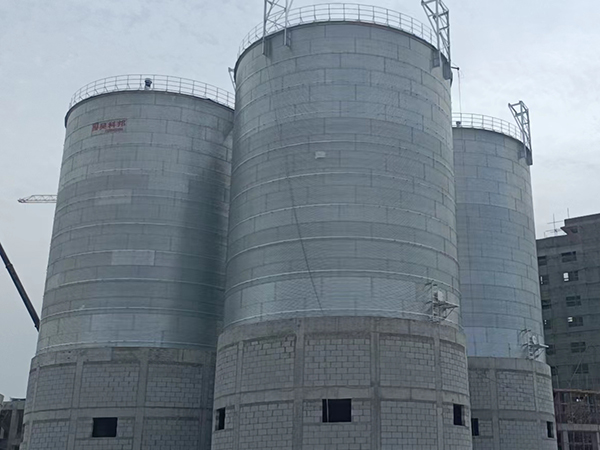
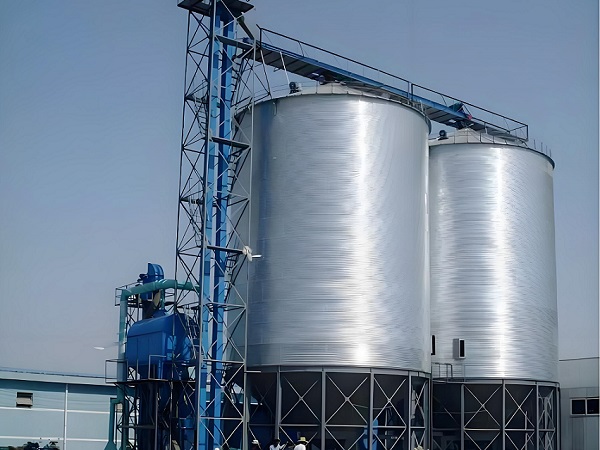
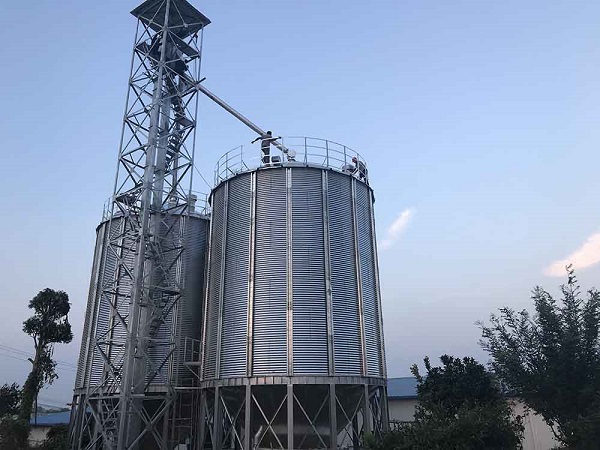
Bolted steel silos dominate the market. They use galvanized steel plates assembled by bolts, offering easy installation and customizable capacity. They suit medium and large grain storage facilities and processing plants.
Welded steel plate silos
Compared with assembled silos, welded silos are more sealed and suitable for long-term storage of grain with low moisture content. The welded structure is stable and suitable for scenarios with high sealing requirements, such as the storage of oil raw materials or grain powder.
Flat-bottom silos and cone-bottom silos
Flat-bottom silos: mostly used for long-term storage, suitable for automatic grain discharging equipment, such as spiral discharging machines.
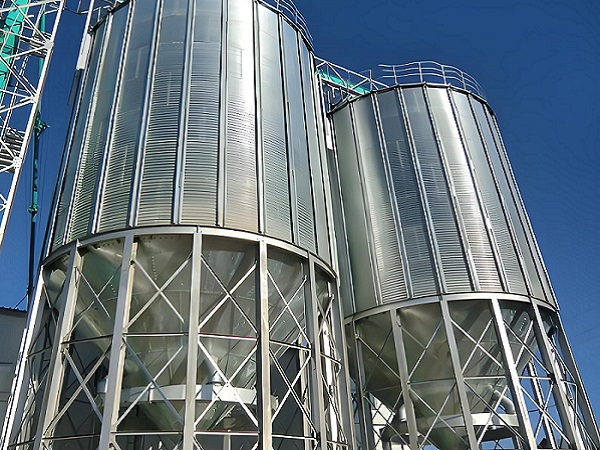
Cone-bottom silos: fast grain discharging speed, suitable for grain turnover silos with frequent circulation.
Inner and outer ring ventilation silos
In order to prevent grain from heating and mildewing during storage, some grain silos are specially designed with ventilation systems. According to different structures, ventilation forms can be divided into silo bottom ventilation and side wall ventilation to improve the safety and stability of grain storage.
Common capacity range of grain silo
The capacity of grain silos is generally expressed in “tons”. When choosing, it should be determined based on the grain storage time, daily turnover and whether the capacity needs to be expanded in the future.
| Model | Capacity (tons) | Height (m) | Diameter (m) | Suitable For |
|---|---|---|---|---|
| Silo-10T | 8-12 | 3-5 | 2.5-3 | Small family farms |
| Silo-50T | 45-55 | 6-8 | 4-5 | Small grain warehouses, medium farms |
| Silo-100T | 90-110 | 8-10 | 6-7 | Agricultural cooperatives, processing stations |
| Silo-500T | 450-550 | 12-15 | 10-12 | Large grain warehouses or processing plants |
| Silo-1000T | 900-1100 | 16-22 | 14-16 | National reserves, port storage |
| Custom | Above 1000 | ≥25 | Custom | Large industrial projects |
The above data is for reference only. The actual capacity is also related to the type of grain, stacking density and water content. For example, when the same type of silo stores corn, wheat or rice, its actual loading weight will be different.
Selection recommendations for grain silo
Selection according to usage requirements
If used for family farms, you can choose a small grain silo with a capacity of 10 to 50 tons. The investment cost is low and the installation is simple. It can meet the needs of self-use; if it is a professional grain purchasing point or a medium-sized processing plant, it is recommended to use a medium-sized silo with a capacity of more than 100 tons, which has a certain degree of automation and expansion space.
Consider the installation site
Grain silos need to occupy a certain area, especially large-capacity models, which have clear requirements for foundation bearing capacity and ventilation and drainage systems. Before selecting, it is recommended to calculate the site size and civil engineering costs in advance.
Pay attention to the discharge method
Different discharge methods have a direct impact on the preservation quality of grain. Cone-bottom silos can discharge materials by their own weight, which is suitable for frequent grain in and out operations; flat-bottom silos require auxiliary grain out systems, which are suitable for long-term storage and centralized processing.
Extended configuration of grain silo
Modern grain silos are not only storage containers, but can also be equipped with a variety of additional systems to improve grain storage efficiency and safety:
Ventilation system
Ensure air circulation in the silo to avoid condensation and mildew.
Temperature control system
Real-time monitoring of grain pile temperature and early warning of abnormal conditions.
Cleaning equipment
For example, built-in bin cleaning machines are convenient for regular cleaning of residual grain.
Automated loading and unloading system
Mechanized warehousing and out of the warehouse are realized to improve efficiency.
Although these functions will increase the initial investment, the long-term operating cost is lower, which is suitable for enterprises or institutions with high requirements for grain storage safety.
Conclusion
Grain silo are important equipment for grain storage and transportation. The choice of their models and capacity directly affects the efficiency and cost of grain storage. There are a variety of silos on the market ranging from 10 tons to 1,000 tons, with a full range of types. When purchasing, users should consider the grain storage time, site conditions and future expansion needs comprehensively and choose the appropriate silo to ensure safe grain storage and convenient management.