The maximum capacity of a silo is not a fixed value, but is determined based on factors such as silos type, design specifications, storage material characteristics and safety requirements. The following analyzes its capacity range and influencing factors from key dimensions:
Common Types of Silos and Capacity Ranges
| Silo Type | Typical Capacity Range | Application Scenarios |
|---|---|---|
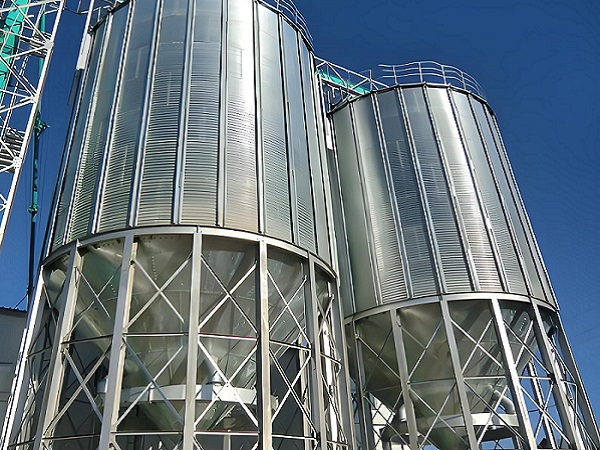
| Steel Silos | 50 tons to 100,000 tons | Bulk materials like grain, cement, coal ash |
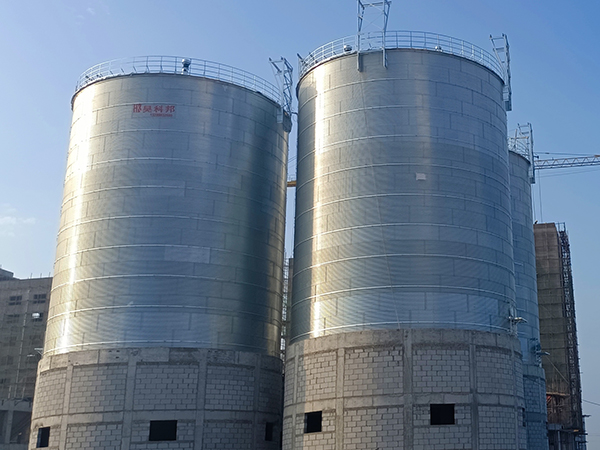
| Concrete Silos | 100 tons to 50,000 tons | Long-term storage in ports and large factories |
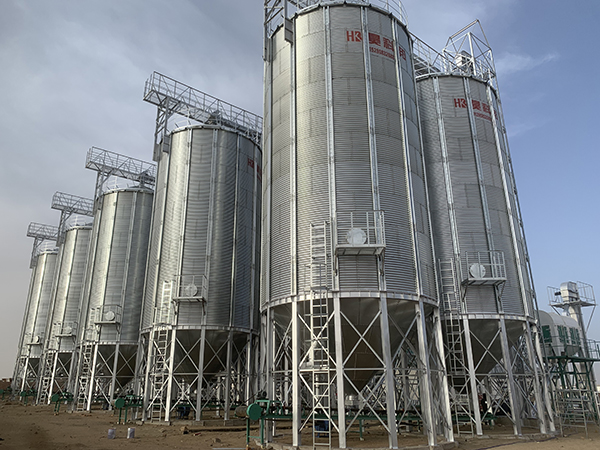
| Prefabricated Silos | 100 tons to 50,000 tons (modularly expandable) | Temporary storage and rapid deployment scenarios |
Minimum capacity?
The minimum capacity of small agricultural silos (for storing grain, feed, etc.) is about 5 tons, with a diameter of 2 meters and a height of 3 meters. Some family farms even use mobile silos with a capacity of only 1-2 tons.

Core factors affecting maximum capacity
Structural strength
The silo wall material (steel plate thickness, concrete grade) and supporting structure (such as columns, foundations) determine the upper limit of the load-bearing capacity.
Example
For a 30-meter-diameter steel silos, if a 10mm thick steel plate is used, the theoretical capacity can reach 10,000 tons, but it needs to be verified by structural calculations.
Material properties
Density
The capacity difference between wheat (about 0.75 tons/m³) and iron ore (about 3 tons/m³) is significant.
Flowability
Materials that are prone to agglomeration (such as wet coal) require larger discharge ports and slopes, which may reduce the effective capacity.
Corrosiveness
Highly corrosive materials (such as ammonium sulfate) require special linings, which affects the design of silo dimensions.
Safety regulations
A 10%-15% head space must be reserved to prevent structural damage or dust explosion risks caused by overfilling of materials.
International standards
ISO 11654 stipulates that the silo filling factor (actual capacity/design capacity) shall not exceed 0.9.
Discharging method
The bottom of a gravity self-flowing silos needs to be designed in a conical shape, and the cone angle is usually ≥45°, which affects the utilization of the bottom space.
When discharging with pneumatic conveying or screw conveyors, additional space is required to arrange equipment.
Actual case reference
Large grain silo
A steel plate silo at a port has a diameter of 40 meters, a height of 35 meters, a designed capacity of 80,000 tons, and an actual filling volume controlled within 72,000 tons.
Cement plant fly ash silo
Concrete structure, diameter of 15 meters, height of 25 meters, capacity of about 12,000 tons, and actual available capacity of about 10,000 tons after reserving the top space.
Simplified formula for capacity calculation
For cylindrical silos, the theoretical capacity can be approximately calculated:
Capacity (tons) = π × (diameter/2)² × height × material density × filling factor
(Note: needs to be corrected in combination with specific design parameters)
Conclusion
The maximum capacity of the silo needs to be customized, and it is recommended to be determined through the following steps:
Clear material properties (density, fluidity, corrosiveness).
Select silos type and structural parameters (material, diameter, height).
Calculate the filling factor (usually ≤0.9) according to safety regulations.
Perform structural verification through professional software (such as STAAD.Pro).
If specific project capacity design is required, it is recommended to consult a structural engineer or a professional silo manufacturer.