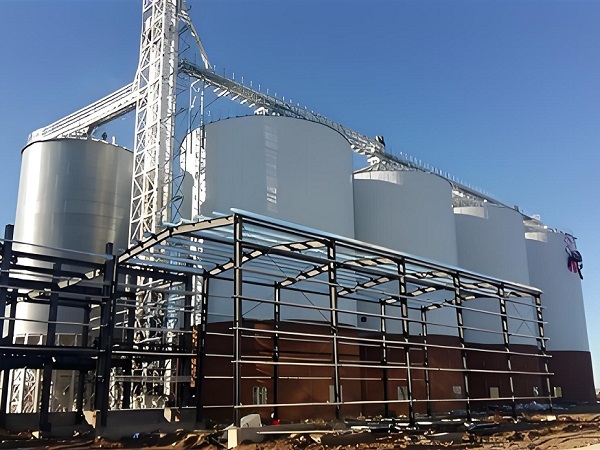
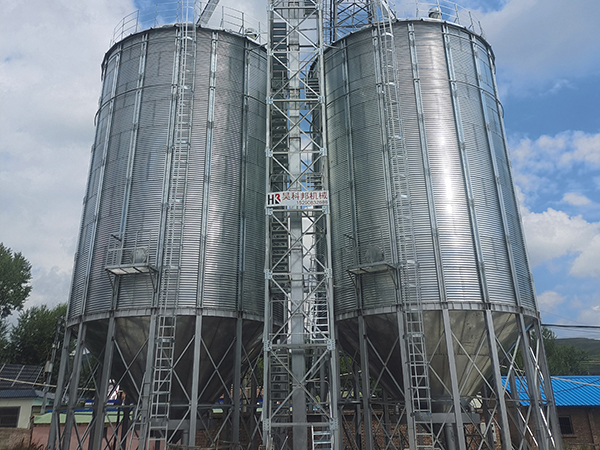
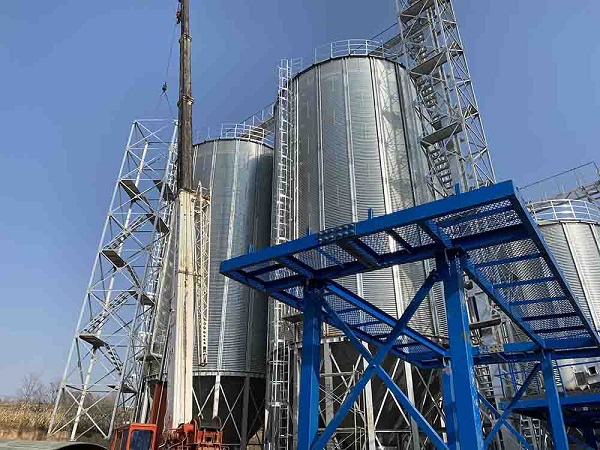
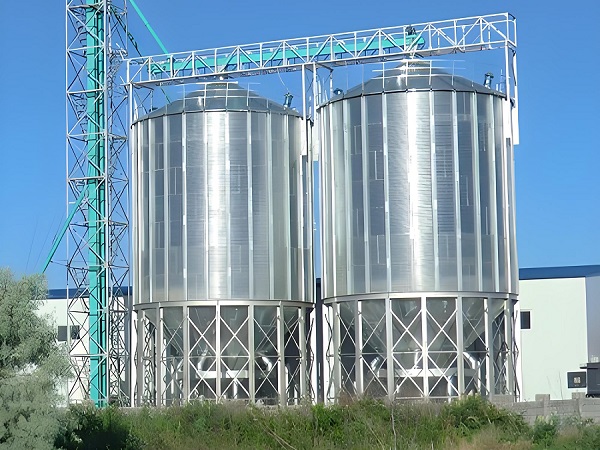
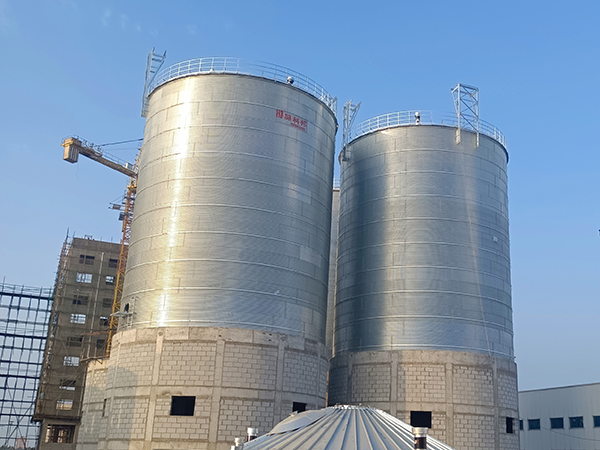
As an enterprise that has been engaged in bulk storage engineering design and export business for many years, in this article, we will sort out the key factors affecting the safety of steel silo and provide systematic preventive suggestions from the aspects of design, construction, operation and maintenance, etc., to help overseas customers more clearly assess project risks and improve the quality of procurement decisions.

Main Factors Affecting the Safety of Steel Silo
Insufficient design parameters or incomplete model calculation
Steel silos belong to thin-walled structural systems, and their stability is highly dependent on correct design calculations. Common design risks include:
- The calculation of the receiving pressure does not conform to industry standards (such AS EN 1991-4, AS 3774, etc.)
- The influence of the material stacking Angle and flow pattern on the pressure of the cylinder wall was not fully considered
- Ignore the stress accumulation caused by temperature changes
- Insufficient estimation of wind load, seismic load and snow load
Incorrect or simplified design calculations can easily lead to local buckling, wall panel cracking or top structure deformation, which in turn can cause systemic instability.
The material quality and welding process do not meet the standards
The durability of steel silos is directly related to the material and welding quality:
- Use low-strength steel plates, coils with insufficient galvanized coating or those that have not been tested
- The weld seam was not subjected to non-destructive testing (such as UT, RT, etc.)
- The strength of the flange connection bolts is insufficient or their fatigue resistance is weak
- Insufficient coating and galvanizing protection lead to long-term corrosion
Material problems usually do not surface immediately, but they will gradually form irreversible damage over many years of operation.
Uneven settlement of the foundation
The foundation is one of the most common sources of potential hazards for steel silos. Especially in large or group silo projects, uneven settlement may lead to:
- The cylinder wall undergoes elliptical deformation
- Vertical crack
- The top ring beam is misaligned
- The discharge port is blocked or even structurally unstable
Changes in the groundwater level, insufficient density of backfill soil or inaccurate assessment of foundation bearing capacity may all exacerbate the risk of settlement.
Eccentric loading pressure caused by the loading and unloading method
The flow pattern of materials in the silo will significantly affect the pressure distribution on the cylinder wall:
- Central discharge and eccentric discharge produce completely different pressure curves
- Some warehouse designs do not take into account the material arch bridge and rat hole effect
- High-speed loading is prone to cause impact pressure
Unreasonable loading and unloading methods are important factors leading to the sudden deformation of steel silos and the instability of the wall panels.
Environmental corrosion and lack of maintenance
During long-term operation, the following environmental factors may gradually erode the steel structure:
- Salt spray corrosion in coastal areas
- High-humidity and high-acid-base material gases accelerate corrosion
- Failure to regularly clean up material residues causes corrosion of the inner wall
Corrosion causing thinning of steel plates is one of the main causes of later accidents in steel silos.

Safety Precautions for Steel Silo
Structural design is carried out in accordance with international standards
It is recommended to give priority to design systems that comply with international engineering standards, such as:
- European Standard EN 1991-4 (Action of Bulk Materials)
- EN 1993 (Design of Steel structures)
- Australian Standard AS 3774 (Design of Steel Silos)
- Seismic design parameters related to ACI and FEMA in the United States
Finite element analysis (FEA) must be conducted during the design stage to ensure that the cylinder wall, foundation, and top structure have sufficient safety margins under various working conditions.
Material traceability and welding quality control
Safety construction must be controlled from the source:
- Use high-strength steel plates with material certification (MTC), such as Q345, S350GD, etc
- The welding process complies with ISO or AWS standards
- Conduct non-destructive testing on key weld seams
- Adhere to strict galvanized steel plate grades (such as ≥ 275g /m²)
High-quality materials and qualified welding are the foundation for ensuring a service life of more than 20 years.
Strict quality control of foundation investigation and construction
The following measures are recommended
- Conduct geological exploration (≥10 m depth) and obtain bearing capacity data
- When necessary, use pile foundation, ring foundation or ground reinforcement techniques
- During the construction process, strictly control the settlement difference value
- Carry out overall foundation design for group silos
Foundation safety is the lifeline of the entire silo system.
Optimize the design of the loading and unloading system
Behavioral control is also a key aspect in safety management:
- Use central loading and evenly distribute the material landing points
- Avoid long-term eccentric unloading
- Simulate material flow patterns (such as silo flow and funnel flow) during the engineering design stage
- Set up reasonable anti-bridge erection devices and arch-breaking systems
By optimizing the operation process, the risk of uneven loading can be significantly reduced.
Establish a periodic inspection and maintenance system
Long-term safe operation relies on a complete maintenance system:
- Inspect the cylinder wall, welds, orifices and other parts every 6 to 12 months
- Regularly measure the roundness, verticality and galvanizing thickness of the cylinder wall
- Repair the corroded areas in a timely manner or replace the damaged plates
- Use drone inspection or laser scanning technology to improve inspection efficiency
“Early detection and early handling” is the most effective way to prevent the expansion of accidents.
Conclusion
Steel silo is a systematic project. Its safety not only depends on the design drawings, but also relies on the full-process management of materials, construction, operation and maintenance. Through strict engineering standards, scientific construction control and continuous operation and maintenance management, steel silos can fully achieve stable operation for decades, providing long-term guarantees for the global grain and bulk materials supply chain.
As a professional supplier of steel silo engineering and exports, we always adhere to safety as the core and international standards as the benchmark, providing highly reliable storage solutions for global customers. If you need more technical information or project support, please feel free to contact us at any time.