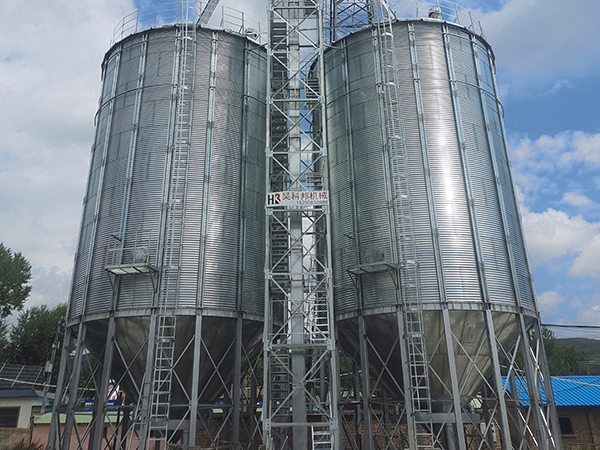
Agricultural silo: the main force of grain storage
Silo capacity, this is something that our grain suppliers have to think about! The capacity of silos is varied, depending on the type, purpose and building materials, the difference is huge.
First, let’s talk about our common agricultural silos. This kind of silos has a very wide range of capacity, ranging from 1,000 tons to 10,000 tons, and some can even be larger. For example, the capacity of cooperative silos is between 1,000 and 10,000 tons. Port silos are even more amazing, with a capacity of more than 5,000 tons, and some can even reach 50,000 tons!

Industrial silo: storage experts in professional fields
Let’s talk about industrial silos, such as cylindrical silos for coal storage. The capacity of this type of silos is also quite impressive. The storage capacity of 15-meter, 18-meter, 22-meter, and 30-meter diameter silos is 3,000 tons, 6,000 tons, 10,000 tons, and 30,000 tons respectively (this is calculated based on the storage density of raw coal of 0.85~1.0g/cm³). Imagine a 30-meter diameter silos that can hold 30,000 tons of coal. How spectacular it would be!
3. Building structure affects capacity
The building materials and structural form of the silos directly affect its capacity:
Reinforced concrete silo: diameter up to 18 meters, height about 35 meters
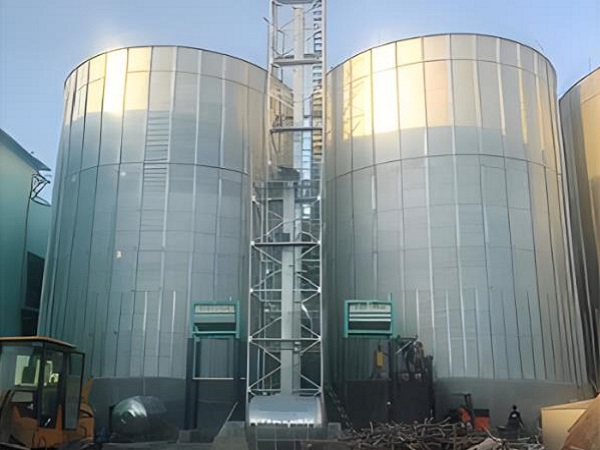
Steel silos: short construction period, flexible and adjustable capacity
Underground silos: capacity ranges from 50,000 kg to 4 million kg
Cone-bottom silos: capacity calculation needs to consider the effective volume of the cone part
4. Practical suggestions for selecting silo
Evaluate actual storage needs: consider annual turnover and peak storage volume
Focus on material characteristics: the stacking density of different grains is significantly different
Site condition restrictions: including foundation bearing capacity and space size
Future scalability: reserving space for expansion is often more economical