The Reality: In Thailand’s heat, a “cheap” flat silo often costs more in spoiled grain and extra labor within just 2 years. As one of the leading grain storage silo manufacturers, we’ve seen how this choice impacts long-term ROI for millers across Southeast Asia.

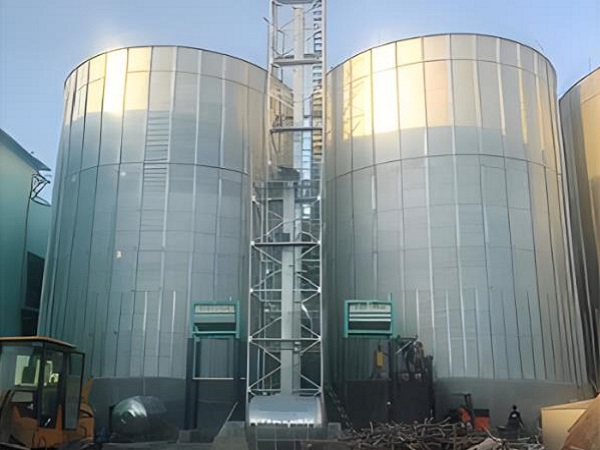
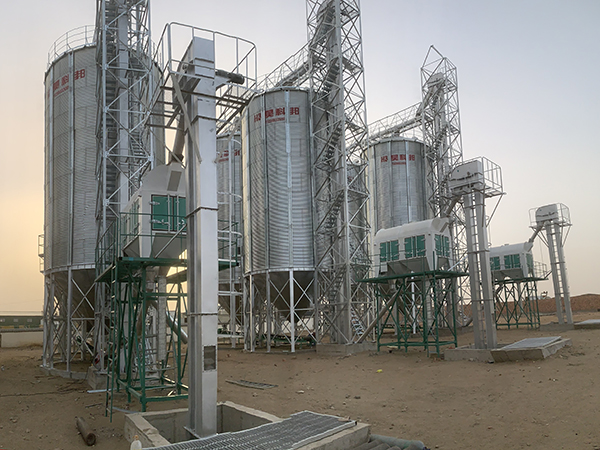
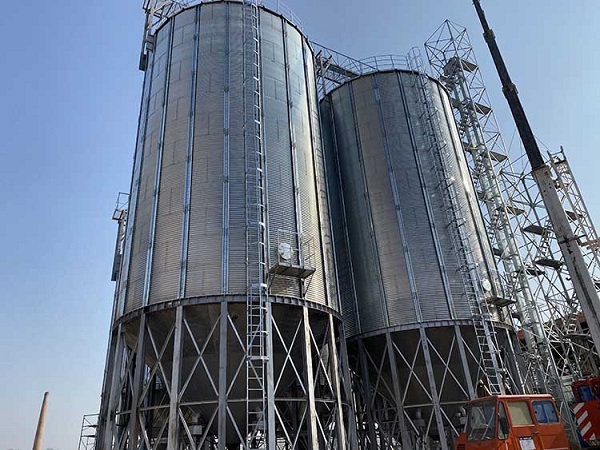
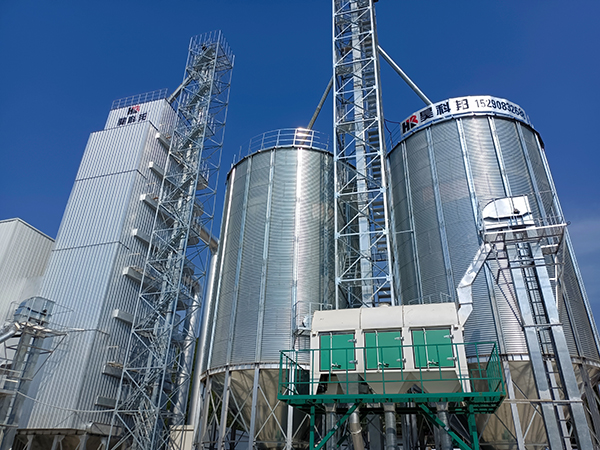
A 1,000-ton High-Tensile Hopper Silo — Engineered for rapid turnover and 100% gravity discharge.
Our Expert Take on 1,000-Ton Silo Solutions in Thailand
When it comes to 1,000-ton grain storage, we don’t just suggest a design; we advocate for the Hopper Bottom (Cone Bottom). Why? Because while a flat-bottom silo looks like a bargain on a quote, the reality in Thailand’s humid climate is often much costlier. Between the back-breaking manual labor and the high risk of grain spoilage at the base, those “initial savings” disappear quickly.
From our years of on-the-ground experience at Coban, a typical 1,000-ton project breaks down into two main investment paths:
The Standard Professional: Ranging between USD 50,000 and 80,000 (Approx. RMB 450k – 750k). This covers your essential, high-quality galvanized structure.
The High-End Smart Silo: Around USD 180,000. This is for high-stakes operations where you can’t afford mistakes. It’s fully automated via PLC, meaning the system handles the ventilation and cooling for you the moment the outside heat spikes, keeping the grain at peak quality without you being on-site. Our automation includes real-time material level measurement systems to manage inventory without ever climbing a ladder.
Table 1: Estimated Cost Breakdown (1,000-ton Hopper Silo)
| Cost Module | Components Included | Budget Share | Recommended for Thailand |
| Main Structure | High-tensile S350GD galvanized plates, stiffeners, roof | 45% – 55% | 350g/m² zinc coating for humidity |
| Hopper Support | Wide-flange I-beams, ring beams, 45°/60° cone plates | 15% – 20% | Reinforced legs for 1,000t vertical load |
| Auxiliary Systems | Elevators, centrifugal fans, cleaners, sensors | 20% – 30% | Automated temperature & moisture monitoring |
| Installation | Civil work, crane rental, on-site labor, commissioning | 10% – 15% | Piling foundation for soft Thai soil |
Why Hopper Bottom is the “Efficiency King”
In the actual quotation process, many customers hesitate between flat and hopper bottoms. Below is a professional comparison explaining why we recommend the latter for medium-scale facilities (1,000-ton).

Efficiency King — The hopper bottom (right) eliminates the “dead zones” and labor-intensive sweeping required in traditional flat silos.
Table 2: Comparison: Flat Bottom vs. Hopper Bottom Silo
| Feature | Flat Bottom Silo | Hopper Bottom Silo | The Coban Advantage |
| Discharge Mode | Requires mechanical Sweep Auger | Gravity-fed / Self-flowing | Hopper: No manual labor required. |
| Residue Level | ~2% (Requires manual sweeping) | Zero Residue (<0.1%) | Hopper: Prevents pest & mold growth. |
| Foundation | Concrete slab with aeration ducts | Elevated steel support structure | Hopper: Easier inspection & maintenance. |
| Cycle Speed | Slow (Emptying takes days) | Fast (Emptying in hours) | Hopper: Ideal for high-turnover mills. |
Keep in mind that these are base costs. For a full breakdown including shipping to Laem Chabang or Bangkok, check our guide on purchasing costs and freight to Thailand.
Engineering for the Thai Environment
Thailand’s geography presents two unique challenges: Soft soil (especially in Central Thailand) and High Humidity.
Foundation Engineering: A 1,000-ton hopper silo exerts concentrated pressure on support legs. Coban implements a Pile-Cap Foundation—driving concrete piles 12-20 meters deep to ensure the silo never tilts or sinks.
Moisture Control: The hopper design provides a 360-degree air buffer. Our Centrifugal Aeration Fans automatically trigger when the “Differential Temperature” exceeds 5°C, preventing the “Sweating Effect” common in tropical climates.
Table 3: Construction Standards for Thailand’s 1,000-ton Silos
| Engineering Factor | Industry Baseline | Coban Construction Standard | Why it matters in Thailand |
| Steel Grade | Standard Q235/Q355 | High-tensile S350GD Steel | Handles the heavy vertical pressure of 1,000 tons without buckling. |
| Corrosion Defense | 275 g/m² Zinc | 350 – 450 g/m² Zinc Coating | Essential for preventing rust in high-humidity/coastal zones. |
| Hardware | Grade 8.8 Bolts | Grade 10.9 (Dacromet Coated) | High-strength bolts that won’t snap under monsoon wind loads. |
| Design Life | 15 – 20 Years | 25 – 30+ Years (In Tropical Zones) | Long-term asset protection, reducing your replacement costs. |
While the engineering above is tailored for 1,000-ton loads, we know every facility has different goals. If a 1,000-ton setup is larger than your current needs, you might want to compare it with the construction cycle of a 200-ton silo in the local market to see which scale fits your current harvest schedule better.
FAQ: Frequently Asked Questions for the Thai Market
Q: Which cone angle should I choose, 45° or 60°?
A: This depends on the flowability. For Corn and Wheat, 45° is sufficient. For Paddy Rice or Soybean Meal, we recommend 60° to ensure smooth gravity discharge without “bridging.”
Q: Can the silo withstand Thailand’s rainy season and typhoons?
A: Yes. Coban silos are designed with airtight roofs and Grade 10.9 high-tensile bolts. We calculate wind loads specifically for Thai monsoon regions to ensure structural integrity.
Q: How do you handle pest control in the silo?
A: For pest control, we use a Recirculation Fumigation System. The hopper’s airtight, elevated design naturally forces the gas to distribute evenly. It’s a lot more effective than a flat bottom because you don’t get those pockets of untreated grain where bugs hide.
Q: How often does the 1,000-ton hopper silo need maintenance?
A: A “Minor Inspection” every 6 months (sensors/belts) and a “Major Inspection” annually (bolt torque/zinc coating). The elevated hopper makes bottom inspections much easier. For a detailed checklist on keeping your site operational, see our full guide on maintenance and cleaning methods for silos in Thailand.
Project Case: 1,000-Ton Maize (Corn) Storage in Laos
To see how these specs translate into profit, here is a project we recently delivered in Vientiane:
Configuration: 2 sets of 500-ton Hopper Bottom Silos.
Material: Maize (Corn).
Local Challenge: High humidity leading to grain “bridging” and slow warehouse turnover.
The Coban Solution:
60° Cone Angle: Tailored for Maize (Corn) to ensure smooth gravity discharge during the monsoon season.
Z350 Galvanized Coating: Heavy-duty protection against tropical inland corrosion.
30TPH Handling System: Integrated cleaning and elevating to maintain grain quality.
The Result:
70% reduction in unloading time.
2.5% reduction in grain loss per cycle (previously lost to manual sweeping and spoilage).
The Bottom Line
Moving to a 1,000-ton hopper system isn’t just an upgrade—it’s about stopping the “invisible leaks” in your business. When you stop paying for manual labor to sweep floors and stop losing grain to spoilage, that money goes straight back into your margin.
Let’s get to work. Contact our engineering team, and we’ll help you map out a site plan and a localized quote that actually fits your operation.