1. Core technical indicators of grain bin
Capacity and structural type
Capacity range:
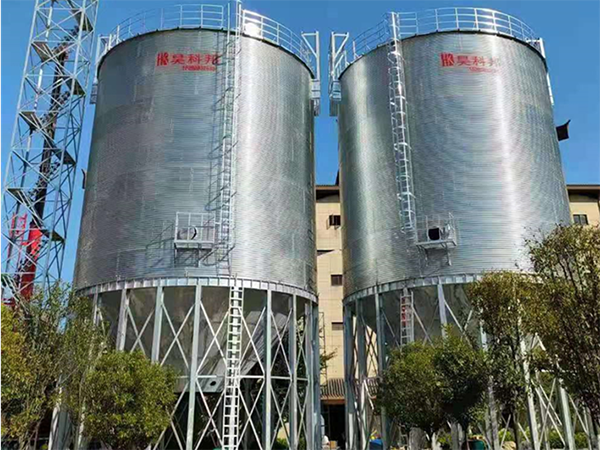
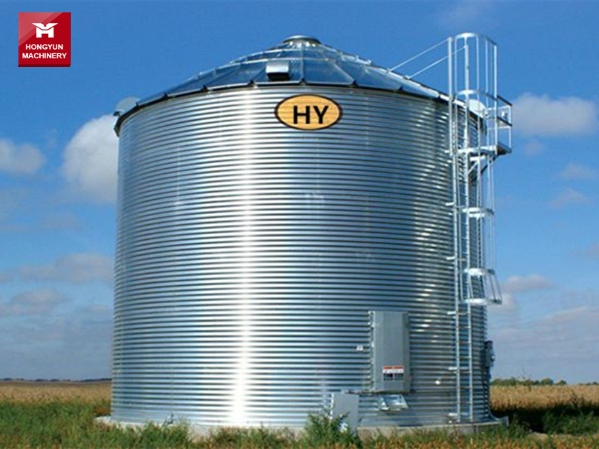
From small bin of 5-50 tons used in family farms to giant silos of more than 1,000 tons configured in commercial grain warehouses, the capacity varies significantly.
Structural classification:
Flat-bottom bin:
Suitable for short-term turnover or small-batch storage, unloading depends on the bottom screw conveyor.
Conical bottom bin:
Self-flow unloading is achieved through the conical bottom design to reduce the residual rate (the residual amount is usually <0.5%).
Airtight bin:
Equipped with sealed doors and pressure balancing devices, it is used for long-term storage that requires inert gas (such as nitrogen) protection.
Environmental control system
Ventilation design:
Positive pressure ventilation or negative pressure exhaust technology is used, combined with grain cooling units, to control the temperature in the bin at 10-15℃ (low temperature storage can extend the shelf life by 12-18 months).
Humidity regulation:
The humidity sensor linked to the dehumidification equipment maintains the relative humidity below 65% to inhibit mold growth.
Pest control:
We use phosphine fumigation, inert gas replacement, or low-temperature freezing technology to replace traditional chemical agents.
Material and anti-corrosion technology
Main material:
Mainly galvanized steel plate (thickness 2.5-4.0mm), some high-end models use aluminum alloy or stainless steel to improve corrosion resistance.
Anti-corrosion process:
Hot-dip galvanizing layer thickness ≥ 65μm, salt spray resistance test > 1000 hours.
We coat the inner wall with epoxy resin to prevent acidic substances in grain from corroding it.
2. Application scenarios and industry value of grain bin
Agriculture field
Post-harvest loss reduction:
In developing countries, the loss rate of traditional storage methods (woven bags, open-air stacking) can reach 15%-30%, while grain bin can reduce the loss to less than 2%.
Seasonal peak shifting:
Increase grain prices through staggered sales. For example, the use of bin storage in China’s main corn producing areas in Northeast China can increase farmers’ income by 10%-15%.
Food processing industry
Raw material homogenization:
Large processing companies achieve consistency in raw material moisture and impurity content through bin mixing functions (such as multi-point feeding and bottom circulation).
Quality traceability:
Some smart bin integrate IoT sensors, which can monitor and record storage parameters in real time to meet the requirements of the HACCP (Hazard Analysis and Critical Control Points) system.
International trade
Letter of credit compliance:
Bin that meet GAFTA (Grain and Feed Trade Association) standards can avoid trade disputes caused by disputes over storage conditions.
Financing mortgage:
In the futures market, traders can use grains stored in certified bin as collateral to improve capital turnover.
3. Technological evolution trend of grain bin
Intelligent upgrade
Sensor network:
Deploy multi-dimensional sensors such as temperature and humidity, gas concentration, and insect monitoring to achieve data cloud synchronization.
AI decision system:
Predict mildew risk based on machine learning algorithms and automatically adjust ventilation and refrigeration parameters.
Sustainable design
Photovoltaic integration:
Install flexible solar panels on the top of the bin to meet 10%-20% of the bin operation energy consumption.
Bio-based materials:
Use bamboo fiber composite materials to replace part of the steel to reduce carbon footprint.
Modular innovation
Scalable structure:
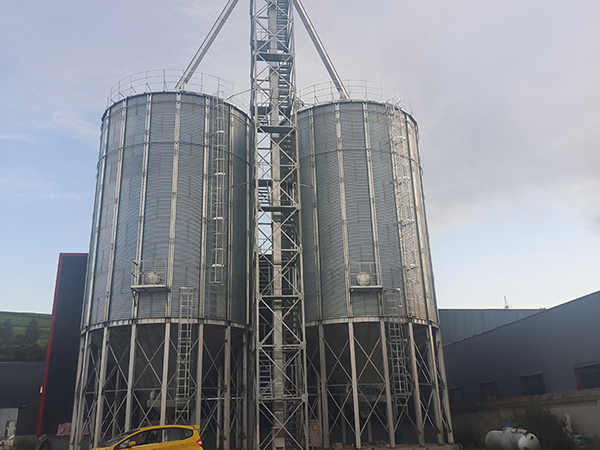
Standardized unit splicing achieves dynamic capacity adjustment to adapt to different scale needs.
Emergency response:
After inflation, a portable inflatable grain bin with a capacity of up to 50 tons can rapidly store food following disasters.
Conclusion
As the infrastructure of agricultural modernization, the technical iteration of grain bin is directly related to food security and industrial chain efficiency. In the future, with the integration of the Internet of Things, new energy and materials science, grain bin will continue to evolve towards the goals of full life cycle management (from field to table) and zero-loss storage, providing more solid support for the global food security system.