Main Structure System
Silo Body
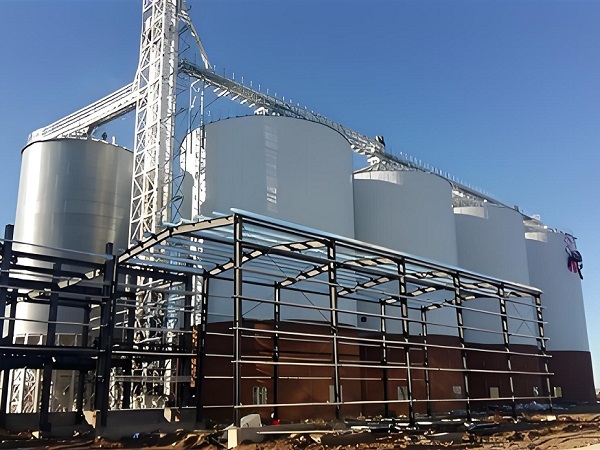
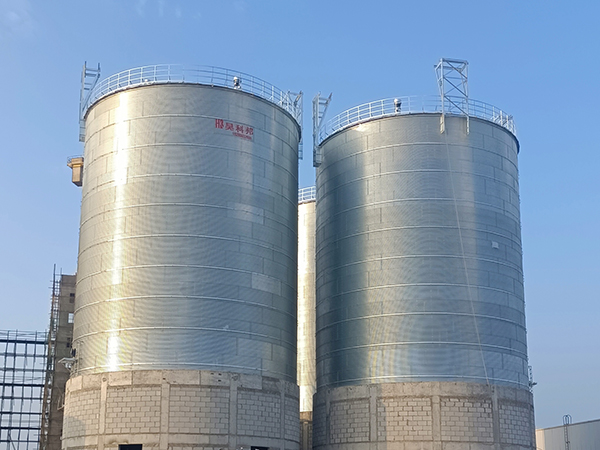
The mainstream materials are galvanized steel sheets or aluminized zinc steel sheets, and the common coating is 275g /m² or higher. The silo body is composed of corrugated plates, vertical reinforcing ribs, circumferential stiffening parts and connecting bolts, and it is the first line of defense for grain storage safety.
Foundation & Floor
Concrete circular foundation or slab foundation should be adopted based on the warehouse capacity and geological conditions. The floor is usually epoxy or wear-resistant concrete to reduce food contamination and enhance durability.
Roof System
Install corner beams, roof profiled sheets, inspection openings and ventilation chimneys. Large silos (with a diameter > 18 meters) mostly adopt truss structures to enhance strength.
Grain Conveying and Loading/Unloading Systems
Bucket Elevator
It is used for vertical lifting of grains and is the core equipment for loading and transporting grains in granaries. The typical lifting capacity is available from 20 to 500 t/h.
Chain Conveyor/scraper conveyor (chain Conveyor)
It mainly undertakes horizontal conveying tasks and is usually installed in the catwalk on the top of the warehouse and in the ground passage.
Screw Conveyor
It is used for short-distance conveying or quantitative feeding to specific process equipment.
Pneumatic discharge System (Pneumatic System, optional)
In some areas, it is used to replace mechanical warehouse release and is suitable for small-scale or multi-variety operation scenarios.


Ventilation and Temperature Control System
Ventilation System
It includes ventilation ducts, perforated floors and axial flow fans, which are used to maintain the stable temperature of the grain pile and suppress pests and mold. The common air volume range is 0.1-0.2 m³/min·t.
Grain Temperature Monitoring system (Temperature Monitoring
Composed of a temperature probe and a digital monitoring platform, it can achieve 24-hour real-time monitoring. The global grain silo generally require that the distance between measurement points be between 2 and 3 meters.
Dust Control system
Including cyclone dust collectors and bag filters, it reduces dust and meets environmental protection standards.
Iv. Safety and Control System
Well sliding and manual/automatic Discharge System (Discharge System
Including the conical bottom, electric gate and flow regulation structure, it is the key to the “grain discharge efficiency” of the silo.
Explosion & Fire Protection facilities
- Explosion-proof pressure relief port
- Explosion-proof film/explosion-proof valve
- Automatic sprinkler or dry powder fire extinguishing system (configured according to local standards)
Structural Monitoring
Large warehouse clusters are usually equipped with stress sensors or settlement monitoring points to further enhance the safety level of the project.
Control System (PLC/SCADA
It is used to integrate fans, conveying equipment, temperature monitoring and inbound and outbound warehouse processes to achieve automated management. Medium and large-scale projects often adopt Siemens or Schneider systems.
Auxiliary Facilities and Operational Infrastructure
Catwalk & Platforms
It mainly carries conveyors, facilitating maintenance and inspection, and is a key connecting component of the warehouse cluster project.
Receiving Pit & Pre-cleaner
After unloading grains from cars or trucks, they enter the unloading pit and then pass through the initial cleaning equipment to remove impurities and improve the storage quality.
Measurement System (Weighing System)
Including truck scales or electronic scales for measurement in and out of the warehouse.
Anti-bridging System for arch breaking and vibration
When storing raw grains with high moisture content or viscosity, it can prevent the grains from piling up and arching, ensuring smooth removal from the warehouse.
Power Supply & MCC Room
Provide independent power distribution and protection for all kinds of electromechanical equipment.
Conclusion
A complete grain silo system is an integrated solution that involves the collaboration of engineering, equipment and digital monitoring. Whether used for corn, wheat, soybeans or feed raw materials, its core objective is always to ensure the quality of grains, safe storage, improve loading and unloading efficiency and reduce operating costs. With the digital upgrade of the global food supply chain, future silos will further develop towards high automation, low energy consumption and unmanned management.