Preliminary preparation and site survey
The first step in the construction of steel silo foundation is sufficient site preparation and survey work. The construction team needs to organize professionals to conduct a detailed investigation of the geological conditions of the construction site, focusing on soil bearing capacity, groundwater level and terrain conditions.
Based on the survey results, the design team formulates a scientific and reasonable foundation design plan to ensure that the steel silo foundation can withstand the weight of the silo itself and the stored materials. The survey report will also guide the formulation of earthwork excavation and drainage plans during the construction process.

Construction drawing review and technical disclosure
Before formal construction, project management personnel need to organize a strict review of the construction drawings to ensure that the drawings meet the design specifications and construction requirements. Key technical indicators including foundation size, reinforcement, concrete strength grade, etc. must be verified.
At the same time, the technical person in charge should organize the construction team to conduct technical briefings, explain the construction process, key nodes and safety matters in detail, ensure that each construction worker clearly understands the construction goals and standards, and reduce construction risks.
Foundation construction process
Earth excavation and site leveling
When excavating earth according to the designed elevation and size, the excavation depth and slope should be strictly controlled to avoid over-excavation or slope collapse. After the excavation is completed, the site should be leveled in time to ensure that the flatness of the bottom surface of the foundation meets the design specifications and construction requirements.
Drainage ditches or drainage facilities should be set up during construction to prevent water accumulation during construction from affecting the foundation quality.
Foundation cushion construction
The foundation cushion is generally made of gravel or concrete cushion to increase the foundation bearing capacity and prevent concrete from directly contacting soft soil. The thickness and density of the cushion should meet the requirements of the design specifications, and compaction should be carried out after laying.
Rebar binding and formwork installation
Bind the steel bar skeleton according to the construction drawings to ensure that the spacing, anchorage length and connection method of the steel bars meet the design standards. After the steel bars are tied, install the formwork. The formwork must be stable and well sealed to prevent leakage during concrete pouring.
The verticality and flatness of the formwork directly affect the molding quality of the foundation and need to be strictly controlled.
Concrete pouring and maintenance
Use concrete that meets the design requirements for pouring. It is recommended to pour in layers and vibrate with a vibrator to avoid quality problems such as honeycomb surface. Construction should be continuous during the pouring process to prevent cold joints.
After the concrete is poured, it should be maintained in time and kept moist for at least 7 days to ensure the strength and durability of the concrete.
Foundation acceptance and quality inspection
After the foundation construction is completed, the project quality inspection department needs to organize acceptance, focusing on checking indicators such as foundation size, flatness, steel bar position and concrete strength. Through non-destructive testing and sampling tests, ensure that the quality of the foundation project meets the design and specification requirements.
Only after the acceptance is qualified can the main installation stage of the steel silo be entered.

Construction safety and environmental protection
The foundation construction of the steel silo should focus on the safety management of earthwork and concrete pouring. Protective measures should be set up during the operation to prevent the risk of falling objects and mechanical injuries from high altitudes. All operators must correctly wear personal protective equipment such as safety helmets and safety belts.
It is recommended to scientifically arrange the operation time and transportation routes, implement dust control and noise prevention measures, and effectively protect the surrounding environment.
Summary
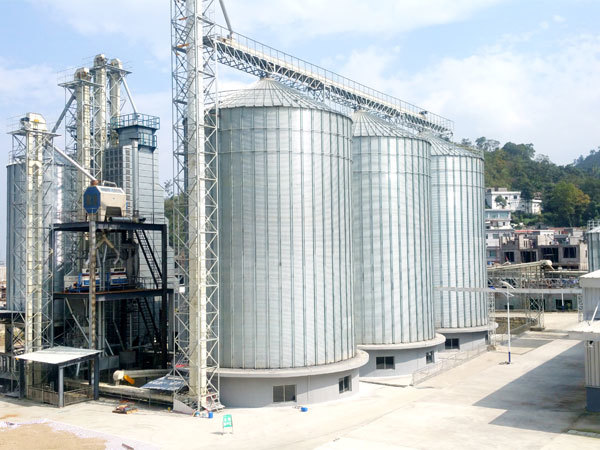
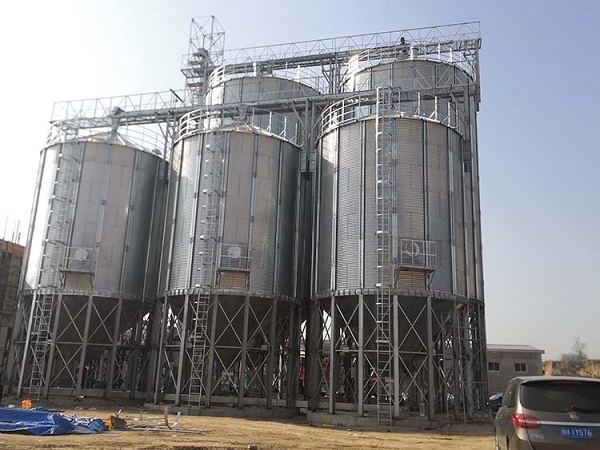
The foundation engineering of the steel silo is a key link to ensure the overall stability and safety of the silo. Scientific construction process and strict quality control are the guarantee for the long-term durability of the steel silos. Through perfect preliminary investigation, precise construction technology and strict quality acceptance, structural problems such as foundation settlement and cracks can be effectively avoided, laying a solid foundation for the subsequent installation and operation of the steel silos.