Grain storage infrastructure is one of the most critical investments in the agricultural supply chain. The choice between steel grain silos and concrete silos significantly affects construction cost, storage efficiency, operational flexibility, and long-term maintenance expenses.
Both technologies have been widely used in grain storage facilities, feed mills, flour mills, and port terminals. However, modern grain logistics trends increasingly favor large-scale galvanized steel silos, while reinforced concrete silos remain common in certain permanent infrastructure projects.
This article provides a technical comparison between steel grain silos and concrete silos, using engineering data, structural parameters, and operational considerations to help investors, engineers, and grain facility managers make informed decisions.
Understanding the Two Types of Grain Silos
Steel Grain Silos
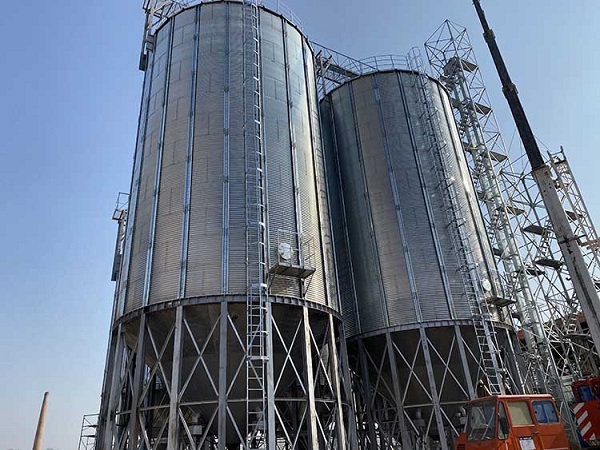
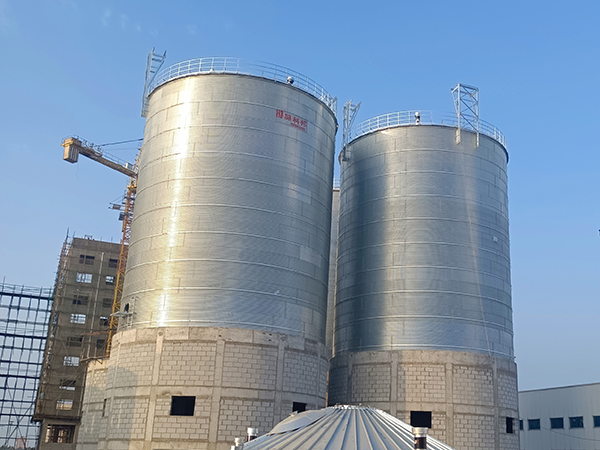
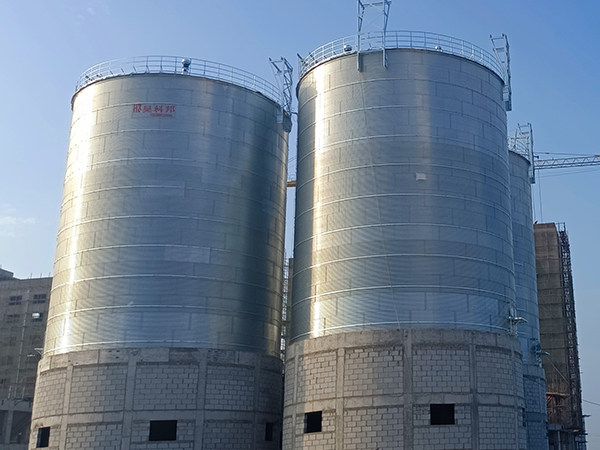
Steel silos are typically made from hot-dip galvanized corrugated steel sheets assembled using high-strength bolts. The design follows international standards such as:
- ANSI / ASAE EP433
- EN 1991-4 (Eurocode for silos)
- GB 50322 for grain storage structures
Typical Technical Characteristics
| Parameter | Typical Value |
|---|---|
| Material | Hot-dip galvanized steel |
| Steel sheet thickness | 2.5–6.0 mm |
| Zinc coating | 275–600 g/m² |
| Single silo capacity | 50 – 20,000 tons |
| Diameter range | 3 m – 32 m |
| Height range | 5 m – 35 m |
| Design lifespan | 25–40 years |
Steel silos are widely used for:
- Commercial grain storage centers
- Feed mills
- Rice mills
- Grain trading hubs
- Export terminals
Concrete Silos
Concrete silos are constructed using reinforced concrete, typically through slip-forming construction techniques. These structures are often used in large grain terminals, port facilities, or permanent storage complexes.
Typical Technical Characteristics
| Parameter | Typical Value |
|---|---|
| Material | Reinforced concrete |
| Wall thickness | 150–300 mm |
| Single silo capacity | 500 – 50,000 tons |
| Diameter range | 6 m – 20 m |
| Height range | 20 m – 60 m |
| Design lifespan | 50–70 years |
Concrete silos are often integrated into large grain terminal infrastructure, where long-term structural durability is prioritized.

Steel Grain Silo vs Concrete Silo: Key Differences
1. Construction Time
One of the most significant differences between the two systems is construction speed.
| Factor | Steel Silo | Concrete Silo |
|---|---|---|
| Construction method | Bolted assembly | Slip-form concrete |
| Typical construction time | 30–90 days | 6–12 months |
| Weather dependency | Low | High |
| Labor requirements | Moderate | High |
Example:
- A 5,000-ton steel silo can typically be installed within 20–30 days.
- A similar-capacity concrete silo may require 4–6 months including curing time.
For projects requiring fast return on investment, steel silos provide a significant advantage.
2. Construction Cost Comparison
Capital investment is often the decisive factor in grain storage projects.
Typical Cost Range (2025 Market Estimate)
| Capacity | Steel Silo Cost | Concrete Silo Cost |
|---|---|---|
| 1,000 tons | $60 – $90 per ton | $120 – $180 per ton |
| 5,000 tons | $50 – $80 per ton | $110 – $160 per ton |
| 10,000 tons | $45 – $70 per ton | $100 – $150 per ton |
Example calculation for 5,000-ton storage capacity
| Type | Estimated Investment |
|---|---|
| Steel silo | $250,000 – $400,000 |
| Concrete silo | $550,000 – $800,000 |
Steel silos often reduce initial investment by 30–50%.
3. Structural Flexibility and Expansion
Modern grain facilities often need future capacity expansion.
| Factor | Steel Silo | Concrete Silo |
|---|---|---|
| Expansion flexibility | Very high | Very limited |
| Modular design | Yes | No |
| Relocation possibility | Possible | Impossible |
Steel silo farms can easily expand by adding additional silos.
Example expansion scenario:
| Stage | Storage Capacity |
|---|---|
| Initial project | 10,000 tons |
| Phase 2 expansion | +10,000 tons |
| Phase 3 expansion | +20,000 tons |
Concrete silo systems usually require full structural redesign for expansion.
4. Maintenance and Corrosion Resistance
Maintenance requirements differ significantly due to materials.
Steel Silo Protection
Modern steel silos use galvanized coating protection.
| Zinc Coating | Corrosion Resistance |
|---|---|
| 275 g/m² | 15–20 years |
| 450 g/m² | 25–30 years |
| 600 g/m² | 30–40 years |
Concrete silos generally require less corrosion protection but may suffer from:
- structural cracking
- moisture penetration
- reinforcement corrosion
Typical Maintenance Requirements
| Maintenance Type | Steel Silo | Concrete Silo |
|---|---|---|
| Structural inspection | Every 3–5 years | Every 5–10 years |
| Surface protection | Possible repainting | Crack repair |
| Foundation monitoring | Required | Required |
5. Grain Quality Management
Grain storage quality depends heavily on aeration and temperature control.
Steel silos are usually equipped with:
- aeration fans
- temperature monitoring cables
- sweep augers
- level sensors
Typical Aeration Parameters
| Parameter | Typical Value |
|---|---|
| Aeration airflow | 0.1–0.3 m³/min/ton |
| Fan power | 5–30 kW |
| Temperature cables | 4–12 per silo |
| Moisture safe storage | 12–14% |
Concrete silos can also use aeration systems, but retrofitting modern monitoring technology is often more complex.
6. Foundation Requirements
The total project cost also depends on the foundation structure.
| Factor | Steel Silo | Concrete Silo |
|---|---|---|
| Foundation type | Reinforced concrete ring foundation | Heavy raft foundation |
| Load distribution | Concentrated | Distributed |
| Foundation cost | Lower | Higher |
Example:
| Silo Capacity | Steel Silo Foundation | Concrete Silo Foundation |
|---|---|---|
| 5,000 tons | $40,000 – $70,000 | $120,000 – $200,000 |
7. Transportation and Installation
Steel silos are manufactured as prefabricated components.
Logistics Comparison
| Factor | Steel Silo | Concrete Silo |
|---|---|---|
| Factory prefabrication | Yes | No |
| Shipping volume | Moderate | N/A |
| On-site construction | Assembly | Full construction |
This makes steel silos particularly suitable for developing countries or remote agricultural areas.
Typical Applications
| Application | Preferred Silo Type |
|---|---|
| Feed mills | Steel silo |
| Grain trading centers | Steel silo |
| Farm grain storage | Steel silo |
| Export grain terminals | Concrete silo |
| Long-term national reserves | Concrete silo |
Real Project Example
20,000-Ton Feed Mill Grain Storage System
| Item | Specification |
|---|---|
| Number of silos | 4 units |
| Silo capacity | 5,000 tons each |
| Diameter | 18 m |
| Height | 22 m |
| Material | Galvanized steel |
| Aeration system | 15 kW fans |
| Temperature monitoring | 8 cables per silo |
Project Timeline
| Phase | Duration |
|---|---|
| Foundation construction | 25 days |
| Silo installation | 40 days |
| Equipment installation | 15 days |
Total construction period: 80 days
A comparable concrete system could require 8–10 months.
When to Choose Steel Grain Silos
Steel silos are ideal when:
- fast construction is required
- investment budget is limited
- future expansion is planned
- the project is located in remote areas
- flexible logistics operations are required
Most modern feed mills and commercial grain facilities choose steel silos for these reasons.
When Concrete Silos May Be Better
Concrete silos may still be preferred when:
- extremely long lifespan is required
- storage capacity exceeds 100,000 tons in one complex
- the facility is a permanent port terminal
- structural integration with industrial buildings is needed
Final Comparison Summary
| Factor | Steel Grain Silo | Concrete Silo |
|---|---|---|
| Construction time | Fast | Slow |
| Initial investment | Lower | Higher |
| Expansion capability | Excellent | Limited |
| Lifespan | 25–40 years | 50–70 years |
| Installation complexity | Low | High |
| Maintenance | Moderate | Moderate |
| Suitable for | Most commercial storage | Large permanent terminals |
Conclusion
Both steel grain silos and concrete silos play important roles in modern grain storage systems. However, with the increasing demand for cost efficiency, rapid construction, and flexible expansion, steel silos have become the preferred choice for most commercial grain storage projects worldwide.
Concrete silos still provide advantages in very large port terminals and permanent national reserve storage systems, where extremely long service life and structural rigidity are required.
For most grain processing plants, feed mills, and agricultural storage facilities, modern galvanized steel silos provide the best balance of cost, performance, and operational flexibility.