In the grain storage industry, many investors ask the same question at the beginning of a project:
“Should we start with small silos or directly invest in large commercial storage systems?”
On paper, the answer often looks simple.
But in real agricultural projects, the decision affects:
- grain quality
- operating efficiency
- labor cost
- drying performance
- future expansion
- transportation logistics
- long-term profitability
After working on grain storage projects across Africa, Southeast Asia, and developing agricultural markets, one reality becomes very clear:
The “best silo” is not necessarily the biggest one.
The correct solution depends on how grain actually moves through the operation during harvest season.
Small Grain Silos: Flexible and Practical for Growing Operations
Small grain silos are commonly used for:
- family farms
- poultry feed projects
- local grain collection centers
- seed storage
- small feed mills
- regional agricultural cooperatives
In many developing agricultural markets, small silos are often the most financially realistic starting point.
A farmer storing 500–3000 tons of maize does not necessarily benefit from building a massive commercial storage complex immediately.
In fact, oversized storage frequently creates unnecessary pressure on:
- cash flow
- grain sourcing
- equipment maintenance
- electricity usage
- labor management
Smaller silo systems allow operators to grow gradually while maintaining manageable operating costs.
Where Small Silos Work Best
Small silo systems are particularly suitable when:
- grain supply is seasonal and inconsistent
- transportation infrastructure is weak
- harvest volume fluctuates heavily
- electricity supply is unstable
- the business is still expanding
This is especially common in parts of:
- Africa
- Southeast Asia
- rural agricultural regions
For example:
A local maize processing business in East Africa may collect grain from multiple villages during harvest season.
Under these conditions, flexible storage rotation matters more than extremely large storage capacity.
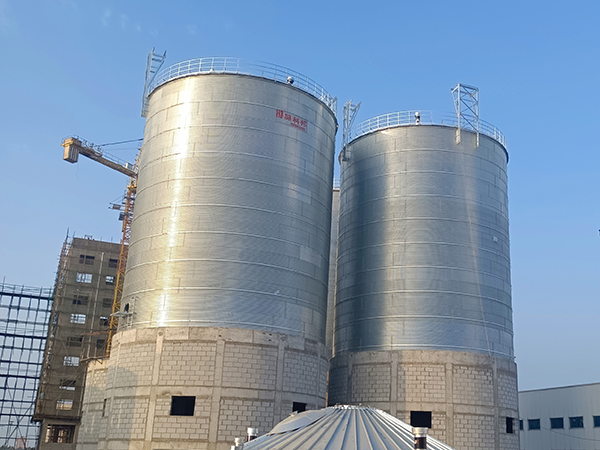
Multiple medium-size silos often operate more efficiently than one oversized silo because operators can separate:
- wet grain
- dry grain
- different grain varieties
- different purchasing batches
This reduces storage risks significantly.
The Real Advantage of Small Grain Silos
Many first-time investors focus only on storage volume.
Experienced operators focus on grain management flexibility.
Smaller silo systems provide advantages including:
- easier grain rotation
- simpler maintenance
- lower initial investment
- easier installation
- reduced operational risk
- lower power requirements
They are also easier to integrate with:
- small grain dryers
- feed production lines
- mobile conveying systems
- local collection stations
For growing agricultural businesses, this flexibility is extremely valuable.
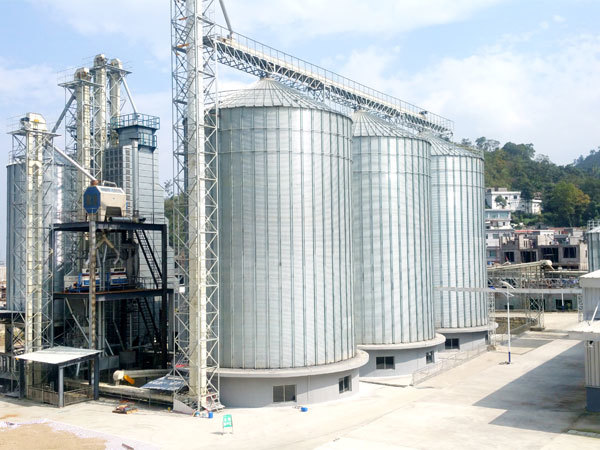
Large Commercial Silos: Designed for Industrial Grain Flow
Large commercial silo systems are built for completely different operational goals.
These projects are usually connected to:
- industrial feed mills
- port logistics
- large flour mills
- commercial grain terminals
- government grain reserves
- industrial processing plants
At this scale, the project is no longer just “grain storage.”
It becomes a continuous grain handling system.
The engineering focus shifts toward:
- unloading speed
- truck turnover efficiency
- automation
- high-capacity drying
- continuous conveying
- inventory management
Large commercial silos are designed to handle massive grain movement during peak harvest periods.
Bigger Silos Also Create Bigger Engineering Responsibilities
This is the part many buyers underestimate.
As silo diameter and storage height increase, engineering complexity increases rapidly.
Large commercial silos require careful planning for:
- foundation design
- wind load resistance
- aeration airflow
- temperature monitoring
- discharge systems
- structural stress
- moisture control
Poor engineering in large silo projects creates very expensive long-term problems.
For example:
If airflow distribution inside a large silo is poorly designed, moisture pockets begin developing in certain areas.
Over time this can cause:
- mold growth
- grain heating
- crust formation
- insect infestation
- spoilage losses
In large storage systems, even small engineering mistakes become operationally expensive.
Why Many Medium Investors Make the Wrong Choice
One common mistake in developing agricultural markets is building oversized commercial storage too early.
The logic usually sounds reasonable:
“Bigger storage means bigger business.”
But real grain operations depend on grain turnover speed, not only storage volume.
A silo filled with unsold grain does not automatically generate profit.
In some cases, oversized storage actually creates:
- slower inventory rotation
- higher maintenance cost
- unnecessary electricity consumption
- increased financing pressure
- more difficult grain management
Many successful agricultural businesses start with medium-scale silo systems and expand step by step based on actual grain flow demand.
Grain Drying Changes the Entire Storage Strategy
One major factor often ignored during silo planning is grain drying capability.
Storage performance depends heavily on incoming grain moisture.
If wet maize enters storage without proper drying:
- mold risk increases rapidly
- grain temperature rises
- storage life decreases
- feed quality becomes unstable
This is why modern silo projects increasingly integrate:
- grain dryers
- aeration systems
- temperature monitoring
- grain cleaning systems
from the beginning.
Professional manufacturers like COBAN Machinery focus on the entire grain handling process instead of treating the silo as a standalone structure.
In real projects, the relationship between drying capacity and silo capacity is often more important than silo size itself.
Small Silos vs Large Commercial Silos: Practical Comparison
| Factor | Small Grain Silos | Large Commercial Silos |
|---|---|---|
| Initial Investment | Lower | Higher |
| Installation Complexity | Easier | More complex |
| Operational Flexibility | High | Moderate |
| Expansion Capability | Gradual expansion | Large-scale planning required |
| Power Consumption | Lower | Higher |
| Grain Segregation | Easier | More difficult |
| Suitable Users | Farms, cooperatives, small feed mills | Industrial grain operations |
| Engineering Requirements | Moderate | Advanced |
Which Storage Solution Is Better for Africa and Developing Markets?
In many developing agricultural regions, medium-scale silo systems often make more economic sense than oversized commercial storage.
This is because local conditions frequently involve:
- seasonal grain collection
- fluctuating supply chains
- unstable transportation
- varying moisture conditions
- limited operating capital
Under these conditions, flexible silo systems combined with practical drying capacity usually outperform massive storage projects with weak grain turnover.
The most successful projects are not always the largest.
They are usually the projects with:
- balanced grain flow
- stable drying systems
- manageable operating costs
- efficient storage rotation
- realistic expansion planning
Final Thoughts
Choosing between small grain silos and large commercial silos is not simply a question of storage capacity.
It is a decision about how the entire grain business will operate during harvest season, storage cycles, and future expansion.
Small silos provide flexibility, lower investment risk, and easier operation for growing agricultural businesses.
Large commercial silos provide industrial-scale efficiency for operations with stable grain volume, strong logistics, and continuous processing demand.
The best storage solution is the one that matches:
- actual grain flow
- local harvest conditions
- drying capacity
- transportation infrastructure
- long-term operational goals
In modern grain storage projects, practical engineering planning matters far more than simply building the largest silo possible.