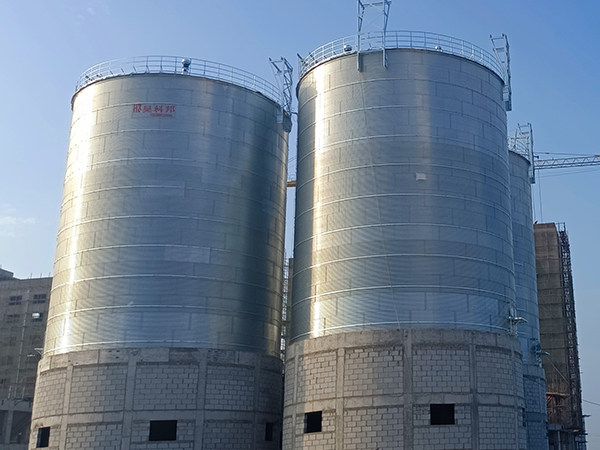
This article will systematically introduce silo suitable for storing corn from four aspects: material selection, design structure, functional characteristics and application scenarios, to help customers make scientific and reasonable purchasing decisions.

The importance of corn storage silo
As the main grain reserve crop, the storage effect of corn is directly related to food security and the stability of market supply. Corn storage silo can provide a closed storage environment with good ventilation performance, effectively block external moisture, and reduce the risk of insect pests and mildew. High-quality silos not only help to ensure the storage safety of corn, but also reduce manpower input and maintenance frequency during management, and improve overall grain storage efficiency.
Selection of materials for silo suitable for storing corn
Hot-dip galvanized or anti-corrosion steel plates are recommended for corn silos. Their excellent corrosion resistance can effectively resist moisture erosion in the storage environment. Some high-end silos are equipped with moisture-proof lining layers to significantly improve the moisture-proof effect and ensure the quality of corn storage.
To ensure the stability and bearing capacity of the silo structure, the thickness of the steel plate used is usually not less than 1.2 mm. This thickness standard helps to improve the wind and earthquake resistance of the silos and adapt to climate change in different regions. At the same time, the selection of steel that meets quality standards can effectively ensure the safe operation and durability of corn storage silos throughout the entire service life.
Design structure and functional characteristics
Sealing design
Corn storage silos are required to have good sealing performance to prevent air and moisture from entering the silo and reduce the risk of corn getting damp and moldy. Sealing treatment of sealed doors, closed covers and interfaces is the key to ensuring the sealing of silos.
Ventilation and dehumidification system
Reasonable ventilation design is crucial for corn storage. Silo suitable for storing corn are equipped with automatic ventilation devices and temperature and humidity monitoring systems, which can realize air circulation and temperature and humidity control in the silos to prevent grain from deteriorating due to heat and humidity.
Insect and mildew proof
Anti-insect nets and mildew-proof coatings are used inside the silo to effectively resist pest invasion and mildew growth. At the same time, regular environmental monitoring and management measures are combined to ensure the safety of corn storage to the greatest extent.
Structural stability
This silos adopts a wind-resistant and earthquake-resistant structural design. The steel component nodes are professionally calculated and strengthened to withstand a 12-level typhoon and an 8-degree earthquake. Finite element analysis has verified that the structural displacement is ≤1/500 under extreme working conditions, which fully meets the safety requirements for grain storage.

Capacity and specification selection
The capacity of the corn silo needs to be determined in combination with the scale of grain storage and the actual site. Common specifications in the market range from tens of tons to thousands of tons. Small silos of 50-200 tons are suitable for farmers, and medium and large silos of more than 1,000 tons are suitable for grain depots and processing companies.
Reasonable capacity configuration not only saves costs, but also facilitates grain management and subsequent logistics transportation. Choosing a corn storage silos with suitable capacity will help improve storage efficiency and ease of use.
Application scenarios and installation requirements
As a modern agricultural infrastructure, the site selection and installation of corn storage silos need to focus on three indicators: site flatness error ≤ 3‰, drainage system designed according to the 50-year rainstorm standard, foundation bearing capacity ≥ 150kPa, to ensure structural safety and grain storage quality.
It is recommended to entrust a professional construction team to carry out the installation, strictly control the assembly accuracy and sealing performance, and optimize the ventilation system configuration in combination with regional climate characteristics to ensure long-term and stable operation of the silos.
Suggestions for selecting high-quality corn storage silo
Material quality
It is recommended to give priority to ISO-certified steel plate materials to ensure that their anti-corrosion performance and durability are more reliable.
Technical support
Select suppliers to provide complete installation, commissioning and after-sales service guarantees.
Intelligent management
Equipped with temperature and humidity monitoring and automatic ventilation systems to improve management efficiency.
Reasonable price
Comprehensively evaluate product quality and price to avoid subsequent high maintenance costs due to low prices.
Summary
As a key facility for food security, the anti-corrosion steel plate structure of corn storage silo ensures durability. The perfect sealing design and intelligent ventilation system effectively prevent moisture and mildew. Professional capacity planning and standardized installation process can meet long-term storage needs under different climatic conditions.
For agricultural enterprises and farmers, choosing corn storage silos that meet their needs is a key step to ensure the quality and quantity of grain. We recommend that customers consider product quality, functional design and after-sales service based on the actual grain storage scale and environmental conditions to ensure that the invested silos can achieve long-term and stable benefits.