Concept of silo capacity
Silo capacity refers to the maximum spatial volume of materials that a storage device can accommodate, which is crucial in grain storage management. It is the key basis for planning grain storage scale, ensuring storage safety, and improving efficiency. Accurately grasping the reasonable arrangement of grain storage, avoiding risks, and ensuring the smooth development of grain storage work. To maximize your investment ROI, it’s crucial to track current market trends. See our latest analysis on [2026 Grain Prices per Bushel] to decide the best time for grain discharge.
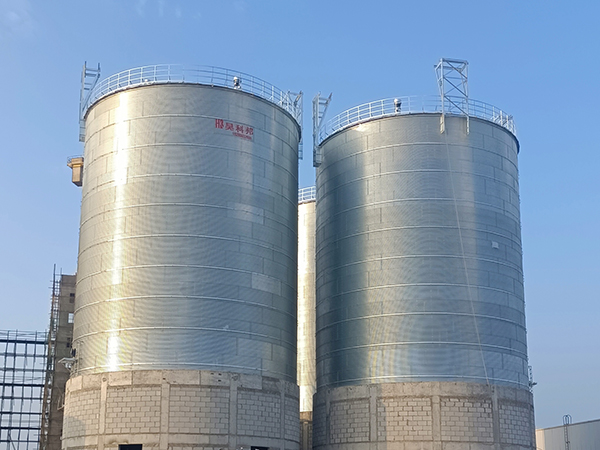
The influence of silo shape
Silos shape is the key to affecting capacity measurement. Common silos are cylindrical and conical. The former has a regular structure and the capacity is calculated using the cylindrical volume formula; the latter is narrowed at the top and requires the cone volume formula. Before measuring, accurately identify the shape and select the corresponding formula to ensure accurate results.
Selection of measuring tools
In order to accurately measure the silos capacity, it is necessary to select appropriate measuring tools. In general, laser rangefinders, steel tape rulers, measuring buckets and other tools are used for measurement. Steel tape rulers are more commonly used measuring tools, but it should be noted that the steel tape ruler should be kept perpendicular to the silos wall during measurement, and errors caused by bending and deformation should be avoided
Application of calculation formulas
Mathematical formulas are required to calculate silo capacity. The volume of a cylindrical silos = π × (diameter ÷ 2)² × height. When using, make sure that the units of diameter and height are consistent. The volume of a conical silos = (1/3) × π × (base radius)² × height. Also, pay attention to the uniformity of units.
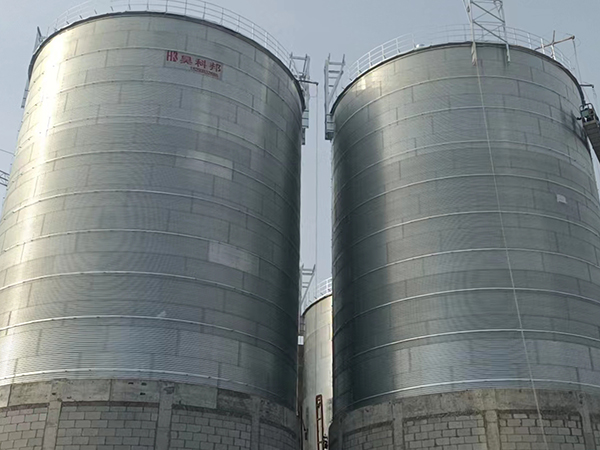
Measurement precautions
Tool accuracy
Select high-precision measuring tools and avoid using tools with poor accuracy to ensure accurate measurement results.
Measuring posture
Maintain the correct measuring posture to reduce errors caused by improper posture.
Formula matching
Select the corresponding formula according to the shape of the silo to prevent measurement deviations caused by formula errors.
Unit uniformity
In measurement calculations, the units of each parameter must be consistent to avoid conversion errors.
Regular inspection
Regularly check the silos capacity to ensure the safety of grain storage.
Summary
Silo capacity measurement is an important part of grain storage management. Mastering the correct method can improve storage efficiency and ensure safety. In actual operation, factors such as silos shape, tools, formulas and unit unification should be considered to reduce errors and provide reliable data for grain storage management.