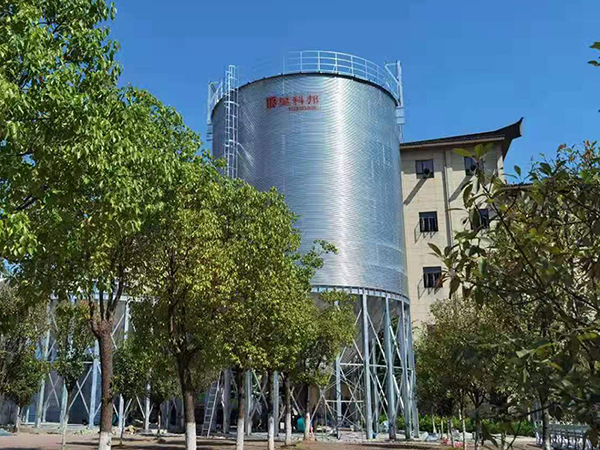
Small Farm Grain Silo
COBAN grain silos are designed to ensure safe storage, stable ventilation, and long-term grain preservation under different climate conditions. Each silo system can be customized based on capacity, grain type, and project requirements for optimal storage performance and reliability.

Small Farm Grain Silo
Product:Small Farm Grain Silo
Capacity:50–5,000+ Tons
Material:Galvanized Steel
Bottom Type:Flat Bottom / Hopper Bottom
Optional Systems:Aeration, Temperature Monitoring & Grain Conveying
- Customized Capacity Design
- High Strength Galvanized Steel
- ISO Certified Manufacturing
- Global Installation Support
Applications
Corn Storage
Wheat Storage
Rice Storage
Soybean Storage
Feed Storage
Commercial Grain Storage
Product Details & Technical Information
A small farm does not necessarily need a large grain storage system. What matters is having a storage bin that matches the farm’s harvest volume, available space, grain turnover and investment budget.
The COBAN Small Farm Grain Silo is designed for farms and small agricultural businesses that need a safer and more organized way to store maize, wheat, rice, sorghum, barley and other dry grains.
Instead of storing harvested grain in temporary bags, warehouses or poorly ventilated rooms, a properly designed small grain storage silo gives farmers better control over grain moisture, temperature, aeration, loading and unloading.
COBAN can configure the silo according to the customer’s actual grain type, storage capacity, site conditions and handling requirements.
Small Farm Grain Silo at a Glance
| Item | COBAN Small Farm Grain Silo |
|---|---|
| Main Application | On-farm grain storage, small grain trading, seed storage and agricultural storage |
| Suitable Grains | Maize, wheat, rice, paddy, sorghum, barley and other free-flowing grains |
| Typical Capacity | Small-capacity designs from approximately 50 tons, with larger customized options |
| Silo Material | Galvanized steel |
| Structure | Corrugated bolted steel silo |
| Bottom Options | Flat bottom or hopper/conical bottom according to application |
| Aeration | Optional ventilation and aeration system |
| Temperature Control | Temperature monitoring system available |
| Loading | Bucket elevator, conveyor or pneumatic/other customized systems |
| Discharge | Gravity discharge, screw conveyor or other conveying equipment |
| Installation | Suitable for farm-level and small commercial grain storage projects |
| Configuration | Customized according to grain, capacity and site conditions |
Why Use a Grain Silo on a Small Farm?
Many small farms harvest grain only once or twice a year. The problem is that selling immediately after harvest is not always the most profitable option.
When the market price is low, farmers may want to hold their grain for several weeks or months. But grain stored in bags or an ordinary warehouse is more difficult to manage, especially when the storage period becomes longer.
A small farm grain silo provides a more controlled storage environment.
1. Reduce Dependence on Bag Storage
Bag storage requires considerable labor for filling, stacking, moving and checking grain.
A silo changes the storage method from manual stacking to bulk grain handling. Grain can be loaded mechanically and discharged when required.
2. Make Better Use of Farm Space
A vertical grain silo uses floor space more efficiently than storing the same quantity of grain in bags.
This is particularly useful for farms with limited storage buildings.
3. Improve Grain Management
With suitable aeration and temperature monitoring, farmers can monitor storage conditions instead of relying only on visual inspection.
4. Prepare for Grain Price Fluctuation
The purpose of a farm grain bin is not simply to hold grain. It can also give farmers more flexibility over when to sell their harvested grain.
For grain traders and small agricultural enterprises, this can be even more important.

Small Grain Storage Silo
COBAN Small Grain Silo: Designed Around the Farm
A common mistake is to select a grain silo only by capacity.
For a small farm, we normally look at several factors before recommending the silo:
- Annual grain production
- Maximum quantity harvested at one time
- Grain type
- Grain moisture after drying
- Expected storage period
- Available installation area
- Loading method
- Discharge requirements
- Local climate
- Future expansion plans
- Available investment budget
For example, a farm producing around 150 tons of maize does not necessarily need a 500-ton silo.
A better solution may be a smaller silo with appropriate aeration and handling equipment, leaving room for future expansion.
This approach avoids unnecessary initial investment while keeping the storage system practical.
Galvanized Steel Small Grain Storage Silo
COBAN uses galvanized steel construction for small farm grain storage applications.
The steel panels are bolted together to form the cylindrical silo body, allowing the silo to be transported and assembled at the customer’s site.
The galvanized surface provides protection against the surrounding environment and is suitable for agricultural grain storage applications.
The silo design also allows different components to be integrated according to project requirements, including:
- Roof structure
- Access manholes
- Inspection openings
- Ladders and platforms
- Aeration equipment
- Temperature sensors
- Grain inlet
- Grain outlet
- Level indicators
- Conveying equipment
The result is not simply a steel tank. It is a small grain storage system designed around the customer’s grain-handling process.
Small Farm Grain Silo Capacity: How Much Do You Need?
Capacity should be calculated from the farm’s actual grain flow rather than choosing the largest available silo.
A simple starting point is:
Required storage capacity = Maximum grain quantity to be stored × storage safety factor
For example, if a farm normally needs to store 200 tons after harvest, a silo system around 200–250 tons may be considered depending on the grain density, operating method and future expansion requirements.
For farms expecting production growth, we often recommend considering multiple smaller silos instead of one oversized silo.
For example:
| Storage Plan | Possible Configuration | Suitable For |
|---|---|---|
| Small operation | 1 × small silo | Basic on-farm grain storage |
| Growing farm | 2 × smaller silos | Separate batches or flexible storage |
| Commercializing farm | Multiple silos + conveying | Grain trading and regular turnover |
| Expansion project | Initial silos + reserved space | Farms expecting future production growth |
Multiple silos also make it easier to separate different grain varieties, harvest periods or quality grades.
Small Grain Silo with Aeration System
Aeration is one of the most important considerations when designing a grain storage system.
Grain may enter the silo after drying, but its temperature can still vary from the surrounding environment. If heat or moisture accumulates inside the grain mass, storage quality can deteriorate.
A properly selected grain silo aeration system helps move air through the stored grain and provides a way to manage grain temperature.
The aeration configuration depends on:
- Silo diameter
- Grain type
- Storage capacity
- Local climate
- Grain temperature
- Target storage period
- Required airflow
For farms located in hot or humid regions, aeration should not be treated as an optional afterthought. It should be considered during the silo design stage.
Grain Temperature Monitoring for Small Farm Storage
A farmer cannot determine the internal condition of a large grain mass simply by looking at the surface.
Temperature monitoring provides another layer of storage management.
COBAN can integrate a grain silo temperature monitoring system with the storage silo. Sensors can be positioned at different heights to monitor temperature changes inside the grain mass.
A typical monitoring strategy focuses on detecting:
- Temperature increases
- Differences between sensor points
- Localized hot spots
- Abnormal temperature trends
The objective is not simply to collect temperature data. The data should help the operator decide when inspection, aeration or other action is required.
Small Farm Grain Silo for Maize Storage
Maize is one of the most common crops requiring bulk storage on farms.
After harvesting and drying, maize can be transferred directly into a maize storage silo instead of being stored in bags.
For maize farmers, the storage system can include:
Corn/maize dryer → Bucket elevator → Grain silo → Aeration → Temperature monitoring → Discharge conveyor
The actual configuration depends on the farm’s production scale.
For a farm with a small harvest, a simple handling system may be sufficient.
For a larger farm or grain-trading operation, COBAN can integrate drying, cleaning, conveying and storage into one system.
Small Grain Silo for Wheat, Rice and Other Crops
The silo does not have to be limited to maize.
With suitable engineering design, small farm grain storage silos can be used for:
- Wheat
- Rice
- Paddy
- Sorghum
- Barley
- Soybean
- Other free-flowing agricultural grains
Different grains have different bulk densities, flow characteristics and storage requirements.
Therefore, the silo diameter, hopper angle, discharge arrangement, aeration system and conveying equipment should be selected according to the actual grain.
This is especially important when one farm plans to store several different crops in the same facility.
Flat Bottom or Hopper Bottom Grain Silo?
This is one of the questions we receive when designing small grain storage projects.
Flat Bottom Silo
A flat bottom silo is generally suitable when:
- Storage capacity is relatively large
- Grain will remain in storage for longer periods
- A permanent foundation is available
- Mechanical unloading equipment can be installed
The initial structure can be economical for bulk storage, particularly as capacity increases.
Hopper Bottom Silo
A hopper bottom silo has an inclined bottom that allows grain to discharge more easily by gravity.
It can be attractive for smaller storage systems where:
- Frequent grain turnover is required
- Faster unloading is important
- Manual clean-out should be minimized
- The customer wants easier batch separation
There is no universally “best” bottom design.
For each project, we consider capacity, grain type, turnover frequency, foundation conditions and budget before selecting the configuration.
Small Farm Grain Silo with Grain Handling Equipment
A silo is only one part of the storage process.
If grain has to be moved manually into and out of the silo, the storage system loses much of its operational advantage.
Depending on the project, COBAN can configure:
Grain Receiving
Receiving hopper and conveying equipment can be used to transfer harvested grain into the storage system.
Grain Elevation
Bucket elevators can lift grain to the silo roof for top loading.
Horizontal Conveying
Chain conveyors, belt conveyors or other suitable equipment can transfer grain between different points.
Grain Cleaning
A cleaner can be installed before storage to remove impurities and improve storage conditions.
Grain Drying
For grain harvested above the safe storage moisture level, a grain dryer can be integrated before the silo.
Grain Discharge
Discharge equipment can transfer grain from the silo to a truck, processing line, dryer or another storage bin.
This allows a small farm to gradually move from simple storage toward a complete on-farm grain storage system.
From Small Grain Bin to Complete Farm Storage System
One advantage of starting with a small grain silo is that the system can be expanded.
A farm may initially need only:
Small grain silo + basic conveying system
After production increases, the same site can potentially be developed into:
Multiple silos + grain cleaner + grain dryer + conveyors + temperature monitoring + automatic control
This staged approach can be more practical than investing in a large complete system from the beginning.
When planning the first silo, we recommend reserving enough space for future equipment and additional bins.
This small detail can significantly reduce expansion difficulties later.
Small Farm Grain Silo Price: What Determines the Cost?
Searching for small farm grain silo price is usually the first step for many buyers, but silo price cannot be determined by tonnage alone.
The final project cost can be affected by:
- Silo capacity
- Silo diameter and height
- Galvanized steel specification
- Flat or hopper bottom
- Aeration system
- Temperature monitoring
- Grain cleaning equipment
- Grain dryer
- Bucket elevator
- Conveyors
- Automation requirements
- Foundation conditions
- Installation requirements
- Shipping destination
For this reason, two silos with the same nominal capacity can have noticeably different project prices.
For a quotation, COBAN can evaluate the required capacity and configuration first rather than giving a misleading price based only on the silo body.
What Makes COBAN Small Farm Grain Silo Different?
Our approach is based on the complete grain storage process rather than simply supplying a steel silo.
Capacity Matched to the Farm
We do not recommend oversized storage simply because larger equipment is available. The silo capacity is selected according to the customer’s production and storage requirements.
Practical Equipment Configuration
A small farm does not always require a complex automated system. We can keep the configuration simple when the application does not justify additional equipment.
Room for Future Expansion
For growing farms, the initial layout can consider future silos, dryers and conveying equipment.
Grain-Specific Design
Maize, wheat, rice, soybean and other grains can have different handling requirements. The storage system is designed accordingly.
Integrated Grain Handling
Where required, the silo can be connected with grain dryers, cleaners, elevators and conveyors.
Project-Based Engineering
Instead of treating the silo as an isolated product, we consider the complete process from grain receiving to final discharge.
Small Farm Grain Storage: Common Problems We Help Solve
“I only harvest a few hundred tons. Do I need a silo?”
Not necessarily a large silo. A properly sized small grain storage silo can provide bulk storage without requiring the investment of a large commercial facility.
“Can I store maize directly after harvesting?”
If the grain moisture is above the appropriate storage level, drying should be carried out before long-term storage. The silo itself cannot replace a grain dryer.
“Do I need aeration?”
For longer-term bulk storage, aeration is generally an important part of the storage design. The required airflow and fan configuration should be calculated according to the silo and grain.
“Should I buy one large silo or several small silos?”
If the farm stores different crops, harvests at different times or expects production growth, several smaller silos can provide greater flexibility.
“Can the silo be expanded later?”
Yes, the site layout and conveying arrangement can be planned with future expansion in mind.
Recommended Small Farm Grain Storage Process
For farms requiring more than basic storage, we normally consider the following process:
Harvesting → Receiving → Pre-cleaning → Drying → Cooling → Temporary/Buffer Storage → Small Farm Grain Silo → Aeration & Monitoring → Discharge
Not every farm needs every step.
For example, a farm receiving already-dried grain may not require an on-site dryer.
A farm selling immediately after harvest may also require less storage capacity than a grain trader holding grain for several months.
The correct system is therefore determined by the actual grain flow.
Is a Small Grain Storage Silo Right for Your Farm?
A small farm grain silo is particularly suitable if you:
- Harvest more grain than you can sell immediately
- Want to reduce dependence on grain bags
- Need bulk maize or wheat storage
- Want better control of stored grain
- Need a more organized on-farm grain storage system
- Plan to expand production
- Operate a small grain trading business
- Need separate storage for different crops or batches
- Want to connect storage with a dryer or cleaning system
If your current storage method involves large numbers of bags, high labor requirements and limited control over stored grain, moving toward a small grain silo can be a practical next step.
Get a Small Farm Grain Silo Designed for Your Operation
The right silo starts with the grain, not the catalog.
Send us your grain type, required storage capacity, harvest volume, expected storage period, country and available installation space.
COBAN can then recommend a suitable silo size and configuration, including the required aeration, temperature monitoring and grain handling equipment.
Whether you need a single small grain storage silo for a farm or a scalable system for a growing agricultural business, the objective is the same: store more grain with better control, less manual handling and a system that can grow with your operation.
Request A Quote
Tell us your capacity, grain type, and project location. We will design a turnkey solution for you.