Silo Sweep Auger
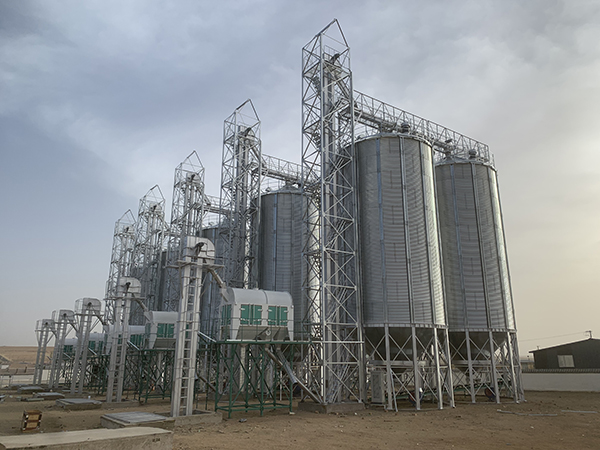
COBAN grain silos are designed to ensure safe storage, stable ventilation, and long-term grain preservation under different climate conditions. Each silo system can be customized based on capacity, grain type, and project requirements for optimal storage performance and reliability.

Silo Sweep Auger
Main Application:Flat Bottom Grain Silo
Function:Residual Grain Unloading & Clean-Out
Suitable Grains:Corn, Wheat, Rice, Soybean
Drive & Design:Electric Drive, Customized to Silo Diameter
- Customized Capacity Design
- High Strength Galvanized Steel
- ISO Certified Manufacturing
- Global Installation Support
Applications
Corn Storage
Wheat Storage
Rice Storage
Soybean Storage
Feed Storage
Commercial Grain Storage
Product Details & Technical Information
A Silo Sweep Auger is a mechanical unloading and clean-out device installed inside a flat bottom grain silo. After most of the grain has discharged through the center outlet by gravity, the sweep auger rotates around the silo and gradually moves the remaining grain toward the center discharge point.
For large flat-bottom silos, it is an important part of the unloading system because it reduces manual clean-out work, improves grain recovery, and makes routine silo operation more efficient.
1. What Is a Silo Sweep Auger?
A silo sweep auger, also called a silo sweep conveyor, sweep auger conveyor, grain sweep auger, flat bottom silo sweep auger, or silo clean-out auger, is designed specifically for removing residual grain from the floor of a flat-bottom storage silo.
It normally works after the main gravity unloading stage.
During normal unloading:
Stored grain → Center discharge → Main conveyor → Grain handling system
After gravity unloading, a layer of grain remains on the silo floor, particularly around the outer sections. The sweep auger then rotates around the central pivot and progressively conveys this residual grain toward the center outlet.
Main functions
- Remove residual grain from the silo floor
- Reduce manual grain shoveling
- Recover more stored grain
- Improve unloading efficiency
- Reduce the time required for silo clean-out
- Support safer and more systematic silo operation
- Work as part of a complete flat bottom silo unloading system
A sweep auger is not a primary grain conveyor for filling the silo. Its main purpose is the final unloading and clean-out stage.

grain sweep auger
2. Where Is a Sweep Auger Installed?
The sweep auger is installed inside the flat bottom silo at floor level.
The central section is connected to the silo’s unloading area, while the auger extends radially toward the silo wall.
As it operates, the sweep auger travels around the silo floor.
Typical unloading sequence
| Stage | Equipment / Action | Function |
|---|---|---|
| 1 | Center discharge opening | Allows grain to leave by gravity |
| 2 | Main unloading conveyor | Removes the majority of stored grain |
| 3 | Sweep auger | Collects grain remaining on the floor |
| 4 | Center outlet | Receives swept grain |
| 5 | Bucket elevator / conveyor | Transfers recovered grain away from the silo |
This arrangement is particularly suitable for large flat-bottom steel grain silos where manually removing the final grain layer would require significant labor.
3. How Does a Silo Sweep Auger Work?
The working principle is relatively simple, but the equipment must be correctly matched to the silo structure and unloading system.
Step 1 — Gravity unloading
The center discharge outlet is opened and most of the grain flows naturally toward the center.
Depending on the silo floor and unloading configuration, a large percentage of the grain can be discharged without mechanical sweeping.
Step 2 — Residual grain remains on the floor
After the main unloading stage, grain remains around the silo floor, particularly toward the perimeter.
The remaining quantity depends on:
- Grain type
- Grain moisture
- Grain flowability
- Silo diameter
- Floor design
- Center outlet arrangement
- Unloading sequence
Step 3 — Sweep auger starts rotating
The sweep auger is driven from the center area and rotates around the silo.
As it moves, the flighting engages the residual grain and conveys it toward the center.
Step 4 — Grain returns to the center outlet
The collected grain is directed toward the center discharge point and enters the main unloading conveyor.
Step 5 — Final clean-out
Once the sweep cycle is completed, only a relatively small quantity of material should remain for final inspection and cleaning.

flat bottom silo sweep auge
4. Why Is a Sweep Auger Important for a Flat Bottom Silo?
A flat-bottom silo provides a large storage volume with a relatively simple structural design. However, unlike a hopper-bottom silo, grain does not naturally flow completely toward the outlet.
This creates a practical unloading problem.
Without a mechanical sweep system, operators may need to enter the silo and manually move the remaining grain toward the discharge point.
For commercial grain storage, this can mean:
- More labor
- Longer unloading time
- Greater exposure to confined-space hazards
- More grain left inside the silo
- More difficult routine cleaning
A properly designed sweep auger provides a mechanical solution to this final unloading stage.
Particularly valuable for
- Commercial grain storage facilities
- Grain collection centers
- Farm grain storage
- Grain terminals
- Feed mills
- Grain trading facilities
- Rice and maize storage projects
- Large-capacity flat-bottom silos
5. Silo Sweep Auger vs. Hopper Bottom Silo
The need for a sweep auger is closely related to the silo floor design.
| Item | Flat Bottom Silo | Hopper Bottom Silo |
|---|---|---|
| Grain discharge | Mainly through bottom outlet | Gravity-assisted through hopper |
| Residual grain | Relatively high after gravity unloading | Generally lower |
| Sweep auger | Commonly required for final unloading | Usually not required |
| Foundation | Concrete floor/foundation | Elevated hopper structure |
| Large storage capacity | Excellent | More commonly used for smaller/moderate capacities |
| Final clean-out | Mechanical sweep + manual inspection | Mostly gravity discharge |
For large-capacity flat-bottom silos, a center unloading system + sweep auger is often a practical combination.
6. Main Components of a Silo Sweep Auger
A sweep auger is more than simply a screw conveyor. Its components must work together with the silo floor, center outlet, drive system and unloading conveyor.
1. Auger Flighting
The screw flight is the main conveying element.
It contacts the residual grain and pushes it toward the center discharge point as the auger rotates.
The flighting should be selected according to:
- Grain characteristics
- Required conveying capacity
- Auger diameter
- Rotation speed
- Silo diameter
- Expected operating conditions
2. Auger Tube / Housing
The housing supports the screw assembly and helps control the movement of grain.
Its construction must provide adequate rigidity while maintaining suitable clearance from the silo floor.
3. Drive Motor
The drive system supplies the torque required to rotate the auger.
Motor selection depends on factors such as:
- Auger length
- Grain depth
- Grain bulk density
- Conveying capacity
- Rotation resistance
- Starting load
The motor should not be selected only according to the silo diameter.
4. Central Pivot / Drive Assembly
The center mechanism acts as the rotational reference point for the sweep auger.
It allows the auger to travel around the silo while maintaining its relationship with the central unloading opening.
5. Support Wheels or Running Mechanism
Depending on the design, the outer end of the sweep auger may use wheels or another support arrangement.
The running mechanism helps maintain the correct position of the auger while it travels around the silo floor.
6. Safety Guards and Protective Components
Moving augers create serious entanglement hazards.
Protective guards, access controls and emergency stopping arrangements are therefore important parts of a complete system.
7. Basic Technical Parameters
Sweep augers are normally customized according to the silo and unloading requirements rather than selected solely from one universal specification.
Typical engineering parameters include:
| Parameter | Typical Design Range / Information |
|---|---|
| Application | Flat bottom grain silos |
| Conveyed material | Corn, wheat, rice, soybean and other free-flowing grains |
| Auger type | Rotating sweep auger |
| Installation | Inside silo, at floor level |
| Working direction | Radial movement toward center outlet |
| Drive | Electric motor / geared drive |
| Control | Local or integrated silo unloading control |
| Capacity | Selected according to grain type and unloading system |
| Auger length | Matched to silo radius |
| Silo diameter | Customized according to project |
| Main structure | Carbon steel / galvanized steel components |
| Operating mode | Mechanical sweeping after gravity unloading |
Important: There is no single sweep-auger capacity that is suitable for every silo. The actual specification should be determined from the silo diameter, grain type, residual grain depth, desired unloading time, center outlet configuration and downstream conveyor capacity.

sweep auger conveyor
8. How Is the Sweep Auger Capacity Selected?
This is one of the most important points when configuring a silo unloading system.
A common mistake is to select the sweep auger simply according to the silo storage capacity.
For example, a 5,000-ton silo does not automatically require a sweep auger with a particular t/h rating.
The sweep auger normally handles the residual grain after the main unloading stage, rather than the full storage capacity of the silo.
Therefore, the engineering calculation should consider:
Required sweep capacity ≠ total silo capacity
Instead, the design should consider:
- Silo diameter
- Estimated residual grain volume
- Grain bulk density
- Required clean-out time
- Main discharge capacity
- Sweep auger conveying capacity
- Downstream conveyor capacity
- Motor torque and starting conditions
Example planning logic
If the main unloading system removes most of the grain by gravity and the remaining grain is handled by the sweep auger, the sweep auger should be capable of processing the residual material without becoming a bottleneck in the unloading process.
The final specification should therefore be determined together with the silo unloading conveyor system, rather than treating the sweep auger as an independent machine.
9. How to Use a Silo Sweep Auger
Correct operating procedures are important for both equipment life and operator safety.
Recommended operating sequence
1. Complete normal grain discharge
Allow the main unloading system to remove the majority of grain first.
2. Confirm the main unloading path is operating
The center outlet and downstream conveyor should be ready to receive the grain collected by the sweep auger.
3. Start the downstream conveyor
The receiving conveyor should normally be available before the sweep auger begins moving grain.
4. Start the sweep auger according to the control sequence
The auger gradually collects residual grain and moves it toward the center.
5. Allow the sweep cycle to proceed
The auger should not be forced through excessive grain depth.
6. Stop the system after the residual grain has been removed
The silo should then be inspected and cleaned according to the facility’s operating procedure.
10. Important Operating Precautions
Because a sweep auger contains rotating mechanical components inside a confined grain storage structure, safety must be treated as a primary design consideration.
Never enter a silo with operating mechanical equipment
The sweep auger, unloading conveyor and other related machinery must be safely isolated before personnel enter the silo.
Use lockout/tagout procedures
Before inspection, maintenance or cleaning:
- Stop the equipment
- Disconnect the electrical supply
- Lock and tag the energy source
- Verify zero-energy condition
- Prevent unintended startup
Do not manually push grain toward a moving auger
Hands, clothing, tools or other objects must never approach exposed rotating flighting.
Check for foreign objects
Rocks, metal pieces, tools or other hard objects can damage the auger and increase the risk of mechanical failure.
Monitor abnormal operating conditions
Stop the equipment if there is:
- Unusual vibration
- Abnormal noise
- Motor overload
- Sudden reduction in conveying performance
- Bearing overheating
- Auger blockage
- Structural interference
11. Maintenance of a Silo Sweep Auger
Regular inspection helps maintain reliable silo unloading performance.
| Component | Inspection Focus |
|---|---|
| Auger flighting | Wear, deformation and damage |
| Bearings | Lubrication, temperature and abnormal noise |
| Gear drive | Oil condition and leakage |
| Motor | Current, temperature and vibration |
| Drive chain/coupling | Alignment and wear |
| Support wheels | Rotation and physical condition |
| Center mechanism | Wear and alignment |
| Guards | Missing or damaged protection |
| Electrical system | Connections and overload protection |
| Silo floor | Foreign objects, deformation and obstruction |
The inspection interval should be established according to operating hours, grain conditions and the equipment manufacturer’s maintenance requirements.
12. Grain Types Suitable for Sweep Augers
A properly selected sweep auger can be used for many common bulk agricultural commodities.
Common applications
- Corn / Maize
- Wheat
- Soybeans
- Rice / Paddy
- Barley
- Sorghum
- Other free-flowing grains
However, grain properties affect conveying performance.
For example, high-moisture grain may behave differently from properly conditioned dry grain. Sticky, compacted or heavily bridged material can place substantially higher loads on the conveying system.
Therefore, the material condition should be included when designing the unloading system.
13. Sweep Auger in a Complete Grain Storage System
COBAN does not treat the sweep auger as an isolated component.
For a complete grain storage project, it normally works together with several pieces of grain handling equipment.
Typical system
Truck receiving → Pre-cleaner → Bucket elevator → Grain conveyor → Grain dryer → Storage silo → Center discharge → Sweep auger → Conveyor → Bucket elevator / destination
The unloading section can be arranged as:
Flat Bottom Silo
↓
Center Gravity Discharge
↓
Main Unloading Conveyor
↓
Residual Grain
↓
Silo Sweep Auger
↓
Center Outlet
↓
Downstream Conveyor
This integrated approach allows the sweep auger capacity and drive configuration to be coordinated with the rest of the grain handling line.
14. Sweep Auger Selection: What Information Does COBAN Need?
When requesting a sweep auger quotation, providing only the silo capacity is usually not enough.
For accurate equipment selection, COBAN recommends providing:
| Required Information | Why It Matters |
|---|---|
| Silo diameter | Determines sweep travel length |
| Silo storage capacity | Defines overall application scale |
| Grain type | Affects conveying characteristics |
| Grain bulk density | Helps determine conveying load |
| Grain moisture | Can affect flowability |
| Center outlet size | Determines discharge arrangement |
| Main unloading capacity | Prevents bottlenecks |
| Required unloading time | Determines performance requirements |
| Local power supply | Determines motor/electrical configuration |
| Silo drawing | Helps verify mechanical compatibility |
If an existing silo is being upgraded, photographs and drawings of the silo floor and center discharge arrangement are also useful.
15. Why Choose a Professionally Matched Sweep Auger?
A sweep auger should not be selected as a generic screw conveyor and then installed inside an existing silo.
The silo diameter, floor structure, center discharge, sweep radius, drive system and downstream conveying equipment all influence the final design.
A properly matched system can provide:
- More reliable residual grain removal
- Better coordination with the main unloading system
- Reduced manual clean-out
- Lower risk of mechanical overload
- Easier maintenance
- More consistent unloading performance
- Better integration with the complete grain storage system
For new grain silo projects, it is preferable to design the sweep auger together with the silo and unloading system from the beginning.
16. COBAN Silo Sweep Auger Solution
COBAN supplies grain storage and handling systems and can configure the sweep auger as part of a complete flat-bottom silo unloading solution.
Instead of determining the auger only from a catalog specification, the engineering team evaluates the complete unloading arrangement, including:
- Silo diameter and capacity
- Flat-bottom structure
- Center discharge
- Sweep auger dimensions
- Drive system
- Main unloading conveyor
- Bucket elevator
- Grain flow direction
- Electrical control
- Site operating requirements
This approach is especially important for large grain storage projects, where the sweep auger is only one part of the complete unloading system.
Need a Sweep Auger for Your Grain Silo?
Send COBAN the silo diameter, capacity, grain type and existing or planned unloading system. We can evaluate the required sweep auger configuration and integrate it with the complete silo unloading solution.
Silo Sweep Auger — Quick Technical Summary
| Item | Specification |
|---|---|
| Product | Silo Sweep Auger |
| Main Application | Residual grain removal from flat-bottom silos |
| Working Principle | Rotating screw conveys grain toward center outlet |
| Suitable Materials | Corn, wheat, rice, soybean and other bulk grains |
| Drive | Electric motor with geared transmission |
| Installation | Inside flat-bottom silo |
| Design | Customized according to silo diameter and unloading requirements |
| System Integration | Center outlet, conveyor, bucket elevator and control system |
Request A Quote
Tell us your capacity, grain type, and project location. We will design a turnkey solution for you.