Grain Screw Conveyor
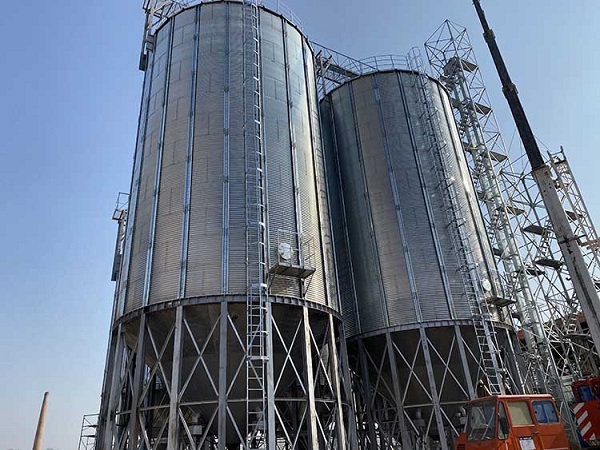
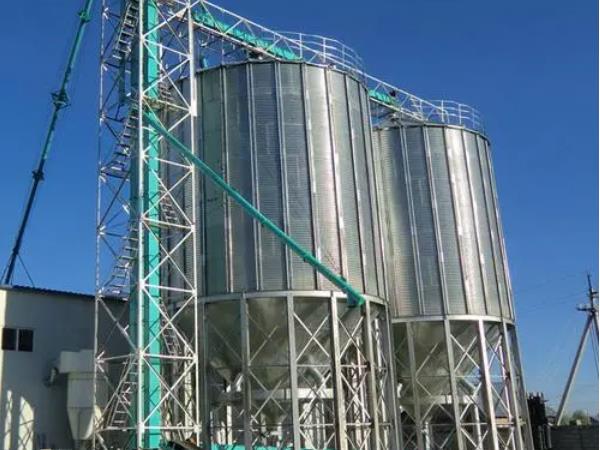
COBAN grain silos are designed to ensure safe storage, stable ventilation, and long-term grain preservation under different climate conditions. Each silo system can be customized based on capacity, grain type, and project requirements for optimal storage performance and reliability.

Grain Screw Conveyor
Conveyor Type:Tubular / Underfloor / Silo Sweep Auger
Application:Grain Silo Loading, Unloading & Transfer
Conveying Material:Wheat, Maize, Rice, Soybean & Other Bulk Grains
Configuration:Horizontal / Inclined, Customized Capacity & Length
- Customized Capacity Design
- High Strength Galvanized Steel
- ISO Certified Manufacturing
- Global Installation Support
Applications
Corn Storage
Wheat Storage
Rice Storage
Soybean Storage
Feed Storage
Commercial Grain Storage
Product Details & Technical Information
A Grain Screw Conveyor is a practical conveying machine used to move grain between silos, receiving points, elevators, cleaners, dryers, and other grain handling equipment. It is especially useful when the conveying distance is relatively short and the grain needs to be moved horizontally or at a controlled incline.
For grain storage projects, a screw conveyor is not always installed in the same place. Depending on the silo design and the conveying task, it can be supplied as an external tubular screw conveyor, underfloor screw conveyor, or silo sweep auger.
COBAN supplies these three configurations for different grain handling requirements and can select the suitable design according to silo size, grain type, conveying distance, capacity, and site layout.
What Is a Grain Screw Conveyor?
A grain screw conveyor consists mainly of a conveyor housing, rotating screw shaft, spiral flights, bearings, inlet and outlet openings, and a drive unit.
When the motor turns the screw shaft, the spiral flights push the grain forward inside the conveyor housing.
Unlike a bucket elevator, which is designed for vertical lifting, a screw conveyor is mainly used for horizontal or inclined grain conveying.
Typical applications include:
- Moving grain from one machine to another
- Conveying grain away from a silo discharge point
- Feeding a bucket elevator
- Transferring grain after cleaning or drying
- Removing grain from a hopper-bottom silo
- Sweeping residual grain toward the center outlet of a flat-bottom silo
The correct screw conveyor should be selected according to the actual grain flow rather than simply choosing a model based on motor power.
Three Grain Screw Conveyor Configurations
For grain silo projects, COBAN mainly considers three different applications:
- External Tubular Screw Conveyor
- Underfloor Screw Conveyor
- Silo Sweep Auger
They use the same basic screw conveying principle, but their installation positions and jobs are quite different.
1. External Tubular Screw Conveyor

The External Tubular Screw Conveyor is installed outside the grain silo and is normally used to transfer grain between different pieces of equipment.
It has a closed tubular housing with a rotating screw inside. A motor and gearbox are mounted at one end, while grain enters through an inlet and leaves through an outlet.
Typical installation
A common arrangement is:
Grain Silo → Screw Conveyor → Bucket Elevator
or:
Grain Cleaner → Screw Conveyor → Grain Silo
It can also be used between a dryer, cleaner, hopper, elevator, or other grain handling equipment.
Why use a tubular design?
The closed tube keeps the grain inside the conveying path and provides a relatively compact installation. It is suitable when the conveyor needs to pass through an existing plant layout or when dust and grain loss need to be controlled.
The conveyor can be installed horizontally or with a moderate incline, depending on the required conveying capacity and grain characteristics.
Main applications
- Grain transfer between silos and elevators
- Feeding grain cleaning equipment
- Connecting dryers with storage silos
- Short-distance grain transfer
- Feeding hoppers and processing equipment
Important selection factors
The conveyor length, diameter, screw speed, motor power, inclination, and required capacity should be considered together.
A longer conveyor or a larger inclination normally requires a different design from a short horizontal conveyor.
2. Underfloor Screw Conveyor

The Underfloor Screw Conveyor is installed below the floor or bottom of a flat-bottom grain silo.
Its job is different from an ordinary external conveyor. Instead of transferring grain from one machine to another, it primarily receives grain discharged from the silo and moves it toward the external conveying system.
A typical arrangement is:
Flat-Bottom Silo → Center Outlet → Underfloor Screw Conveyor → Bucket Elevator
The screw conveyor may be installed inside a concrete trench or another protected space below the silo floor.
How does it work?
During unloading, grain flows through the silo’s discharge openings into the conveyor below.
The screw rotates continuously and carries the grain toward the selected discharge point.
This allows the conveyor to remain underneath the silo without occupying much space around the outside of the storage bin.
Where is it useful?
Underfloor screw conveyors are particularly useful for:
- Flat-bottom grain silos
- Grain storage facilities
- Grain receiving and unloading systems
- Multi-silo storage plants
- Projects where the conveying equipment needs to stay below ground level
Underfloor Screw Conveyor vs. External Screw Conveyor
The two machines may look similar from the outside, but their functions are different.
| Item | External Tubular Screw Conveyor | Underfloor Screw Conveyor |
|---|---|---|
| Installation | Outside equipment/silo | Below silo floor |
| Main purpose | Transfer grain | Collect and discharge grain |
| Common connection | Cleaner, dryer, silo, elevator | Silo outlet |
| Typical direction | Horizontal/inclined | Usually horizontal |
| Application | General grain conveying | Silo unloading |
For a new silo project, the underfloor conveyor should be considered together with the silo outlet arrangement, foundation, discharge gates, and bucket elevator position.
3. Silo Sweep Auger

The Silo Sweep Auger is designed specifically for flat-bottom grain silos.
It is installed inside the silo at floor level, rather than underneath or outside the silo.
This is an important distinction.
After the main grain outlets have discharged most of the stored grain, a layer of grain can remain on the silo floor. A sweep auger helps move this remaining grain toward the central discharge opening.
How does it work?
The basic operating sequence is:
Main unloading → residual grain remains → sweep auger moves grain → center outlet → external conveying system
The sweep auger normally extends from the center area toward the silo wall.
As it rotates, the screw flight gradually moves the remaining grain toward the center discharge point.
Depending on the silo design, the sweep auger can rotate around the silo center while progressively clearing the floor.
Why is a sweep auger needed?
A flat-bottom silo cannot rely entirely on gravity to remove all the grain.
Without a sweep system, operators may need to enter the silo or use manual tools to remove the remaining grain. A properly designed sweep auger reduces this manual work and makes final unloading more practical.
Typical applications
- Flat-bottom grain storage silos
- Wheat storage
- Maize storage
- Rice storage
- Soybean storage
- Commercial grain storage facilities
- Farm grain storage systems
Grain Screw Conveyor and Silo Sweep Auger Are Not the Same
This distinction is worth making clear on a product page.
A Grain Screw Conveyor generally transports grain from one point to another.
A Silo Sweep Auger is specifically intended to move residual grain inside a flat-bottom silo toward the discharge outlet.
In other words:
The screw conveyor moves grain through a conveying line; the sweep auger helps clear grain from the silo floor.
Although both use a rotating screw, their installation and working conditions are different.
How a Screw Conveyor Fits Into a Grain Silo System
A screw conveyor normally works as one part of a complete grain handling system.
For example:
Truck Receiving
      ↓
Receiving Hopper
      ↓
Grain Cleaner
      ↓
Bucket Elevator
      ↓
Grain Screw Conveyor
      ↓
Grain Silo
During unloading:
Grain Silo
      ↓
Silo Outlet
      ↓
Underfloor Screw Conveyor
      ↓
Bucket Elevator
      ↓
Cleaner / Dryer / Other Silo
For a flat-bottom silo with a sweep system:
             Flat-Bottom Silo
        ┌─────────────────────┐
        │                     │
        │       Grain         │
        │                     │
        │         ↓           │
        │      Center         │
        │      Outlet         │
        │         ↑           │
        │   ← Sweep Auger →   │
        └─────────┬───────────┘
                  ↓
          Underfloor Conveyor
                  ↓
            Bucket Elevator
The actual arrangement depends on the silo diameter, storage capacity, foundation design, number of discharge outlets, and required grain flow.
Grain Screw Conveyor for Different Grain Types
Screw conveyors can be used for many bulk agricultural materials, but the conveyor should be selected according to the material being handled.
Common materials include:
- Maize / Corn
- Wheat
- Paddy / Rice
- Soybean
- Barley
- Sorghum
- Sunflower seed
- Rapeseed
- Other free-flowing grains
Grain moisture, bulk density, particle size, temperature, and the required conveying rate can all affect the final design.
For example, a conveyor handling dry maize does not necessarily require the same configuration as one handling high-moisture paddy.
How to Select the Right Grain Screw Conveyor
There is no single screw conveyor size that fits every grain silo.
Before selecting the equipment, COBAN normally needs several basic project details.
1. Required Capacity
First determine how much grain needs to be moved per hour.
For example:
10 TPH, 20 TPH, 30 TPH, 50 TPH
The conveyor capacity should normally match the surrounding equipment instead of becoming a bottleneck in the system.
2. Conveying Distance
Measure the approximate distance between the inlet and outlet.
A 5-meter conveyor and a 20-meter conveyor will have different shaft, bearing, drive, and power requirements.
3. Installation Angle
A horizontal conveyor is generally easier to design than an inclined conveyor.
As the inclination increases, the usable conveying capacity can change, so the conveyor should be sized according to the actual installation angle.
4. Grain Type
Wheat, maize, rice, soybean, and other grains have different flow characteristics.
The material should therefore be considered when selecting the screw diameter and operating speed.
5. Silo Type
The silo structure is particularly important.
For example:
- Flat-bottom silo: may require an underfloor conveyor and/or sweep auger.
- Hopper-bottom silo: grain can discharge through the hopper outlet and enter a conveyor below or beside the silo.
- Multiple silos: conveyors may be arranged to transfer grain between several storage bins.
Grain Screw Conveyor for Silo Projects
For a complete grain storage project, the screw conveyor should not be selected separately from the silo.
The following equipment usually needs to be considered as one conveying system:
| Equipment | Main Function |
|---|---|
| Grain Hopper | Receives incoming grain |
| Grain Cleaner | Removes impurities |
| Bucket Elevator | Vertical grain conveying |
| Grain Screw Conveyor | Horizontal/inclined conveying |
| Underfloor Screw Conveyor | Silo discharge conveying |
| Silo Sweep Auger | Removes residual grain |
| Grain Silo | Stores grain |
| Distribution Equipment | Directs grain to the selected silo |
This approach helps avoid a common problem in grain storage projects: having a silo with sufficient storage capacity but insufficient conveying capacity.
COBAN Grain Screw Conveyor
COBAN supplies Grain Screw Conveyor solutions for grain storage and handling systems, including external tubular conveyors, underfloor conveyors, and sweep augers for flat-bottom silos.
The conveyor can be designed according to the customer’s actual project rather than using the same configuration for every silo.
Our engineers can consider:
- Grain type
- Required conveying capacity
- Conveyor length
- Installation angle
- Silo diameter and capacity
- Flat-bottom or hopper-bottom silo
- Bucket elevator capacity
- Motor and power requirements
- Inlet and outlet positions
- Existing grain handling equipment
For a complete grain storage project, COBAN can also coordinate the screw conveyor with the grain silo, bucket elevator, cleaner, dryer, discharge system, and other grain handling equipment.
Request a Grain Screw Conveyor Configuration
If you already know your silo capacity, grain type, required conveying capacity, and approximate conveying distance, these details are enough for a preliminary selection.
Send us:
Grain: Maize / Wheat / Rice / Soybean / Other
Capacity: ___ TPH
Conveying Distance: ___ m
Installation: Horizontal / Inclined
Silo Capacity: ___ tons
Silo Type: Flat Bottom / Hopper Bottom
COBAN can then recommend the appropriate external screw conveyor, underfloor screw conveyor, or silo sweep auger for the project.
Request A Quote
Tell us your capacity, grain type, and project location. We will design a turnkey solution for you.