Grain Belt Conveyor
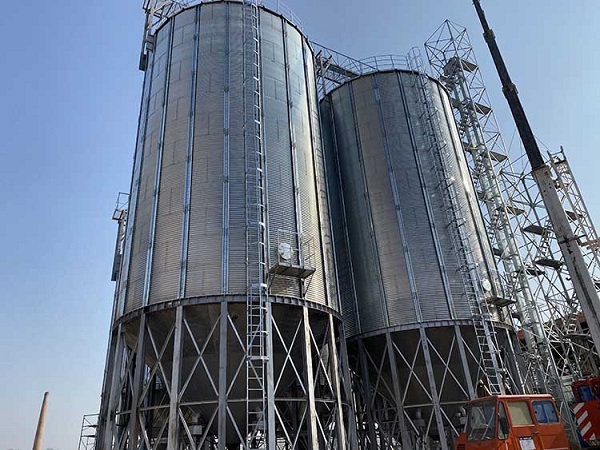
COBAN grain silos are designed to ensure safe storage, stable ventilation, and long-term grain preservation under different climate conditions. Each silo system can be customized based on capacity, grain type, and project requirements for optimal storage performance and reliability.

Grain Belt Conveyor
Application:Grain Silo & Grain Handling System
Material:Maize, Wheat, Paddy, Rice, Barley, etc.
Capacity:Customized According to Project
Design:Customized Length, Width & Layout
- Customized Capacity Design
- High Strength Galvanized Steel
- ISO Certified Manufacturing
- Global Installation Support
Applications
Corn Storage
Wheat Storage
Rice Storage
Soybean Storage
Feed Storage
Commercial Grain Storage
Product Details & Technical Information
A Grain Belt Conveyor is one of the most practical conveying machines for moving grain horizontally or over a gentle incline between receiving pits, bucket elevators, grain silos, dryers, cleaners and other grain processing equipment.
In a complete grain storage project, the belt conveyor is rarely an isolated machine. Its real value comes from how it works together with the grain receiving system, bucket elevator, grain cleaner, dryer, silo, discharge system and control system.
At COBAN, we design grain belt conveyors according to the material flow and capacity of the complete project rather than selecting a conveyor independently. This helps reduce unnecessary transfer points, grain damage, energy consumption and operating problems.
What Is a Grain Belt Conveyor?
A grain belt conveyor is a continuous conveying system that uses a moving belt to transport agricultural commodities from one point to another.
Unlike screw conveyors, which move grain through a rotating screw, a belt conveyor carries the material on the surface of a continuous belt.
This makes it particularly suitable for:
- Wheat
- Maize / corn
- Paddy
- Rice
- Barley
- Sorghum
- Soybeans
- Oats
- Rapeseed
- Sunflower seeds
- Other free-flowing agricultural commodities
For large grain storage facilities, belt conveyors are mainly used where high-volume horizontal conveying is required.
Typical Grain Belt Conveyor Structure
A complete grain belt conveyor normally consists of:
| Component | Function |
|---|---|
| Conveyor belt | Carries grain continuously |
| Drive motor | Provides conveying power |
| Gear reducer | Transfers suitable torque and speed |
| Drive pulley | Drives the belt |
| Tail pulley | Returns the belt |
| Idler rollers | Support the loaded belt |
| Conveyor frame | Supports the complete conveyor |
| Belt tensioning system | Maintains appropriate belt tension |
| Feeding inlet | Receives grain |
| Discharge outlet | Transfers grain to the next machine |
| Inspection/maintenance points | Facilitate cleaning and servicing |
| Safety protection | Protects operators from moving components |
The actual configuration can be adjusted according to capacity, conveyor length, installation height, grain type and project layout.

cheap grain conveyor
Why Is a Belt Conveyor Important in a Grain Silo Project?
A grain silo does not work as a standalone storage tank.
A commercial grain storage facility needs to move grain through several stages:
Receiving → Pre-cleaning → Elevating → Drying → Cleaning → Storage → Reclaiming → Loading
The belt conveyor provides the horizontal connection between these machines.
A typical system may look like:
Truck Receiving Pit
↓
Grain Belt Conveyor
↓
Bucket Elevator
↓
Grain Cleaner / Dryer
↓
Distribution Conveyor
↓
Grain Silo
During grain discharge:
Grain Silo
↓
Bottom Outlet
↓
Belt Conveyor
↓
Bucket Elevator
↓
Truck / Packaging / Processing
This means conveyor selection directly affects the efficiency of the entire grain handling system.
A conveyor that is undersized can become a bottleneck even when the grain silo itself has a much larger storage capacity.
Where Is a Grain Belt Conveyor Used?
The correct location depends on the overall plant layout.
1. Receiving System
After grain is unloaded from trucks, a receiving conveyor can transport grain from the receiving pit toward the bucket elevator.
This arrangement is particularly useful when the receiving point and elevator are separated horizontally.
2. Between Bucket Elevators and Silos
Belt conveyors can distribute grain from a vertical elevator to different storage silos.
For example:
Bucket Elevator → Belt Conveyor → Distributor → Multiple Silos
For multi-silo projects, the conveyor length and discharge points should be determined according to the number and arrangement of silos.
3. Grain Dryer System
Wet grain coming from harvesting normally needs to be transported to the dryer before storage.
A common configuration is:
Receiving → Cleaner → Wet Grain Conveyor → Dryer → Dry Grain Conveyor → Silo
The conveyor must be selected according to the dryer throughput so that grain flow is continuous.
4. Silo Discharge System
When stored grain needs to leave the silo, the belt conveyor can collect grain from the silo outlet and transfer it to the next handling point.
This is particularly useful for large-capacity grain storage systems.
5. Grain Loading System
A belt conveyor can also transport grain toward:
- Truck loading points
- Rail loading systems
- Packaging systems
- Processing plants
- Feed mills
- Rice mills
Grain Belt Conveyor vs Bucket Elevator
These two machines are frequently used together, but they perform different jobs.
| Feature | Grain Belt Conveyor | Bucket Elevator |
|---|---|---|
| Main conveying direction | Horizontal / inclined | Vertical |
| Main purpose | Horizontal transportation | Vertical lifting |
| Typical application | Long-distance grain movement | Elevating grain to higher levels |
| Grain handling | Gentle and continuous | High vertical lifting |
| Layout advantage | Excellent for horizontal distances | Excellent for height differences |
| Energy requirement | Generally efficient for horizontal transport | Higher energy demand for vertical lifting |
| Typical role in silo system | Connects equipment and silos | Transfers grain between elevations |
In a well-designed grain handling plant, belt conveyors and bucket elevators are complementary rather than competing machines.
For example:
Receiving Pit → Belt Conveyor → Bucket Elevator → Belt Conveyor → Silo
The belt conveyors handle horizontal movement, while the bucket elevator provides vertical elevation.
Grain Belt Conveyor vs Screw Conveyor
Customers often compare belt conveyors with screw conveyors when designing a grain handling system.
| Factor | Belt Conveyor | Screw Conveyor |
|---|---|---|
| Long-distance conveying | Excellent | More limited |
| Large capacity | Excellent | Suitable but higher power demand |
| Grain damage | Low when correctly designed | Can be higher due to continuous screw movement |
| Horizontal conveying | Excellent | Excellent |
| Inclined conveying | Suitable within design limits | Suitable within design limits |
| Cleaning | Relatively easy | More enclosed internal structure |
| Energy efficiency | Generally favorable for long distances | More power intensive for equivalent long-distance transport |
| Multi-point discharge | Can be configured | Can be configured |
| Best application | High-volume grain handling | Short-distance / controlled conveying |
For a large grain silo project where the conveying distance is substantial, a belt conveyor is often the more practical solution.
How Does a Grain Belt Conveyor Work?
The operating principle is straightforward.
Step 1: Grain Enters the Conveyor
Grain enters through the feed inlet from a receiving pit, hopper, bucket elevator or upstream machine.
Step 2: The Motor Drives the Belt
The electric motor transfers power through the reducer to the drive pulley.
The drive pulley moves the belt continuously.
Step 3: Grain Moves Along the Belt
The grain rests on the moving belt and travels toward the discharge point.
The idler rollers support the belt and maintain its conveying shape.
Step 4: Grain Is Discharged
At the end of the conveyor, the belt changes direction around the pulley while the grain continues forward and falls into the next equipment.
Step 5: Belt Returns
The empty belt returns underneath the conveyor and repeats the cycle.
This continuous operating principle makes belt conveyors suitable for high-throughput grain conveying.

Belt conveyor connecting steel silos
How to Choose the Right Grain Belt Conveyor?
There is no single conveyor specification suitable for every grain silo project.
We normally determine the conveyor according to several engineering parameters.
1. Required Capacity
The first question is:
How many tons of grain need to be transported per hour?
For example, a silo project handling 30 TPH should not automatically use the same conveyor as a 100 TPH or 300 TPH grain handling system.
The conveyor capacity should normally be coordinated with the capacity of:
- Bucket elevator
- Grain cleaner
- Grain dryer
- Receiving system
- Silo discharge system
The weakest machine in the conveying chain can become the overall bottleneck.
2. Conveyor Length
Longer conveying distances require careful consideration of:
- Belt width
- Belt speed
- Motor power
- Belt tension
- Pulley size
- Frame strength
- Intermediate support
- Maintenance access
For long-distance grain conveying, the conveyor should be engineered as a complete mechanical system rather than simply increasing motor power.
3. Grain Type
Different grains have different:
- Bulk densities
- Particle sizes
- Flow characteristics
- Moisture contents
- Abrasiveness
- Fragility
For example, conveying dry maize and conveying high-moisture paddy may require different operating considerations.
4. Installation Angle
Horizontal conveying is the most straightforward application.
If the conveyor must be inclined, the belt type, surface characteristics, belt speed and inclination angle must be evaluated to prevent grain from rolling backward or slipping.
5. Silo Layout
The conveyor should fit the actual arrangement of the storage facility.
For example:
2 Silos
may require a relatively simple conveying route.
A project with:
6 × 2,000-ton silos
may require multiple discharge points, distribution conveyors and transfer points.
Therefore, conveyor selection should be completed together with the grain silo layout design.
Grain Belt Conveyor Capacity
Conveying capacity is affected by several variables rather than belt width alone.
Important factors include:
- Belt width
- Belt speed
- Material bulk density
- Loading cross-section
- Grain characteristics
- Conveyor inclination
- Feeding consistency
A simplified engineering relationship is:
Conveying Capacity ≈ Belt Loading × Belt Speed × Material Bulk Density
However, actual equipment selection requires allowance for operating conditions and the required continuous throughput.
For this reason, we do not recommend selecting a belt conveyor simply by searching for a “100 TPH belt conveyor” online.
The correct question is:
100 TPH under what grain, what conveyor length, what inclination and what operating condition?
Grain Belt Conveyor for Different Grain Storage Applications
Small Grain Storage Facility
For smaller farms and grain warehouses, the conveyor may be relatively short and designed around a lower throughput.
Typical application:
Receiving → Conveyor → Cleaner → Silo
Commercial Grain Storage
A commercial grain storage facility normally requires higher throughput and greater conveying distances.
Typical configuration:
Truck Receiving → Pit Conveyor → Bucket Elevator → Distribution Conveyor → Multiple Silos
Large Grain Storage Terminal
Large facilities may require multiple conveyors working simultaneously.
The system can include:
- Receiving conveyors
- Transfer conveyors
- Distribution conveyors
- Silo discharge conveyors
- Loading conveyors
- Reclaim conveyors
The conveyor system becomes part of the overall material-handling network.
Grain Belt Conveyor for Paddy and Rice
Paddy requires particular attention because it is relatively fragile and may be handled repeatedly throughout harvesting, drying and storage.
A typical paddy storage system may include:
Paddy Receiving → Pre-cleaning → Bucket Elevator → Paddy Dryer → Belt Conveyor → Paddy Silo
After storage:
Paddy Silo → Discharge → Conveyor → Rice Mill
Reducing unnecessary transfer points can help reduce grain damage and maintain smoother material flow.
Grain Belt Conveyor for Maize
Maize is one of the most common materials transported by belt conveyor systems.
A maize storage project may use conveyors at several points:
Truck → Receiving Pit → Belt Conveyor → Bucket Elevator → Cleaner → Dryer → Belt Conveyor → Silo
For maize storage projects in Africa and other warm climates, conveyor design should also consider:
- Dust control
- Easy cleaning
- High ambient temperatures
- Seasonal high throughput
- Maintenance accessibility
Grain Conveyor Dust Control
Grain handling produces dust, particularly at:
- Receiving points
- Transfer points
- Discharge points
- Elevator outlets
- Conveyor loading points
For enclosed grain handling systems, dust control should be considered as part of the engineering design.
Depending on the project, the conveyor system may be combined with:
- Enclosed conveyor covers
- Dust collection points
- Pulse jet dust collectors
- Proper transfer chute design
- Sealed inspection openings
- Appropriate ventilation
A good conveyor design should not simply move grain efficiently; it should also make the facility easier and safer to operate.
Belt Conveyor and Grain Damage
One reason belt conveyors are widely used in grain handling is their relatively gentle conveying action.
However, grain damage does not depend on the belt alone.
The complete system should consider:
Belt Speed + Drop Height + Transfer Chute + Grain Moisture + Number of Transfers
For example, repeatedly dropping grain from one machine to another can cause more damage than the actual belt conveying process.
Our engineering approach is therefore to reduce unnecessary transfer points wherever the plant layout allows.
COBAN Grain Belt Conveyor
At COBAN, we treat the grain belt conveyor as part of the complete grain handling system, not as an isolated conveyor machine.
This difference is important when designing a grain storage project.
A conveyor purchased separately may meet a stated capacity on paper but still perform poorly when integrated into the actual silo system.
Our design considers the complete material flow.
Key COBAN Advantages
| COBAN Approach | Customer Benefit |
|---|---|
| Project-based conveyor selection | Better compatibility with the complete silo system |
| Capacity matching | Prevents conveyor bottlenecks |
| Customized length and layout | Fits actual site conditions |
| Integration with bucket elevators | Smooth vertical + horizontal conveying |
| Integration with silos | Coordinated loading and unloading |
| Appropriate drive selection | Avoids unnecessary energy consumption |
| Practical maintenance access | Easier daily inspection and servicing |
| Dust-control considerations | Cleaner working environment |
| Complete project engineering | Fewer compatibility problems between machines |
Why Choose COBAN as Your Grain Conveyor Supplier?
When purchasing a grain belt conveyor, price should not be the only consideration.
A conveyor is mechanically simple compared with some grain processing machines, but an incorrectly selected conveyor can affect the operation of the entire plant.
We recommend evaluating suppliers based on five areas.
1. Can the supplier understand your complete grain flow?
A good grain conveyor supplier should ask about:
- Grain type
- Required capacity
- Conveyor length
- Elevation difference
- Number of silos
- Dryer capacity
- Bucket elevator capacity
- Receiving method
- Final discharge point
If a supplier only asks you for the belt width, the engineering evaluation is probably incomplete.
2. Can the conveyor be customized?
Every grain silo site is different.
The conveyor may need to fit around:
- Existing buildings
- Silos
- Elevators
- Dryers
- Roads
- Loading areas
- Foundations
A practical supplier should be able to adapt the conveyor layout to the project.
3. Can the supplier provide the complete handling system?
COBAN can coordinate the belt conveyor with equipment such as:
- Grain silos
- Bucket elevators
- Grain cleaners
- Grain dryers
- Rotary distributors
- Magnetic separators
- Dust collectors
- Grain loading and unloading equipment
This reduces the risk of buying machines from several suppliers that were never designed to work together.
Grain Belt Conveyor Price: What Determines the Cost?
There is no responsible way to give one fixed grain belt conveyor price without knowing the project requirements.
The cost is influenced by:
| Cost Factor | Why It Matters |
|---|---|
| Conveyor capacity | Higher throughput generally requires larger components |
| Conveyor length | More structure, belt and support components |
| Belt width | Affects material handling capacity |
| Motor power | Depends on conveying load and distance |
| Installation height | Influences support structure and layout |
| Inclination | Changes conveying requirements |
| Belt specification | Different applications require different belts |
| Number of discharge points | Adds mechanical complexity |
| Dust protection | Enclosed systems require additional components |
| Installation requirements | Site conditions affect total project cost |
For this reason, a cheap grain conveyor is not necessarily a low-cost solution.
The more meaningful comparison is:
Equipment Price + Installation + Energy + Maintenance + Expected Service Life
Grain Belt Conveyor Cost vs Total Project Cost
In a complete grain storage project, the conveyor itself is only one part of the investment.
For example:
Grain Receiving
↓
Belt Conveyor
↓
Bucket Elevator
↓
Grain Cleaner
↓
Grain Dryer
↓
Distribution Conveyor
↓
Grain Silo
A low-cost conveyor that limits the capacity of a high-value dryer or silo system can create a much larger economic problem.
We therefore size the conveyor around the required system throughput, not simply the lowest initial purchase price.
What Makes COBAN Different from Other Grain Conveyor Suppliers?
The biggest difference is not necessarily the belt conveyor itself.
The difference is how the conveyor is engineered into the project.
Many suppliers can manufacture a conveyor.
The more important question is:
Can the supplier design the conveyor so that it works correctly with your complete grain storage system?
For COBAN projects, we focus on:
Material → Capacity → Equipment → Layout → Conveying Route → Storage → Final Application
This project-based approach is particularly valuable for customers purchasing:
- Complete grain silo systems
- Commercial grain storage plants
- Grain drying plants
- Rice storage facilities
- Maize storage projects
- Farm grain handling systems
- Feed mill raw-material handling systems
Complete Grain Handling System by COBAN
A typical COBAN grain storage and handling project can be configured as:
Grain Receiving
Truck → Receiving Hopper / Pit
Pre-cleaning
Receiving Conveyor → Bucket Elevator → Grain Cleaner
Drying
Cleaner → Wet Grain Conveyor → Grain Dryer
Storage
Dry Grain Conveyor → Bucket Elevator → Distributor → Grain Silo
Grain Discharge
Silo → Discharge Conveyor → Bucket Elevator / Loading System
Final Application
→ Truck Loading
→ Rice Mill
→ Feed Mill
→ Processing Plant
This integrated approach allows the capacity of each machine to be coordinated instead of designing every machine independently.
Grain Belt Conveyor Maintenance
A properly maintained conveyor can provide reliable service for many years.
We recommend routine inspection of:
- Belt tension
- Belt alignment
- Idler rollers
- Drive pulley
- Tail pulley
- Bearings
- Gear reducer
- Motor
- Belt joints
- Scrapers
- Discharge points
- Safety guards
Operators should also remove accumulated grain and dust regularly.
For seasonal grain operations, a thorough inspection before the harvesting season is particularly important.
Common Grain Belt Conveyor Problems
Belt Tracking Problems
If the belt continuously moves toward one side, check:
- Pulley alignment
- Idler alignment
- Belt tension
- Frame alignment
- Material loading position
Grain Spillage
Common causes include:
- Excessive feeding
- Incorrect loading position
- Damaged belt
- Poor transfer chute design
- Misalignment
Excessive Belt Wear
Possible causes include:
- Incorrect belt specification
- Material contamination
- Misaligned components
- Excessive belt tension
- Improper cleaning
Motor Overload
Possible causes include:
- Excessive loading
- Mechanical resistance
- Bearing problems
- Belt tension problems
- Incorrect motor selection
A good conveyor design should minimize these problems before commissioning rather than relying entirely on maintenance after installation.
How to Order a Grain Belt Conveyor from COBAN
To recommend the appropriate conveyor, we normally need the following information:
| Required Information | Example |
|---|---|
| Grain material | Maize / Wheat / Paddy |
| Required capacity | 50 TPH |
| Conveyor length | 25 m |
| Horizontal or inclined | Horizontal |
| Feeding equipment | Bucket elevator |
| Receiving equipment | Grain silo |
| Number of discharge points | 1 / Multiple |
| Installation environment | Indoor / Outdoor |
| Project location | Country and site conditions |
With these parameters, the conveyor can be selected as part of the overall grain handling solution.
Grain Belt Conveyor FAQ
What is a grain belt conveyor used for?
It is mainly used to transport grain horizontally or over a suitable incline between receiving systems, bucket elevators, grain cleaners, dryers, silos and loading systems.
Is a belt conveyor suitable for grain?
Yes. Belt conveyors are widely suitable for maize, wheat, paddy, rice, barley, sorghum, soybeans and many other bulk agricultural commodities.
What is the difference between a grain conveyor and a bucket elevator?
A grain conveyor is primarily used for horizontal or inclined transportation, while a bucket elevator is designed mainly for vertical grain lifting.
How much does a grain belt conveyor cost?
The price depends on capacity, length, belt width, motor power, installation height, belt specification, discharge arrangement and project requirements. A project-specific quotation is more meaningful than a generic price.
Can COBAN customize a grain belt conveyor?
Yes. Conveyor dimensions, capacity, conveying route, discharge arrangement and integration with other grain handling equipment can be designed according to the project.
Can the conveyor be used with grain silos?
Yes. Belt conveyors can be integrated with grain silos for receiving, silo filling, grain transfer and silo discharge systems.
Is a belt conveyor better than a screw conveyor?
Neither is universally better. For high-capacity and relatively long-distance grain transportation, belt conveyors are often more suitable. Screw conveyors can be advantageous for shorter conveying routes or specific controlled-feeding applications.
Get the Right Grain Belt Conveyor for Your Project
The right grain conveyor should be selected from the complete material flow, not from a catalogue specification alone.
If you are planning a grain silo project, maize storage facility, paddy storage system, grain drying plant or complete grain handling system, COBAN can help match the conveyor capacity and configuration with the rest of your equipment.
Send us your:
Grain type + required capacity + silo capacity + conveying distance + project layout
and we can recommend a suitable Grain Belt Conveyor configuration for your project.
Request A Quote
Tell us your capacity, grain type, and project location. We will design a turnkey solution for you.