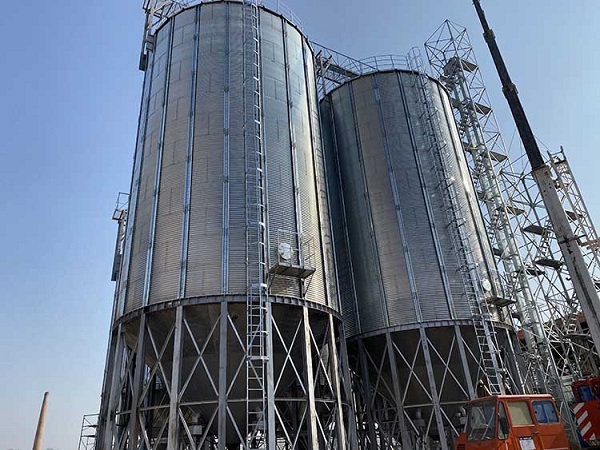
Bulk Grain Silo
COBAN grain silos are designed to ensure safe storage, stable ventilation, and long-term grain preservation under different climate conditions. Each silo system can be customized based on capacity, grain type, and project requirements for optimal storage performance and reliability.

Bulk Grain Silo
Storage Capacity:50–50,000 Tons
Silo Type:Flat Bottom / Hopper Bottom
Construction:Galvanized Steel Sheet
Suitable Grain:Maize, Wheat, Rice, Paddy, Barley, Sorghum, Soybean
Optional Systems:Aeration, Temperature Monitoring, Conveying & Grain Handling System
- Customized Capacity Design
- High Strength Galvanized Steel
- ISO Certified Manufacturing
- Global Installation Support
Applications
Corn Storage
Wheat Storage
Rice Storage
Soybean Storage
Feed Storage
Commercial Grain Storage
Product Details & Technical Information
Bulk Grain Silo for Commercial Grain Storage
A Bulk Grain Silo is designed for storing large quantities of loose grain in a controlled and easily managed environment. Compared with bag storage or temporary warehouses, a steel bulk grain silo provides higher storage density, easier grain handling, better aeration control, and more convenient inventory management.
From our engineering experience, the right silo should not be selected by capacity alone. Grain type, moisture content, local climate, foundation conditions, loading and unloading rate, storage period, and future expansion plans all affect the final design.
COBAN supplies galvanized steel bulk grain silos for farms, grain traders, feed mills, rice mills, maize processing plants, commercial grain storage facilities, and complete grain storage projects.
Bulk Grain Silo – Basic Specifications
| Item | Specification |
|---|---|
| Storage Capacity | 50–50,000 tons per silo |
| Silo Type | Flat Bottom / Hopper Bottom |
| Main Material | Galvanized Steel Sheet |
| Suitable Grain | Maize, Wheat, Rice, Paddy, Barley, Sorghum, Soybean and more |
| Typical Applications | Farms, Grain Terminals, Feed Mills, Rice Mills, Grain Trading & Storage |
Actual silo dimensions, steel thickness, roof structure, aeration system and accessories are engineered according to capacity, grain density, wind/snow load and project location.
Why Use a Bulk Grain Silo?
For commercial grain storage, the main objective is not simply to put grain into a large container. The storage system must keep grain dry, cool, clean and accessible throughout the storage period.
A properly designed bulk grain storage silo offers several practical advantages:
- High storage capacity in a relatively small footprint
- Mechanical loading and unloading of loose grain
- Reduced dependence on grain bags and manual handling
- Integrated grain aeration and temperature monitoring
- Faster grain turnover
- Easier stock measurement and inventory management
- Suitable for automation and centralized grain handling
- Galvanized steel construction for long-term outdoor use
- Individual silos can be combined into larger storage complexes
For example, a 4 × 3,000-ton silo project provides approximately 12,000 tons of nominal storage capacity while allowing the operator to separate different grain batches, moisture levels or purchasing periods.
This flexibility is often more useful than putting the same volume into one very large storage bin.

large grain storage silos
Bulk Grain Silo Structure
A commercial bulk grain silo is a complete structural system rather than simply a cylindrical steel tank.
1. Galvanized Steel Silo Body
The silo wall is assembled from galvanized steel sheets with bolted connections. Steel thickness is selected according to the pressure generated by stored grain and the structural requirements of each silo section.
The lower wall sections normally carry higher grain pressure, so the wall design cannot simply use the same thickness from top to bottom.
2. Reinforcement Stiffeners
Vertical stiffeners reinforce the silo wall and help the structure withstand:
- Grain lateral pressure
- Wind loads
- External loads
- Roof loads
- Empty-silo wind conditions
The number and size of stiffeners are determined according to silo diameter, height, capacity and local design conditions.
3. Silo Roof
The roof provides protection against rain and environmental contamination while supporting roof accessories.
Depending on the project, the roof can be equipped with:
- Grain inlet
- Manhole
- Ventilation openings
- Temperature sensor cables
- Level indicator
- Dust control connections
- Maintenance platform and ladder
4. Silo Bottom
The bottom configuration should be selected according to the customer’s operating requirements.
Flat bottom silo
Suitable for large-volume long-term grain storage where the customer accepts mechanical sweeping or unloading equipment for the remaining grain.
Hopper bottom silo
Suitable when faster discharge, reduced residual grain and easier cleaning are priorities.
The choice between a flat bottom grain silo and hopper bottom grain silo should therefore be based on the complete handling process rather than silo price alone.
Flat Bottom vs Hopper Bottom Bulk Grain Silo
| Factor | Flat Bottom | Hopper Bottom |
|---|---|---|
| Large capacity storage | Excellent | Good |
| Long-term storage | Excellent | Excellent |
| Initial structure cost | Lower | Higher |
| Foundation requirement | Larger floor foundation | Higher local support structure |
| Automatic discharge | Requires suitable unloading system | Easier gravity discharge |
| Residual grain | Requires sweeping | Lower |
| Cleaning | Mechanical cleaning normally required | Easier |
| Recommended use | Large commercial storage | Frequent turnover / easier discharge |
For large grain storage centers, we often recommend flat bottom silos for the main storage volume and hopper bottom silos for smaller working or buffer storage.
What Grain Can Be Stored in a Bulk Grain Silo?
The silo can be engineered for different agricultural commodities, provided the storage conditions and bulk density are considered during design.
Common applications include:
- Maize / Corn
- Wheat
- Paddy
- Rice
- Barley
- Sorghum
- Soybean
- Sunflower seed
- Rapeseed
- Other free-flowing agricultural grains
Different grains have different bulk densities and flow characteristics.
For example, the same physical silo volume does not necessarily represent the same tonnage of maize, wheat or soybean. Therefore, a bulk grain storage silo should be sized according to both geometric volume and the actual bulk density of the stored grain.
Grain Silo Capacity: From Small Farms to Large Storage Centers
COBAN bulk grain silos can be configured for different project scales.
Typical capacity combinations include:
- 100–500 tons – farms and small grain storage facilities
- 500–2,000 tons – commercial farms and grain traders
- 2,000–5,000 tons – medium-sized grain storage centers
- 5,000–10,000 tons – commercial grain terminals and processing plants
- 10,000–50,000+ tons – large centralized grain storage projects
Instead of selecting one oversized silo, customers can use multiple silos.
For instance:
4 × 2,000 tons = 8,000 tons
This arrangement allows different grain lots to be stored separately and provides more flexibility when one silo needs inspection or maintenance.
Bulk Grain Silo Aeration System
Aeration is one of the most important systems in long-term bulk grain storage.
After grain enters the silo, temperature and moisture conditions can become uneven. Without sufficient airflow, localized heating may develop inside the grain mass.
A typical grain silo aeration system consists of:
- Aeration fan
- Air ducts
- Perforated aeration floor or air channels
- Ventilation outlets
- Control system
The required airflow is calculated according to:
- Grain type
- Grain moisture
- Storage temperature
- Storage period
- Silo diameter
- Local climate
- Required cooling rate
For customers storing maize in hot or humid regions, aeration should be considered together with grain drying, rather than treated as an independent system.
A silo cannot compensate for grain that enters storage with excessively high moisture.

Grain Temperature Monitoring System
For large-capacity bulk grain storage, temperature monitoring is a critical part of the system.
Temperature cables can be installed vertically inside the silo, with multiple sensors distributed at different heights.
The monitoring system can help identify:
- Localized temperature increases
- Uneven grain temperature
- Potential hot spots
- Cooling problems
- Abnormal conditions during long-term storage
For a large commercial grain storage facility, we generally recommend combining:
Temperature Monitoring + Aeration + Proper Grain Moisture Control
These three elements work together to reduce the risk of grain deterioration.
Grain Silo Loading & Unloading System
A bulk grain silo should be designed together with the grain conveying system.
A typical configuration may include:
Truck Receiving → Pre-cleaner → Bucket Elevator → Distributor → Silo → Conveyor → Dryer / Processing Line / Truck Loading
Depending on capacity and required throughput, the system can include:
- Truck unloading pit
- Belt conveyor
- Screw conveyor
- Bucket elevator
- Chain conveyor
- Rotary distributor
- Grain cleaner
- Magnetic separator
- Grain dryer
- Dust collector
- Automatic control system
For example, if a facility needs to receive 100 tons of maize per hour, the conveyor and elevator capacity should not be selected solely according to silo capacity. The entire receiving, conveying, drying and storage process must be balanced around the required throughput.

Bulk Grain Silo for Maize Storage
Maize is one of the most common applications for bulk grain silos.
A typical maize storage system may include:
Maize Receiving → Cleaning → Drying → Temporary Storage → Bulk Grain Silo → Aeration → Temperature Monitoring → Discharge
This arrangement is particularly useful in regions where maize is harvested during a short period and must be stored for several months.
For maize storage, we pay particular attention to:
- Initial grain moisture
- Drying uniformity
- Grain temperature
- Aeration airflow
- Storage duration
- Dust accumulation
- Discharge efficiency
The silo capacity should also reflect the customer’s actual harvest or purchasing volume rather than simply selecting the largest available model.
Galvanized Steel Construction for Outdoor Grain Storage
The silo body uses galvanized steel sheets to provide corrosion resistance for outdoor agricultural storage applications.
The final material specification can be adjusted according to:
- Local humidity
- Rainfall
- Coastal conditions
- Temperature variation
- Wind speed
- Expected service life
- Grain type
- Silo capacity
For projects located in coastal or highly humid environments, additional attention should be given to galvanization, fasteners, roof details, drainage and foundation design.
A good silo design is not only about the steel plate itself. The connection between the silo, foundation and surrounding grain handling equipment is equally important.
Bulk Grain Silo Safety & Maintenance
A commercial grain storage silo needs routine inspection.
Important maintenance points include:
Before Grain Loading
- Inspect silo wall and stiffeners
- Check roof condition
- Confirm aeration channels are clear
- Check temperature sensors
- Remove residual grain and foreign material
- Inspect conveyors and elevators
During Storage
- Monitor grain temperature regularly
- Check moisture where possible
- Run aeration according to grain and weather conditions
- Watch for abnormal temperature increases
- Inspect roof vents and dust accumulation
Before Emptying
- Check discharge equipment
- Confirm conveyor capacity
- Inspect access and safety equipment
- Make sure the downstream system can receive the discharged grain
This routine is especially important for large grain storage silos, where a localized problem can affect hundreds or thousands of tons of grain.
Bulk Grain Silo Layout Options
There is no single ideal silo layout for every project.
Option A – Single Large Silo
Suitable for customers who mainly store one commodity or one large batch.
Advantages:
Lower number of conveyors and relatively simple operation.
Option B – Multiple Parallel Silos
Example:
4 × 3,000 tons = 12,000 tons
This arrangement allows different grain batches to be separated.
Option C – Multiple Capacities
Example:
2 × 5,000 tons + 2 × 2,000 tons
This provides greater flexibility for customers purchasing grain from different suppliers or during different harvest periods.
Option D – Storage + Working Silo
Large flat-bottom silos can be used for long-term storage, while smaller hopper-bottom silos serve as receiving, drying or processing buffer bins.
This configuration is particularly useful for integrated grain processing plants.
What Determines the Cost of a Bulk Grain Silo?
The price of a bulk grain silo cannot be accurately determined from capacity alone.
The main cost factors include:
- Silo capacity
- Silo diameter and height
- Galvanized steel specification
- Flat or hopper bottom
- Foundation requirements
- Aeration system
- Temperature monitoring system
- Grain conveying capacity
- Cleaning equipment
- Grain dryer integration
- Dust collection
- Automation level
- Shipping distance
- Installation conditions
For this reason, two 3,000-ton silo projects can have noticeably different total project costs even when their nominal storage capacities are identical.
Why Choose COBAN for Your Bulk Grain Storage Project?
From our engineering experience, the biggest mistake in silo purchasing is treating the silo as an independent product.
A commercial grain storage project works properly only when storage capacity, grain handling, drying, aeration, temperature monitoring and discharge capacity are matched.
COBAN can develop the silo configuration around the customer’s actual operating conditions, including:
- 50–50,000 ton storage capacity
- Flat-bottom and hopper-bottom designs
- Galvanized steel silo construction
- Grain aeration systems
- Temperature monitoring
- Bucket elevators and conveyors
- Grain cleaning systems
- Grain drying systems
- Dust collection
- Electrical control systems
- Complete grain storage solutions
For a project with multiple silos, we can also work from the customer’s available land area, required storage capacity and daily grain throughput to determine the appropriate silo number, diameter, layout and handling configuration.
Bulk Grain Silo Project Design
Before preparing a quotation, we normally need several basic project details:
| Project Information | Why It Matters |
|---|---|
| Grain Type | Determines bulk density and storage conditions |
| Required Capacity | Determines silo size and quantity |
| Initial Moisture | Determines whether drying is required |
| Daily Receiving Volume | Determines conveying capacity |
| Storage Period | Determines aeration and monitoring requirements |
| Available Land | Determines silo layout |
| Local Wind / Snow Conditions | Affects structural design |
| Loading & Unloading Rate | Determines equipment capacity |
| Future Expansion | Determines initial layout and reserved space |
Send us your required storage capacity, grain type and available site dimensions, and we can work out a practical Bulk Grain Silo configuration, including silo quantity, capacity, layout and supporting grain handling equipment.
Request A Quote
Tell us your capacity, grain type, and project location. We will design a turnkey solution for you.