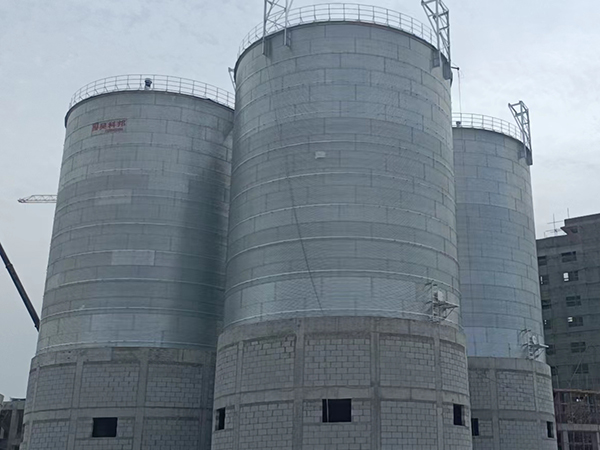
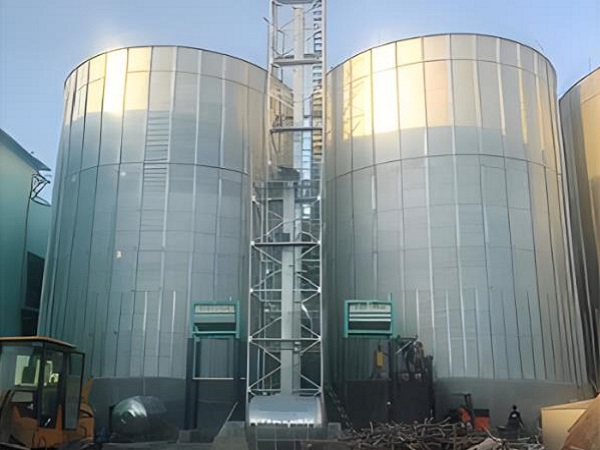
So, why do more and more enterprises and farmers choose to store corn in silos? The following will systematically elaborate from multiple perspectives such as the principle of grain storage, quality control, economic cost, safety, and the development direction of the industry.
If you’re planning to upgrade your storage system, you can refer to our detailed technical guide on how to choose a suitable metal grain silo to understand structural standards, coating requirements, and engineering considerations before investment.

Core principles of grain storage in cylinders: Sealing, temperature control, humidity control and ventilation management
The two most critical risks for corn during storage are unstable moisture and microbial growth. Traditional flat warehouses have inherent deficiencies in ventilation, airtightness and temperature and humidity control, while silos precisely make up for these pain points.
The sealed structure reduces external influences
Silos are usually made of steel plates or concrete structures, which can effectively isolate the outside air and moisture, reduce the probability of pest invasion and mold growth, and help maintain a dry and stable storage environment for corn.
The high-efficiency ventilation system ensures uniform heat dissipation
When corn is stored, it generates heat due to respiration. The bottom air ducts and automatic ventilation system equipped on the silo can promptly expel the accumulated heat, maintaining a balanced temperature inside the silo and preventing the formation of “hot spots”.
The intelligent monitoring system ensures precise storage
The new type of silo can be equipped with temperature probes, humidity monitors, automatic control valves and other devices, enabling managers to have real-time access to the data inside the silo and achieve automatic adjustment. This digital management approach makes corn storage safer and more reliable.

Significant Advantages of storing corn in silo
Improve the storage quality of corn and extend its storage period
Silos can maintain the low moisture and low temperature state of corn for a relatively long time, thereby delaying fat oxidation, inhibiting mold growth, and significantly improving the commercial quality of corn. Compared with traditional storage methods, the grain loss during the sale of corn in drum storage is significantly lower. This is a key factor for both grain enterprises and farmers to increase their profits.
Reduce storage costs and increase land utilization
Silos are three-dimensional buildings. Under the same floor area, the grain storage capacity of silos is much higher than that of ordinary warehouses.
For instance, a silo covering an area of several dozen square meters can store thousands of tons of corn, significantly enhancing the grain storage capacity per unit area.
Meanwhile, the mechanized loading and unloading system of silos reduces labor costs, lowers grain storage management expenses, and brings higher economic benefits to grain enterprises.
Achieve automated loading and unloading to enhance operational efficiency
The conveyors, elevators, grain unloading systems and other facilities that are matched with silos can achieve rapid grain loading and unloading, with a speed far exceeding that of manual or semi-manual methods. This not only enhances the efficiency of corn warehousing and outbound, but also improves the turnover capacity of enterprises during peak seasons.
Higher grain storage safety
Corn is vulnerable to pests, moisture and fungi, leading to problems such as overheating, mold growth and excessive aflatoxin. The sealed system and automatic detection equipment of the silo can promptly identify abnormal temperature rises and take measures such as ventilation or silo transfer in advance, thereby preventing the deterioration of grain conditions.
In contrast, traditional warehousing often relies on manual inspections, making it difficult to detect potential risks in a timely manner.
Driven by industrial chain demand: Silos have become standardized facilities for grain enterprises
With the upgrading of the grain industry, the standardization and normalization of grain storage systems have become an inevitable trend in the industry. Whether it is state storage facilities, grain trading enterprises, or deep processing enterprises such as feed mills, starch factories, and alcohol factories, they are all gradually phasing out old warehouses and adopting more efficient silo systems.
The industry trends are mainly reflected in the following aspects:
Large-scale storage and circulation require high turnover capacity
During the period of centralized grain purchasing, if the storage and unloading speeds are insufficient, it will directly lead to vehicle congestion, queue delays, and affect the operational efficiency of enterprises.
The rapid unloading of grain from silos and the use of automated equipment can significantly increase the turnover speed and meet the demands of modern grain circulation.
Large grain enterprises need long-term and stable quality control
Feed enterprises and processing enterprises have strict requirements for the moisture and mold indicators of raw corn. Silos can ensure a stable supply throughout the year and avoid fluctuations in production formulas or increased losses caused by corn deterioration.
The direction of digital and intelligent grain depot construction is clear
In recent years, the state has been promoting projects such as “Smart Grain Depots” and “Green Grain Storage”. Silos, as facilities that are easy to achieve digital management, are in line with this policy orientation.
Comparison between Silos and Traditional Storage Methods
To help decision-makers more clearly determine whether silos are suitable for their own business, the following comparison is made from multiple dimensions:
| Category | Silo Corn Storage (Modern) | Traditional Flat Warehouse |
|---|---|---|
| Airtightness | Excellent; low pest risk | Weak; high pest-control cost |
| Ventilation | Strong; automated | Limited; requires manual effort |
| Temp & Humidity | Continuous monitoring + Auto adjustment | Manual monitoring, higher error margin |
| Storage Loss | Very low (Minimized Waste) | Relatively high |
| Loading/Unloading | Fully mechanized | Labor-intensive |
| Land Use | Highly efficient (Vertical) | Requires more space |
| Long-Term Cost | Decreases over time (High ROI) | Increases with labor & maintenance |
It can be seen that silos outperform traditional warehouses in almost all key indicators, especially being more competitive in the large-scale grain storage market.
Economic Benefit Analysis of Storing Corn in Cylindrical Warehouses
For enterprises, investing in silos is not only an option to enhance food security but also a long-term investment that can directly generate profits.
Reduce the direct benefits brought by losses
For every 1% reduction in corn loss during storage, the annual profit of enterprises will increase significantly. Silos can keep the loss of stored grain at the lowest level and are especially suitable for long-term storage.
Raising the grade of grain brings about a premium
Corn maintaining a low moisture content and good appearance is conducive to achieving a higher price in the market. The use of silos can effectively reduce mold, breakage and insect infestation, and improve the grade of corn.
The improvement of turnover efficiency brings about economies of scale
Automated silos reduce labor costs and also increase the turnover speed of grain from storage to delivery, enabling enterprises to seize market opportunities during peak seasons.
Future Trends: Intelligent silos will become the mainstream in the industry
As the digital transformation of grain enterprises accelerates, silos will continue to upgrade in the following directions:
- A smart grain storage system based on big data
- Automated detection + unmanned management
- Energy-saving low-temperature grain storage technology
- A more environmentally friendly green grain storage solution
This means that silos will not only be containers for storing grain, but also intelligent systems integrating detection, automation and management.
Conclusion: Selecting silos is the key to improving the quality of corn storage and enhancing the competitiveness of enterprises
In the modern grain production and circulation system, silos are no longer an option but a necessary facility for improving quality, reducing costs and enhancing efficiency. Whether it is large and medium-sized grain enterprises, large-scale farmers or cooperatives, silos can bring about significant improvements in grain storage safety, economic benefits and management efficiency.
If you hope to maintain a competitive edge in the highly competitive grain market, then incorporating silos into your grain storage system is a strategic choice worth long-term investment.