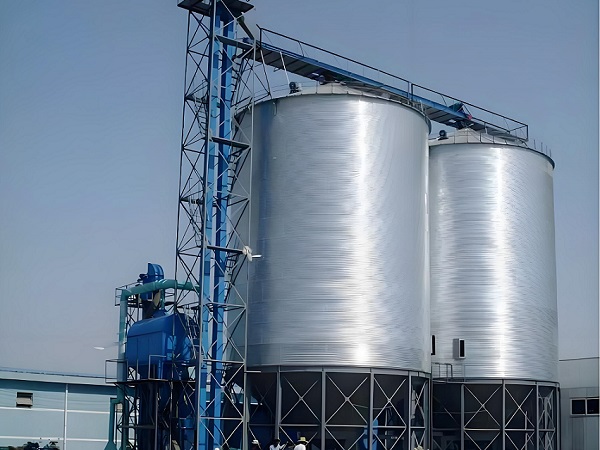
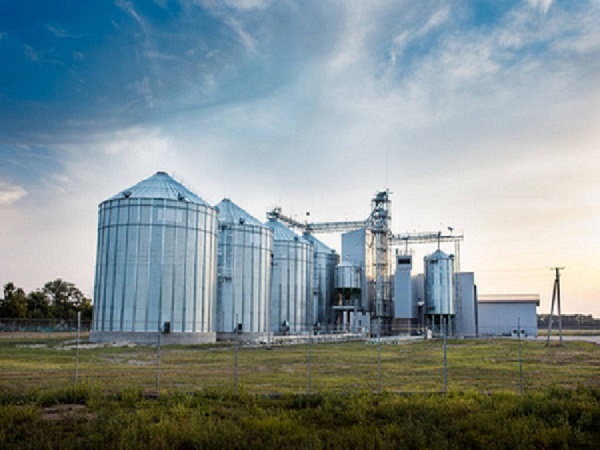
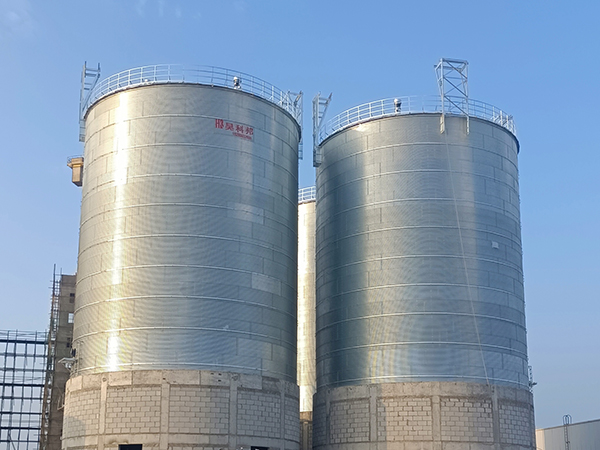
W systemie silosów zbożowych, sprzęt transportowy nie polega po prostu na przenoszeniu ziarna z jednego punktu do drugiego. Trasa transportu, wysokość podnoszenia, wymagana pojemność, dostępna przestrzeń, stan ziarna, maintenance access and silo layout all affect which machine should be used.
For most grain storage projects, bucket elevators and belt conveyors are not direct substitutes. They normally perform different jobs within the same handling system:
- Winda kubełkowa: mainly used for vertical lifting.
- Przenośnik taśmowy: mainly used for horizontal or gently inclined conveying.
- A complete silo system: often uses both.
A typical grain flow may look like:
Truck Intake → Pit Conveyor → Bucket Elevator → Cleaner/Dryer → Bucket Elevator → Top Belt Conveyor → Selected Silo
This combination is common because each machine is being used where its mechanical design makes the most sense. Grain-handling references also distinguish belt systems for horizontal movement and bucket elevators for vertical lifting.
1. What Is the Difference Between a Bucket Elevator and a Belt Conveyor?
The most important difference is the direction of conveying.
Winda kubełkowa
A winda kubełkowa consists of buckets mounted to a continuously moving belt or chain. Grain enters the elevator boot, is picked up by the buckets, carried vertically and discharged at the head.
Because the buckets travel inside a relatively narrow enclosed casing, the machine can raise grain several tens of metres while occupying relatively little floor space. Commercial grain bucket elevators are available in a wide range of capacities; Na przykład, one current grain elevator range lists capacities from 100 Do 1,000 t/h depending on elevator size.
Przenośnik taśmowy
A belt conveyor carries grain continuously on a moving belt supported by rollers or another support system.
It is particularly useful when grain needs to travel:
- Horizontally
- Over a relatively long distance
- Between several pieces of equipment
- From a bucket elevator to several silo inlets
- Along a receiving or discharge area
Belt conveyors are widely used for long-distance and energy-efficient horizontal grain transport.

2. Przenośnik kubełkowy a przenośnik taśmowy: Direct Comparison
| Czynnik | Winda kubełkowa | Przenośnik taśmowy |
|---|---|---|
| Main conveying direction | Vertical | Poziomy / inclined |
| Typical silo application | Lift grain to silo roof or upper equipment | Move grain between silos, elevators and equipment |
| Floor space | Very small | Increases with conveying distance |
| Podnoszenie pionowe | Doskonały | Possible only with inclined routing and additional space |
| Long horizontal conveying | Not suitable | Doskonały |
| Enclosed conveying | Tak | Can be enclosed |
| Typical grain flow | Continuous | Continuous |
| Main components | Buckets, belt/chain, head, boot, casing | Belt, pulleys, idlers, frame, drive |
| Dostęp konserwacyjny | Concentrated at head/boot and along casing | Distributed along conveyor |
| Layout flexibility | Best for vertical routes | Best for horizontal routes |
| Grain handling | Good for free-flowing grain | Good for continuous horizontal movement |
| Space requirement | Low footprint | Depends strongly on length |
| Common silo role | Elevation | Distribution/transfer |
| Best use | Lifting grain | Moving grain |
The distinction is important because trying to use one machine for a job naturally suited to the other can make the silo layout unnecessarily complicated.
3. Why Bucket Elevators Are Commonly Used in Grain Silos
A steel grain silo is relatively tall compared with its footprint. Grain entering the facility often has to be lifted from ground level to the top of the silo.
That is exactly where the bucket elevator fits.
Na przykład:
Receiving Pit → Bucket Elevator → Top Conveyor → Silo Inlet
The elevator provides the vertical lift, while the top conveyor distributes the grain horizontally.
This arrangement makes it possible to serve multiple silos from one conveying line.
A bucket elevator also has a major space advantage. A vertical elevator can reach substantial lifting heights without requiring a long inclined conveyor structure. Commercial grain elevators are specifically designed around this compact vertical configuration.
Przykład
Suppose grain has to be raised approximately 25–30 m before entering the silo roof.
A bucket elevator can make this movement almost directly upward.
An inclined belt conveyor would require a much longer conveyor structure to achieve the same elevation while maintaining an appropriate conveying angle.
Dlatego, when the main problem is “How do I lift this grain to the top of the silo?”, a bucket elevator is normally the equipment that should be evaluated first.
4. Why Belt Conveyors Are Important in Silo Systems
A bucket elevator solves the vertical transport problem, but it does not eliminate the need for horizontal conveying.
Consider a grain storage project with six silos.
The grain may need to travel:
Bucket Elevator → Horizontal Conveyor → Silo 1
Lub
Bucket Elevator → Horizontal Conveyor → Silo 2
Lub
Bucket Elevator → Horizontal Conveyor → Silo 3
and so on.
W tej sytuacji, a belt conveyor provides a practical distribution route.
Belt conveyors can also be used for:
- Truck unloading
- Transfer from cleaner to dryer
- Dryer discharge
- Transfer between storage areas
- Silo discharge
- Warehouse filling
- Long-distance grain movement
The conveyor route can be designed around the plant’s actual layout rather than forcing all equipment into a straight vertical arrangement.
5. Pojemność: Which One Handles More Grain?
There is no universal capacity number that makes one system better than the other.
Capacity must be calculated from the actual application.
For a bucket elevator, important variables include:
- Bucket volume
- Bucket spacing
- Belt speed
- Material bulk density
- Loading efficiency
- Elevator width
- Required lifting height
- Grain characteristics
For a belt conveyor, capacity depends mainly on:
- Belt width
- Belt speed
- Gęstość nasypowa
- Loading cross-section
- Conveyor inclination
- Material flow characteristics
A grain elevator manufacturer’s published capacities can range from relatively small farm systems to several hundred tonnes per hour or more.
Dlatego, it is better to specify the required t/h first, rather than selecting a machine based only on the physical size of the silo.
A practical sizing rule
If the silo project requires a maximum grain flow of 100 t/godz, the conveying system should not simply be selected as exactly 100 t/godz.
The elevator, przenośniki, odkurzacz, suszarka, intake system and discharge equipment should be checked as one material-flow chain.
The smallest-capacity machine in the main route can become the bottleneck.
6. Space Requirement: Floor Area vs Vertical Space
This is one of the clearest differences.
Winda kubełkowa
A bucket elevator uses very little floor area but requires sufficient:
- Headroom
- Elevator height
- Maintenance platforms
- Access around the head and boot
- Wsparcie strukturalne
This is particularly useful for tall grain silos.
Przenośnik taśmowy
A belt conveyor requires more horizontal space as the conveying distance increases.
Na przykład, if grain must be moved 40 m horizontally, the conveyor needs approximately that length plus space for its structure, access and transfer points.
If the conveyor is inclined, the required route becomes longer as the elevation difference increases.
So the basic design question is:
Is the project short on floor space or short on vertical clearance?
For a tall silo complex with limited ground space, the bucket elevator has a natural advantage for vertical transport. For long horizontal routes, the belt conveyor becomes much more practical.
7. Grain Damage and Handling
Grain quality matters because excessive impact during conveying can create:
- Uszkodzone jądra
- Cracks
- Fines
- Increased dust
- Lower market value
- Greater dust accumulation inside the system
A properly designed bucket elevator can handle grain efficiently, but bucket loading, belt speed and discharge geometry must be matched to the material.
Bucket elevators for grain are commonly designed with belt speeds and bucket arrangements suited to free-flowing agricultural products.
Belt conveyors provide continuous support to the grain over the conveying route and are often useful where long horizontal movement is required.
Jednakże, neither machine should automatically be described as “zero damage.” Actual grain damage depends on:
- Wilgotność ziarna
- Grain variety
- Drop height
- Transfer chute design
- Conveyor speed
- Elevator speed
- Bucket geometry
- Number of transfer points
The transfer points can be just as important as the conveyor itself.
8. Maintenance Comparison
Maintenance is another area where the two machines differ considerably.
Bucket Elevator Maintenance
The main inspection points include:
- Elevator belt or chain
- Buckets
- Head pulley
- Boot pulley
- Namiar
- Belt tension
- Belt tracking
- Backstop
- Casing
- Inlet section
- Discharge section
- Safety sensors
Because the elevator extends vertically, maintenance at the head section requires appropriate platforms and safe access.
Modern grain elevators may include inspection hatches and features designed to simplify servicing.
Belt Conveyor Maintenance
Typical inspection points include:
- Przenośnik taśmowy
- Drive pulley
- Tail pulley
- Idler rollers
- Namiar
- Belt tracking
- Belt tension
- Scrapers
- Skirt seals
- Transfer chutes
The advantage is that much of the conveyor can be inspected from ground-level or platform access along its route.
The disadvantage is that a long conveyor contains many components distributed over a large distance.
9. Dust and Grain Safety
Dust control should not be treated as an optional issue in a grain handling system.
Both systems can generate dust if grain falls excessively, leaks at transfer points or is allowed to accumulate.
A bucket elevator is normally enclosed, which helps contain grain and dust within the conveying casing. Grain elevator designs also commonly incorporate monitoring and protective devices for belt movement, temperature and other operating conditions.
For belt conveyors, attention should be given to:
- Enclosed transfer points
- Skirt sealing
- Dust extraction where required
- Belt alignment
- Grain spillage
- Cleaning around the conveyor
- Access for inspection
A well-designed silo system should therefore consider the conveying equipment and dust-control system together, rather than treating dust collection as a separate problem.
10. Energy Consumption
Energy consumption depends on the amount of grain moved, conveying distance, elevation and equipment efficiency.
For a bucket elevator, the motor must overcome the vertical lifting requirement.
For a belt conveyor, the motor mainly overcomes:
- Belt movement resistance
- Idler resistance
- Material movement
- Inclination
- Transfer losses
The vertical elevation is particularly important for bucket elevators.
A useful engineering concept is that lifting grain vertically requires additional energy because the grain is gaining potential energy. Dlatego, two systems carrying the same 100 t/h can have very different motor requirements if one is lifting grain 30 m while the other is moving it horizontally.
This is why comparing motors simply by kW without considering the conveying duty can lead to a misleading conclusion.
11. Initial Cost vs Total System Cost
It is difficult to say that either machine is always cheaper.
The correct comparison should include:
Sprzęt + steel structure + instalacja + układ elektryczny + konserwacja + operating cost + oczekiwany okres użytkowania
A belt conveyor may appear simple, but a long conveyor requires:
- Structural supports
- Multiple idlers
- Walkways or access
- Transfer chutes
- Guarding
- Belt alignment
- Additional civil/steel work
A bucket elevator requires:
- Elevator tower or supporting structure
- Head and boot sections
- Dostęp konserwacyjny
- Safety devices
- Belt/chain and buckets
- Proper foundation and alignment
Dlatego, the cheapest equipment price is not necessarily the lowest-cost conveying solution.
12. Which Equipment Is Better for Different Silo Applications?
| Aplikacja | More Suitable Equipment | Powód |
|---|---|---|
| Lift grain from receiving pit to silo top | Winda kubełkowa | Compact vertical lifting |
| Lift grain 20–40 m | Winda kubełkowa | Designed for vertical transport |
| Move grain 30–100 m horizontally | Przenośnik taśmowy | Efficient long-distance conveying |
| Distribute grain across several silos | Przenośnik taśmowy + distributors | Easy horizontal distribution |
| Connect intake pit to elevator | Belt/chain conveyor | Suitable for horizontal transfer |
| Feed grain into tall silos | Winda kubełkowa | Small footprint for elevation |
| Transfer grain between processing machines | Przenośnik taśmowy | Flexible routing |
| Large silo complex | Both | Each handles its appropriate direction |
| Limited floor space | Bucket Elevator for vertical movement | Compact footprint |
| Long horizontal route | Przenośnik taśmowy | Better suited to distance |
13. Can a Belt Conveyor Replace a Bucket Elevator?
Technicznie, an inclined belt conveyor can raise grain.
But that does not mean it is an efficient replacement for a bucket elevator.
The problem is geometry.
If grain needs to rise 25 M, an inclined belt must travel considerably farther than 25 M. The exact length depends on the allowable inclination and plant layout.
That means:
More structure + more floor area + longer belt + more support points
For a project with abundant land and a relatively low elevation requirement, an inclined belt may make sense.
For a tall silo complex where the available footprint is limited, a bucket elevator can provide the required elevation in a much more compact arrangement.
14. Can a Bucket Elevator Replace a Belt Conveyor?
For long horizontal movement, it usually makes little sense.
A bucket elevator is fundamentally designed around lifting grain through its casing.
If grain has to travel 80 m horizontally between two areas, using an elevator to repeatedly raise and lower the grain would introduce unnecessary transfer points and equipment.
A belt conveyor is much more straightforward:
Point A → Belt Conveyor → Point B
This is one reason complete grain storage systems commonly combine vertical elevators with horizontal conveyors rather than trying to use only one conveying technology.
15. The Most Practical Silo Arrangement: Use Both
For many commercial grain silo projects, the question should not be:
Bucket elevator or belt conveyor?
A better question is:
Where should the bucket elevator be used, and where should the belt conveyor be used?
Na przykład:
Grain Receiving
Truck → Receiving Pit → Belt Conveyor
↓
Vertical Lifting
Belt Conveyor → Bucket Elevator
↓
Cleaning/Drying
Bucket Elevator → Grain Cleaner → Dryer
↓
Silo Filling
Bucket Elevator → Top Belt Conveyor → Distributor → Selected Silo
↓
Silo Discharge
Silo → Screw/Chain/Sweep Conveyor → Belt Conveyor → Bucket Elevator or Loading System
This arrangement separates vertical lifting from horizontal distribution and allows each machine to perform the task it was designed for.
16. How to Choose the Right Equipment for Your Grain Silo Project
Before selecting a bucket elevator or belt conveyor, COBAN engineers would normally look at the following information:
1. Required Capacity
Determine the actual grain flow:
t/h = tonnes of grain ÷ required conveying time
Do not size the conveyor only according to silo storage capacity.
A 5,000-silos gliniany does not automatically require a 500 t/h conveyor. The correct capacity depends on how quickly the customer wants to fill and empty the silo.
2. Vertical Lift
Measure the difference between:
- Receiving level
- Equipment discharge level
- Silo inlet level
If the main requirement is significant vertical lifting, a bucket elevator should be considered.
3. Horizontal Distance
Measure the distance between:
- Otwór odbiorczy
- Odkurzacz
- Suszarka
- Winda
- Silo rows
- Loading point
Long horizontal routes generally favor belt conveyors.
4. Rodzaj ziarna
Consider whether the system will handle:
- Kukurydza
- Pszenica
- Niełuskany
- Ryż
- Soja
- Rzepak
- Other bulk grains
Bulk density and grain characteristics affect equipment sizing.
5. Zawartość wilgoci
Wet grain behaves differently from dry grain.
If grain enters the handling system immediately after harvesting, wilgoć, flowability and transfer-point design need to be considered when selecting and sizing the conveying equipment.
6. Number of Silos
A single silo and a 10-silo storage complex require completely different conveying layouts.
For multiple silos, a top conveyor and distribution system can allow one elevator to serve several storage bins.
17. Przenośnik kubełkowy a przenośnik taśmowy: Final Engineering Comparison
There is no universal winner because they solve different conveying problems.
Choose a bucket elevator when the primary requirement is vertical grain lifting and floor space is limited.
Choose a belt conveyor when the primary requirement is horizontal or long-distance grain movement.
For a complete grain silo system, the most practical solution is often a combination of the two:
Bucket elevator for vertical lifting + belt conveyor for horizontal distribution.
This arrangement can reduce unnecessary conveying distance, keep the silo layout compact and allow the receiving, czyszczenie, drying and storage equipment to work as one continuous grain-handling system.
The final selection should be based on pojemność, lift height, conveying distance, rodzaj ziarna, wilgoć, silo arrangement, transfer points, maintenance access and future expansion, rather than choosing equipment from capacity alone.
Quick Selection Table
| If your main requirement is… | Rozważać… |
|---|---|
| Podnoszenie pionowe | Winda kubełkowa |
| 20–50 m elevation | Winda kubełkowa |
| Long horizontal conveying | Przenośnik taśmowy |
| Multiple silo distribution | Przenośnik taśmowy + Dystrybutor |
| Limited floor area | Winda kubełkowa |
| Long transfer distance | Przenośnik taśmowy |
| Complete grain silo handling system | Both |
| High-capacity commercial storage | Engineered combination of both |
For COBAN grain silo projects, the conveying equipment should therefore be sized together with the silo capacity, środek do czyszczenia ziarna, suszarka, receiving pit, discharge system and required t/h, rather than treated as an independent machine.