Definitions and Structural Differences
Hopper
A hopper is a container used for temporary storage and control of material flow. Its main function is to transport bulk, granular or powdered materials from the upper storage port to the lower outlet, achieving uniform and controllable discharge of materials. Hoppers generally have a small capacity and are often used in the material distribution stage of production lines or as supplementary equipment for silos and warehouses. The structure of the hopper is usually in the shape of an inverted cone or an inverted pyramid, and it is equipped with a valve or a screw conveyor at the bottom to facilitate the smooth discharge of materials.
Silo
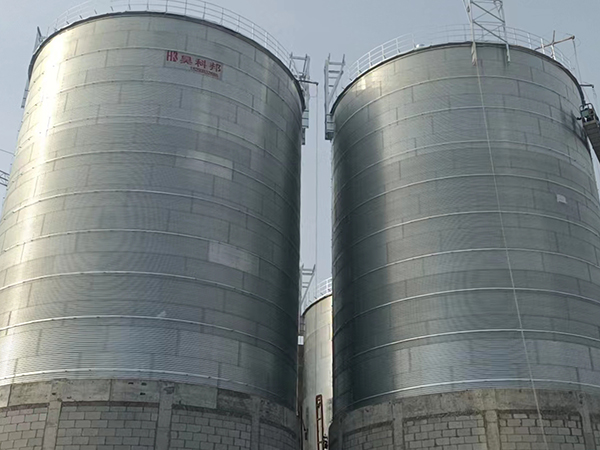
A silo is a large storage device specifically designed for long-term storage of bulk materials such as grains, cement, and chemical particles. The capacity of silos usually ranges from tens of cubic meters to tens of thousands of cubic meters, and they can be set up independently or combined into storage systems. Silos are generally cylindrical or round in shape, with feeding ports and ventilation devices at the top and discharge ports at the bottom. Materials are discharged through gravity or mechanical conveying equipment. Compared with hoppers, silos pay more attention to storage capacity, sealing performance and moisture-proof and dust-proof functions.
Differences in Functions and Applications
Storage duration
Hoppers are mainly used for short-term storage or transfer during the production process, and their storage time is usually calculated in hours or days. Silos can be used for long-term storage, with a storage period of several months or even a year, which can meet the demands of large-scale logistics and trade.
Material types and adaptability
The hopper is suitable for various granular, powdered or small block materials, such as plastic granules, fertilizer powder or grain classification processing. Due to its small size, the hopper can improve the fluidity of materials when they have poor fluidity and are prone to caking through vibration or heating devices.
Silos are more suitable for large-scale and continuous storage of materials such as corn, soybeans, and cement clinker, and have higher requirements for moisture-proofing, mold-proofing, and caking prevention of the materials.
Operation control and conveying mode
Hoppers are usually integrated with the automated equipment of the production line, with screw conveyors, pneumatic conveying pipes or vibrating feeders set at the bottom to achieve precisely controlled discharge. The discharge from silos relies on gravity or large conveying systems, emphasizing continuity and stability, and is often used in logistics, ports, factories or warehousing centers.

Differences in Design and Manufacturing Standards
Structural design
The hopper design focuses on smooth discharge and anti-clogging. The bottom cone Angle is usually 45° to 60° to ensure the smooth sliding of materials. The design of silos focuses on load-bearing capacity, anti-corrosion, wind resistance and sealing. The wall thickness of the silo can be designed according to the density and height of the stored materials, and is generally made by welding steel plates or pouring concrete.
Material selection
Hoppers are mostly made of carbon steel, stainless steel or wear-resistant alloys. The lining or coating is selected according to the corrosiveness and friction characteristics of the material. Silos need to take into account the long-term storage environment. Common materials include galvanized steel plates and reinforced concrete, and they are equipped with anti-corrosion coatings or linings to ensure the quality of the materials.
Safety and monitoring facilities
Hoppers are generally equipped with flow monitoring, level sensors and anti-overflow devices. Silos require more safety measures, such as pressure relief valves, explosion-proof facilities, moisture-proof systems, and automatic material level monitoring and alarm systems, to deal with the risks that may arise from storing large amounts of materials.
Selection Suggestions in Foreign Trade Scenarios
For export trade enterprises, the selection of hoppers or silos should be comprehensively judged based on customer demands, transportation methods and storage environments.
- If the customer’s production line requires short-term transfer and automated distribution, it is recommended to give priority to choosing hoppers, which is convenient for integrating automated equipment and improving production efficiency.
- If the customer is involved in the export, warehousing or port distribution of bulk materials and needs to ensure the safety of long-term storage and transportation, silos should be chosen to meet the requirements of high capacity, moisture-proofing and anti-caking.
In addition, when making selections, export enterprises also need to take into account international standard certifications, such as ISO and CE certifications, as well as corrosion resistance and fire protection regulations, to ensure the smooth export of products and meet the safety and quality standards of overseas customers.
Summary
Although both hopper and silo belong to bulk material storage equipment, there are significant differences in capacity, storage duration, material adaptability, design standards and application scenarios. Foreign trade enterprises should, based on the actual needs of customers, make reasonable selections and designs to ensure both logistics and production efficiency as well as the safety and quality of materials. Understanding the essential differences between the two not only helps enterprises provide precise and professional products in the international market, but also enables them to win the trust of customers in the highly competitive export market.