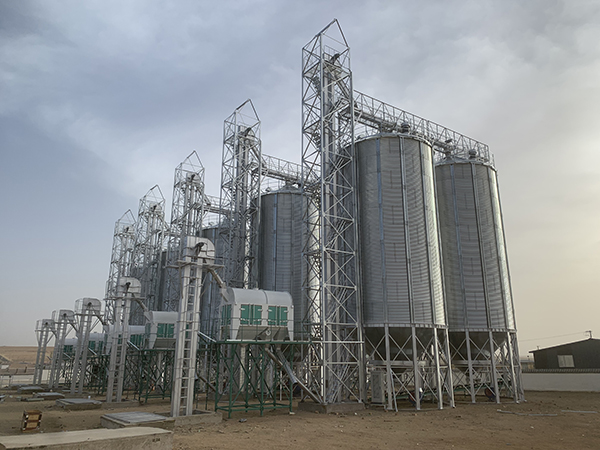

Lipp Silo
COBAN grain silos are designed to ensure safe storage, stable ventilation, and long-term grain preservation under different climate conditions. Each silo system can be customized based on capacity, grain type, and project requirements for optimal storage performance and reliability.

Lipp Silo
Capacity:50–20,000 m³
Suitable Materials:Wheat, Corn, Rice, Soybean, Feed Pellets
Construction:Spiral Seamed Steel Structure
Wall Material:Galvanized Steel / Stainless Steel
Design Life:30–40 Years
Optional Systems:Aeration, Temperature Monitoring, Level Sensor
- Customized Capacity Design
- High Strength Galvanized Steel
- ISO Certified Manufacturing
- Global Installation Support
Applications
Corn Storage
Wheat Storage
Rice Storage
Soybean Storage
Feed Storage
Commercial Grain Storage
Product Details & Technical Information
What Is a Lipp Silo?
A Lipp Silo, also known as a spiral seamed grain silo, is a cylindrical steel storage structure manufactured on-site using continuous spiral forming technology. Instead of assembling hundreds of prefabricated steel panels with bolts, a Lipp Silo is constructed from a continuous steel strip that is mechanically folded into a spiral seam while the forming machine gradually climbs upward. The finished silo becomes a highly rigid, airtight, and durable storage structure designed for long-term grain preservation.
Originally developed in Germany, spiral seamed construction has been widely recognized for its structural efficiency and fast installation. Today, it is used around the world for agricultural storage projects where grain quality, construction speed, and long service life are priorities.
For grain storage applications, the advantages of this construction method go beyond strength. The continuous spiral seam reduces the number of joints in the silo wall, improving airtightness and helping maintain a more stable storage environment. Combined with proper aeration and temperature monitoring, it provides ideal conditions for preserving harvested grain throughout the storage season.
At COBAN, every Lipp Silo is engineered according to the customer’s storage requirements, grain type, local climate, and handling process. Rather than offering standard products, we design storage systems that fit seamlessly into the customer’s grain handling operation.
How Does a Spiral Seamed Lipp Silo Work?
The construction process is one of the defining features of a Lipp Silo.
Instead of transporting large wall panels to the construction site, a continuous steel coil is fed into a specialized forming machine. As the machine rotates around the silo, it shapes, bends, and locks the steel strip into a continuous spiral seam.
With each revolution, the machine climbs slightly higher until the silo reaches its final height.
This innovative construction method creates a continuous reinforced spiral rib around the outer wall, significantly increasing the silo’s overall rigidity while reducing the need for extensive welding or bolted connections.
The result is a storage structure that combines high strength with excellent dimensional accuracy.
Construction Process
Step 1 – Steel Coil Preparation
High-quality galvanized steel coils are positioned on the uncoiling system and fed continuously into the forming equipment.
Step 2 – Precision Roll Forming
Multiple forming rollers gradually shape the flat steel strip into the required wall profile without damaging the protective galvanized coating.
Step 3 – Continuous Spiral Seaming
As the machine rotates, each new section of steel is mechanically locked to the previous section, creating a continuous spiral seam around the silo body.
Step 4 – Automatic Vertical Climbing
The forming machine continuously climbs upward as construction progresses, allowing the silo wall to be built from the ground up without large cranes or full-height scaffolding.
Step 5 – Roof and Equipment Installation
After the wall reaches the designed height, the roof, access ladder, maintenance platform, ventilation components, grain level sensors, temperature cables, and conveying equipment are installed according to the project design.
This efficient construction process reduces installation time while maintaining excellent construction quality.
Why Spiral Seamed Construction Is Better Than Conventional Bolted Silos
Both bolted silos and spiral seamed silos are widely used for grain storage, but they differ significantly in construction and long-term performance.
A conventional bolted silo is assembled by fastening numerous corrugated steel sheets together with thousands of bolts. While this method is suitable for many storage applications, the large number of mechanical connections requires careful sealing and regular inspection over time.
A Lipp Silo uses continuous spiral forming technology, creating a nearly seamless wall with far fewer connection points. This provides several practical advantages for grain storage projects.
| Feature | Lipp Silo | Conventional Bolted Silo |
|---|---|---|
| Wall Construction | Continuous spiral seam | Corrugated bolted panels |
| Structural Rigidity | Excellent | Good |
| Airtight Performance | Excellent | Good |
| Installation Method | On-site spiral forming | Panel assembly |
| Construction Speed | Fast | Moderate |
| Maintenance | Low | Regular bolt inspection required |
| Customization | Highly flexible | Standard modular sizes |
The choice between the two depends on the project’s scale, site conditions, and operational requirements. For customers seeking excellent sealing performance, efficient construction, and a long service life, spiral seamed silos provide an attractive solution.
Designed Around Grain Preservation
A grain silo should do more than hold grain—it should help preserve its quality from harvest until processing or sale.
Every aspect of a COBAN Lipp Silo is designed with grain protection in mind.
Stable Internal Storage Environment
A properly sealed silo minimizes unnecessary air exchange with the outside environment, helping maintain more stable internal conditions.
This reduces the risk of moisture migration, condensation, and quality deterioration during long-term storage.
Efficient Aeration
Aeration systems distribute fresh air evenly through the grain bulk when required.
Proper airflow helps:
- Reduce temperature differences
- Remove excess moisture
- Improve storage stability
- Extend safe storage time
The aeration system is designed according to grain type, storage capacity, and local climate.
Temperature Monitoring
Grain continues to respire after harvest.
Without monitoring, localized heating can develop inside the grain mass, leading to mold growth and quality loss.
COBAN can integrate multi-point temperature monitoring systems that continuously track grain temperature throughout the silo.
Operators receive accurate information for timely aeration and grain management.
Smooth Grain Flow
The carefully designed internal wall and discharge structure promote smooth grain movement during unloading.
This helps reduce:
- Grain bridging
- Material blockage
- Uneven discharge
- Mechanical damage to grain
The result is more efficient operation and lower maintenance requirements.
Structural Advantages of COBAN Lipp Silos
The long-term performance of a grain storage system depends largely on its structural design. A well-engineered silo must withstand the weight of thousands of tons of grain while resisting wind loads, seasonal temperature changes, and continuous daily operation.
COBAN Lipp Silos are designed with these challenges in mind. By combining advanced spiral seamed construction with precision engineering and high-quality steel, every silo is built to deliver reliable performance throughout its service life.
High Structural Strength for Long-Term Reliability
One of the most distinctive features of a Lipp Silo is its continuous spiral seam.
During construction, the steel strip is mechanically folded into a reinforced spiral profile that extends from the bottom of the silo to the roof. This spiral reinforcement acts like a continuous stiffening rib around the entire structure, increasing rigidity without requiring excessive material thickness.
Compared with conventional storage structures, this design provides several important benefits:
- Higher resistance to deformation under heavy grain loads
- Improved structural stability during filling and unloading
- Better distribution of vertical and horizontal forces
- Increased resistance to wind and seismic loads
- Reduced structural stress concentration
For customers investing in long-term grain storage infrastructure, this means greater operational reliability and lower maintenance over many years of service.
Excellent Airtightness for Better Grain Preservation
Grain quality is directly influenced by the storage environment.
Excessive air exchange allows outside humidity to enter the silo, increasing the risk of moisture migration, condensation, mold growth, and insect activity.
The continuous spiral seaming process significantly reduces the number of potential leakage points compared with conventional panel assembly methods.
When combined with properly designed roof ventilation, aeration systems, and quality sealing components, the silo provides a stable internal environment that supports:
- Long-term grain storage
- Better moisture management
- Reduced spoilage risk
- Improved grain quality
- More effective pest management
For customers storing high-value crops, maintaining grain quality is just as important as increasing storage capacity.
Faster Construction, Earlier Operation
Construction time has a direct impact on project cost and return on investment.
The spiral forming process allows the silo wall to be manufactured directly at the installation site, eliminating the need to assemble hundreds of individual wall panels.
This construction method offers several practical advantages:
- Fewer installation steps
- Reduced dependence on heavy lifting equipment
- Lower labor requirements
- Cleaner construction site
- Shorter overall installation schedule
Because the forming machine continuously builds the silo upward, projects can often be completed more efficiently than traditional construction methods, allowing customers to begin storing grain sooner.
Flexible Design for Different Storage Requirements
Every grain storage project has unique operational requirements.
Some customers require seasonal grain storage, while others operate year-round grain processing or feed manufacturing facilities.
COBAN customizes every Lipp Silo according to factors such as:
- Required storage capacity
- Available installation area
- Grain type
- Daily loading and unloading volume
- Climate conditions
- Future expansion plans
Available options include:
- Different silo diameters
- Various storage heights
- Flat bottom or customized discharge systems
- Single silo or multi-silo layouts
- Integrated conveyor systems
- Multiple access platforms
- Intelligent monitoring equipment
This flexibility allows customers to maximize storage efficiency while making the best use of available space.
Long Service Life with Low Maintenance
A grain silo is a long-term investment expected to operate reliably for decades.
COBAN manufactures Lipp Silos using high-quality galvanized steel with excellent corrosion resistance. Combined with precision manufacturing and strict quality control, the storage structure is designed to withstand demanding agricultural environments.
Routine maintenance is simple and typically includes:
- Periodic structural inspection
- Cleaning after grain discharge
- Inspection of ventilation equipment
- Checking monitoring sensors
- Lubrication of moving equipment
With proper maintenance, a COBAN Lipp Silo can provide dependable service for many years while minimizing operating costs.
Designed for Efficient Grain Handling
A high-quality silo should not only protect stored grain but also improve the efficiency of the entire grain handling process.
COBAN designs each Lipp Silo to work seamlessly with modern conveying and storage equipment.
Typical system integration includes:
Grain Receiving
Incoming grain is transferred efficiently from trucks or receiving pits through bucket elevators and conveyors into the storage system.
Grain Distribution
A rotary distributor or conveyor network evenly directs grain into the selected silo, helping operators manage different grain varieties and storage batches with greater flexibility.
Grain Storage
Inside the silo, aeration ducts and temperature monitoring systems work together to maintain suitable storage conditions, reducing the risk of spoilage during long-term storage.
Grain Discharge
Depending on the project design, grain is discharged smoothly through gravity flow or mechanical unloading systems, ensuring consistent material flow and minimizing residual grain inside the silo.
Grain Transfer
Stored grain can be conveyed directly to cleaning equipment, drying systems, feed production lines, or packaging facilities, allowing the silo to become an integral part of the customer’s production process.
By integrating storage with conveying, monitoring, and automation, COBAN helps customers improve productivity while reducing manual handling.
Suitable Materials for Storage
COBAN Lipp Silos are designed specifically for agricultural grain and feed storage.
Typical applications include:
Cereal Grains
- Wheat
- Maize (Corn)
- Rice
- Paddy
- Soybeans
- Barley
- Sorghum
- Oats
These grains can be stored safely for short-term or long-term use when appropriate moisture content and storage management practices are followed.
Feed Products
COBAN Lipp Silos are also widely used for storing finished feed products and feed ingredients, including:
- Poultry Feed Pellets
- Livestock Feed Pellets
- Cattle Feed
- Pig Feed
- Fish Feed
- Shrimp Feed
- Compound Feed
The smooth internal surface and efficient discharge design help maintain consistent material flow while reducing residue during unloading.
Ideal Applications
COBAN Lipp Silos serve a wide range of agricultural storage projects where grain quality, operational efficiency, and reliable long-term performance are essential.
Commercial Grain Storage Centers
Designed for grain collection, storage, and distribution, these facilities require dependable storage systems capable of handling seasonal harvests while preserving grain quality before transportation or processing.
Feed Manufacturing Plants
Integrated with batching systems, conveying equipment, and feed pellet production lines, Lipp Silos provide efficient storage for raw grains and finished feed pellets, ensuring a stable supply throughout the production process.
Rice Mills
Lipp Silos are suitable for storing paddy before milling as well as finished rice before packaging or shipment. Their airtight structure helps maintain grain quality and reduces post-harvest losses.
Flour Mills
By providing reliable storage for wheat and other cereal grains, Lipp Silos support continuous milling operations and improve raw material management.
Agricultural Cooperatives
Many cooperatives require centralized grain storage to serve multiple farmers during harvest season. Customized multi-silo systems allow efficient grain receiving, classification, and long-term storage.
Government Grain Reserve Projects
For strategic grain reserves, long service life, structural safety, and dependable grain preservation are critical. COBAN designs storage systems that meet the operational requirements of large-scale reserve facilities.
Technical Specifications & Custom Configuration Options
Every grain storage project has its own operational requirements. The type of grain, storage duration, site layout, local climate, and handling capacity all influence the final silo design. For this reason, COBAN does not rely on one-size-fits-all models. Every Lipp Silo is engineered and manufactured according to the specific needs of each project.
Whether you are planning a small grain storage facility for a feed mill or a large commercial grain storage center, our engineering team will recommend the most suitable silo dimensions, structural configuration, and supporting equipment to ensure safe storage and efficient operation.
Standard Technical Specifications
The following specifications serve as a general reference. Final dimensions and configurations are customized according to your project requirements.
| Item | Specification |
|---|---|
| Storage Capacity | 50–20,000 m³ (Custom Design Available) |
| Silo Diameter | 3–30 m |
| Silo Height | Customized According to Capacity |
| Construction Method | Spiral Seamed On-site Forming |
| Wall Material | Hot-Dip Galvanized Steel / Stainless Steel (Optional) |
| Steel Thickness | Designed According to Structural Requirements |
| Roof Type | Self-Supporting Roof |
| Design Service Life | 30–40 Years with Proper Maintenance |
| Installation | Professional On-site Construction |
| Automation | Optional PLC Monitoring System |
Every project is designed after evaluating grain characteristics, loading frequency, environmental conditions, and future expansion requirements.
Recommended Storage Applications
COBAN Lipp Silos are specifically designed for grain and feed storage applications.
| Stored Material | Typical Application |
|---|---|
| Wheat | Flour Mills, Grain Processing Plants |
| Maize (Corn) | Commercial Grain Storage, Feed Mills |
| Rice | Rice Mills, Grain Trading Centers |
| Paddy | Temporary and Long-Term Storage |
| Soybeans | Oil Processing and Grain Storage |
| Barley | Grain Processing Facilities |
| Sorghum | Commercial Grain Storage |
| Feed Pellets | Poultry, Livestock, and Aquaculture Feed Plants |
Our engineers can optimize the silo design based on the bulk density, flow characteristics, and storage period of each material to ensure smooth loading, stable storage, and efficient unloading.
Structural Configuration Options
Different storage projects require different structural solutions. COBAN offers flexible configurations to meet a wide range of operational requirements.
Customized Silo Diameter
The silo diameter is selected according to storage capacity, site conditions, and grain flow characteristics. Larger diameters are suitable for centralized grain storage, while smaller silos provide greater flexibility for storing different grain varieties separately.
Customized Silo Height
Height is determined based on the desired storage volume, foundation conditions, and available installation space. A balanced ratio between diameter and height helps achieve optimal structural performance and efficient grain discharge.
Roof Design
The roof is designed to provide structural strength while accommodating grain loading equipment and maintenance access.
Available roof features include:
- Roof inspection hatch
- Maintenance platform
- Safety handrails
- Roof ventilation openings
- Conveyor connection points
- Lighting installation provisions
Optional Grain Management Systems
A modern grain storage facility requires more than a steel structure. COBAN offers a range of optional systems that improve grain quality, operational safety, and management efficiency.
Grain Temperature Monitoring System
Temperature changes inside stored grain can indicate moisture migration or the early stages of spoilage.
COBAN can install multi-point temperature monitoring cables throughout the silo, allowing operators to continuously monitor grain conditions and take corrective action when necessary.
Benefits include:
- Early detection of temperature changes
- Reduced risk of mold development
- Improved grain preservation
- Better storage management
Grain Level Monitoring
Knowing the exact grain level inside each silo improves inventory management and production planning.
Level monitoring systems provide accurate information during both filling and unloading operations, helping operators optimize storage utilization and prevent overfilling.
Aeration System
Proper aeration plays an essential role in maintaining grain quality during storage.
COBAN designs aeration systems according to:
- Grain type
- Storage capacity
- Climate conditions
- Airflow requirements
The system promotes uniform airflow through the grain mass, helping maintain consistent storage conditions throughout the silo.
Access and Maintenance Facilities
Safe maintenance is an important consideration for every storage project.
Optional maintenance equipment includes:
- External ladders
- Internal ladders
- Roof walkways
- Safety cages
- Maintenance platforms
- Inspection doors
These features allow operators to safely inspect and maintain the storage facility throughout its service life.
Integrated Grain Conveying Solutions
One of COBAN’s greatest strengths is the ability to supply a complete grain handling system rather than individual equipment.
Depending on the project, the Lipp Silo can be integrated with:
Bucket Elevators
For efficient vertical grain conveying from receiving pits, dryers, or cleaning systems into the silo.
Chain Conveyors
Ideal for horizontal grain transportation between multiple silos and processing equipment while minimizing grain damage.
Belt Conveyors
Suitable for transferring large volumes of grain over longer distances with stable and energy-efficient operation.
Rotary Distributor
Allows grain to be directed automatically into different storage silos, improving operational flexibility and storage management.
By integrating conveying equipment with the silo design from the beginning of the project, customers benefit from smoother material flow, reduced handling time, and improved overall efficiency.
Intelligent Automation Options
As grain storage facilities become larger and more automated, digital monitoring has become an important part of efficient operation.
COBAN can provide intelligent control systems that help operators monitor and manage storage conditions in real time.
Available automation features include:
- Grain temperature monitoring
- Grain level indication
- Aeration control
- Equipment operating status
- Conveyor interlocking
- Alarm notifications
- PLC centralized control
- Remote operation support
These systems help reduce manual inspections, improve operational efficiency, and support more informed management decisions.
How to Choose the Right Lipp Silo for Your Grain Storage Project
Selecting the right Lipp Silo is not simply a matter of choosing the largest capacity. An efficient grain storage system should match your production process, grain type, daily handling volume, and future expansion plans. A well-designed silo improves grain quality, reduces operating costs, and provides reliable performance for many years.
At COBAN, every Lipp Silo is customized after a detailed engineering evaluation. Rather than recommending standard models, we help customers choose the most suitable solution based on their actual operating requirements.
Step 1 – Identify the Grain You Will Store
Different grains have different physical characteristics, storage periods, and handling requirements.
Before designing a silo, our engineers first determine the primary material to be stored.
| Grain Type | Typical Storage Considerations |
|---|---|
| Wheat | Long-term storage, good aeration recommended |
| Maize (Corn) | Moisture control is especially important after harvest |
| Rice | Stable ventilation helps maintain grain quality |
| Paddy | Drying before storage is recommended for long-term preservation |
| Soybeans | Gentle handling helps reduce grain damage |
| Feed Pellets | Smooth discharge design prevents bridging and material residue |
Understanding the stored material allows us to recommend the appropriate silo structure, ventilation system, and unloading method.
Step 2 – Determine the Required Storage Capacity
Storage capacity should be based on your harvesting schedule, production demand, and inventory strategy rather than simply choosing the largest available silo.
Typical project sizes include:
| Project Scale | Recommended Storage Capacity |
|---|---|
| Small Farms | 50–500 m³ |
| Grain Collection Centers | 500–5,000 m³ |
| Commercial Grain Storage | 5,000–20,000 m³ |
| Large Grain Reserve Projects | Customized According to Requirements |
For many customers, multiple medium-sized silos provide greater operational flexibility than one large silo because different grain varieties or harvest batches can be stored separately.
Step 3 – Consider Your Local Climate
Environmental conditions have a significant impact on grain storage performance.
When designing a Lipp Silo, COBAN evaluates factors such as:
- Annual rainfall
- Ambient temperature
- Seasonal humidity
- Prevailing wind conditions
- Local building standards
These factors influence structural design, roof configuration, ventilation requirements, and corrosion protection, ensuring reliable operation under local conditions.
Step 4 – Plan the Grain Handling Process
A silo should fit naturally into your production workflow.
Our engineers work with customers to understand how grain will move through the facility.
Typical questions include:
- Will grain be received from trucks or existing storage?
- Is grain cleaned before storage?
- Is grain dried before entering the silo?
- How often will the silo be filled and emptied?
- Will the grain be transported to a feed mill, flour mill, or packaging line?
- Are additional silos planned in the future?
By understanding the complete handling process, we can recommend the most efficient layout and equipment configuration.
Step 5 – Choose the Right Supporting Equipment
The performance of a grain storage system depends not only on the silo itself but also on the equipment connected to it.
Depending on your project requirements, COBAN can integrate:
- Grain Dryers
- Bucket Elevators
- Chain Conveyors
- Belt Conveyors
- Grain Cleaning Machines
- Rotary Distributors
- Temperature Monitoring Systems
- Grain Level Sensors
- Aeration Systems
- PLC Automatic Control Systems
A complete system improves operational efficiency while reducing manual handling and maintenance.
Common Lipp Silo Configurations
The following examples illustrate how different customers may configure their storage systems.
Small Feed Mill
A feed manufacturer storing raw grains and finished feed pellets may choose:
- One or two medium-capacity Lipp Silos
- Bucket elevator
- Chain conveyor
- Temperature monitoring system
This configuration provides stable storage while supporting continuous feed production.
Commercial Grain Storage Center
A grain trading company may require:
- Multiple large-capacity Lipp Silos
- Central receiving system
- Grain cleaner
- Rotary distributor
- Aeration system
- Intelligent monitoring system
This allows efficient grain receiving, storage, and distribution throughout the year.
Rice Processing Plant
For rice processing facilities, a typical solution may include:
- Separate silos for paddy and finished rice
- Grain dryer
- Bucket elevator
- Chain conveyor
- Grain level monitoring
- PLC control system
The integrated design helps improve material flow while maintaining grain quality during storage.
Why Work with COBAN?
Choosing the right storage equipment is easier when supported by an experienced engineering team.
When you work with COBAN, you receive more than equipment. Our engineers assist throughout the planning process by providing practical recommendations based on your project requirements.
We evaluate:
- Storage capacity
- Grain type
- Site layout
- Production process
- Local climate
- Future expansion plans
Based on this information, we develop a customized solution that balances storage efficiency, construction cost, operational reliability, and long-term value.
Our goal is to help every customer build a grain storage system that performs efficiently today while remaining flexible for future growth.
Ready to Plan Your Grain Storage Project?
Whether you are building a new grain storage facility or expanding an existing operation, choosing the right Lipp Silo is an important investment.
COBAN’s engineering team is ready to help you select the optimal storage capacity, equipment configuration, and system layout for your application.
Simply share your project information—such as the grain type, required storage capacity, and site conditions—and we will provide a tailored solution designed to meet your operational needs.
Frequently Asked Questions (FAQ)
1. What is a Lipp Silo?
A Lipp Silo is a steel storage silo constructed using continuous spiral seamed technology. Unlike conventional bolted silos, the silo wall is formed on-site from a continuous steel strip, creating a strong, airtight structure with excellent durability. It is widely used for storing grains and feed pellets where long-term storage performance and grain protection are essential.
2. What grains can be stored in a COBAN Lipp Silo?
COBAN Lipp Silos are designed specifically for agricultural storage applications and are suitable for:
- Wheat
- Maize (Corn)
- Rice
- Paddy
- Soybeans
- Barley
- Sorghum
- Oats
- Feed Pellets
- Poultry Feed
- Livestock Feed
- Aquaculture Feed
Each silo is engineered according to the characteristics of the stored material to ensure safe storage and smooth unloading.
3. What is the difference between a Lipp Silo and a bolted grain silo?
Both types of silos are suitable for grain storage, but they use different construction methods.
A Lipp Silo is manufactured on-site using continuous spiral seamed technology, creating a highly rigid structure with excellent airtightness and a fast construction process.
A bolted grain silo is assembled from prefabricated galvanized steel panels connected with bolts. It offers excellent scalability and is commonly used for large commercial grain storage projects.
COBAN provides both solutions and recommends the most suitable option based on your project requirements, storage capacity, and budget.
4. How do I choose the right silo capacity?
The appropriate silo capacity depends on several factors, including:
- Annual grain production
- Daily handling capacity
- Harvest schedule
- Storage duration
- Available land
- Future expansion plans
Our engineering team evaluates these factors and recommends a customized storage solution rather than simply selecting the largest available silo.
5. Can a Lipp Silo be integrated with a complete grain storage system?
Yes.
COBAN can integrate the Lipp Silo with a complete grain handling system, including:
- Grain Dryers
- Bucket Elevators
- Chain Conveyors
- Belt Conveyors
- Grain Cleaning Machines
- Rotary Distributors
- Aeration Systems
- Temperature Monitoring
- PLC Control Systems
This creates an efficient turnkey solution from grain receiving to storage and discharge.
6. How is grain quality maintained during long-term storage?
Maintaining grain quality requires more than a well-built silo.
COBAN recommends combining the Lipp Silo with:
- Proper grain drying before storage
- Efficient aeration
- Temperature monitoring
- Regular grain inspection
- Correct moisture management
Together, these measures help reduce the risk of mold, insect activity, and quality deterioration during long-term storage.
7. Does COBAN provide customized Lipp Silos?
Yes.
Every COBAN Lipp Silo is customized according to the customer’s:
- Storage capacity
- Grain type
- Site layout
- Climate conditions
- Loading and unloading process
- Automation requirements
Our engineers develop a solution that matches your production process rather than offering a standard model.
8. Does COBAN provide installation and after-sales support?
Absolutely.
Our services include:
- Project consultation
- Engineering design
- Equipment manufacturing
- Export packaging
- Installation guidance
- Equipment commissioning
- Operator training
- Spare parts supply
- Long-term technical support
Our objective is to help customers operate their grain storage systems safely and efficiently throughout the equipment’s service life.
Build a Reliable Grain Storage System with COBAN
Investing in a Lipp Silo is more than adding storage capacity—it’s about protecting grain quality, improving operational efficiency, and supporting the long-term growth of your business.
With advanced spiral seamed construction technology, customized engineering, and complete grain handling solutions, COBAN Machinery provides reliable storage systems that meet the demands of modern agriculture.
Whether your project involves a grain collection center, a feed manufacturing plant, a rice mill, a flour mill, or a government grain reserve, our engineering team will work closely with you to develop a solution tailored to your operational needs.
From project planning and equipment manufacturing to installation, commissioning, and after-sales support, COBAN is committed to delivering dependable grain storage solutions backed by professional engineering and responsive service.
Why Customers Choose COBAN
- Customized Lipp Silo solutions for grain and feed storage
- Complete turnkey grain storage systems
- Professional engineering and technical support
- Integrated conveying, drying, and storage equipment
- Strict quality control and reliable manufacturing
- Flexible designs for future expansion
- Global project experience and responsive after-sales service
If you are planning a new grain storage project or upgrading an existing facility, our team is ready to help.
Contact COBAN today to discuss your storage requirements, and let our engineers design a Lipp Silo solution that delivers reliable performance, efficient grain management, and long-term value for your business.
Request A Quote
Tell us your capacity, grain type, and project location. We will design a turnkey solution for you.


