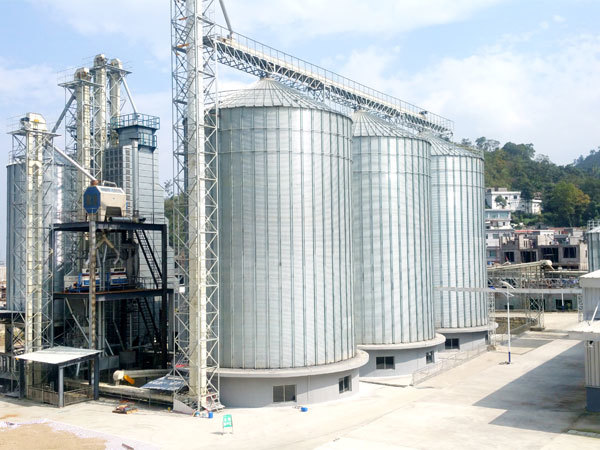

Insulated Steel Silo
COBAN grain silos are designed to ensure safe storage, stable ventilation, and long-term grain preservation under different climate conditions. Each silo system can be customized based on capacity, grain type, and project requirements for optimal storage performance and reliability.

Insulated Steel Silo
Storage Capacity:100–5,000 Tons
Silo Structure:Double-Wall Insulated Steel
Insulation Material:PU / PIR
Application:Grain, Feed & Bulk Materials
Optional System:Aeration & Temperature Monitoring
- Customized Capacity Design
- High Strength Galvanized Steel
- ISO Certified Manufacturing
- Global Installation Support
Applications
Corn Storage
Wheat Storage
Rice Storage
Soybean Storage
Feed Storage
Commercial Grain Storage
Product Details & Technical Information
An insulated steel silo is designed for grain and other bulk materials that need better protection from outside temperature changes. Unlike a conventional single-wall grain silo, it adds a thermal insulation layer between the outer protective shell and the inner silo wall. This helps slow down heat transfer and makes the storage environment easier to manage in hot, cold, or rapidly changing climates.
For grain storage projects, insulation is particularly useful when the silo is exposed to strong solar radiation, high daytime temperatures, large day-night temperature differences, or long storage periods. Depending on the material, climate, storage capacity, and required temperature-control level, the silo can be configured with insulation, aeration, temperature monitoring, sealing, and other auxiliary systems.
Insulated Steel Silo at a Glance
| Item | Typical Specification |
|---|---|
| Storage Capacity | 100–5,000 tons |
| Silo Structure | Double-wall insulated steel construction |
| Outer Wall | Galvanized steel sheet or coated steel sheet |
| Insulation Material | PU, PIR or equivalent thermal insulation material |
| Inner Wall | Galvanized steel or stainless steel according to application |
| Insulation Thickness | Project-specific, normally selected according to climate |
| Temperature Monitoring | Optional grain temperature sensors |
| Aeration System | Optional, selected according to grain and capacity |
| Roof Design | Galvanized steel roof with weather protection |
| Installation | Bolted modular assembly |
| Applications | Grain, feed ingredients and other temperature-sensitive bulk materials |
The final steel grade, sheet thickness, insulation material, insulation thickness, capacity and auxiliary equipment should be determined according to the project design.
Why Use an Insulated Steel Silo for Grain Storage?
The main reason for choosing an insulated silo is not simply to keep grain “cold.” The more important objective is to reduce the speed and extent of temperature changes inside the storage system.
A conventional steel silo can absorb heat from direct sunlight. In a hot climate, the roof and wall exposed to the sun may become considerably hotter than the surrounding air. Without sufficient thermal protection, this heat can gradually affect the grain near the silo wall.
An insulated steel grain silo creates a thermal barrier between the external environment and the stored grain. This gives the aeration system and grain cooling process better conditions to work with.
From an engineering perspective, insulation becomes particularly valuable when:
- Outdoor temperatures change sharply between day and night.
- The silo is installed in a hot or tropical climate.
- Grain must be stored for several months.
- Solar radiation is strong.
- The stored grain has a relatively low allowable storage temperature.
- The customer wants tighter control of grain temperature rather than relying only on ventilation.
Main Structure of an Insulated Steel Silo
A properly designed insulated grain silo is more than a steel bin with insulation added to the outside. The wall system, insulation, sealing, structural reinforcement, aeration and monitoring equipment should be considered together.

1. Outer Protective Steel Wall
The outer wall protects the insulation layer from rain, sunlight, mechanical damage and the surrounding environment.
Galvanized steel is commonly used because it provides a practical balance between corrosion resistance, strength and cost. Coated steel can also be selected when additional weather protection or a specific appearance is required.
2. Thermal Insulation Layer
The insulation layer is the key difference between an insulated silo and a conventional steel grain bin.
PU or PIR insulation can be selected according to the required thermal performance and local conditions. The appropriate thickness should not be selected simply by using a fixed value. It should be calculated according to factors such as:
- Local maximum and minimum temperatures
- Solar radiation
- Storage material
- Required storage temperature
- Silo diameter and height
- Storage period
- Aeration capacity
For projects in particularly hot regions, increasing insulation thickness can be more useful than simply increasing the cooling capacity of the aeration system.
3. Inner Storage Wall
The inner wall is the surface that directly separates the grain from the silo structure.
For normal grain applications, galvanized steel can be used. For applications with higher hygiene or corrosion requirements, stainless steel can be considered.
The inner surface should be smooth enough to reduce material retention and make cleaning and inspection easier.
4. Reinforcement System
Ring stiffeners and vertical structural components maintain the strength of the silo wall under grain pressure, wind loads and other operating conditions.
The reinforcement arrangement is determined by silo diameter, wall height, stored material density, local wind conditions and structural design requirements rather than by capacity alone.
5. Aeration and Temperature Monitoring
Insulation does not replace grain aeration.
For commercial grain storage, we normally regard insulation + aeration + temperature monitoring as three complementary parts of the storage system.
Temperature cables can be installed at different heights inside the silo. When a temperature increase is detected, the operator can determine whether cooling aeration is required before the problem spreads through the stored grain.
Insulated Steel Silo Performance: What Customers Should Actually Consider
Many customers initially focus on the insulation material or insulation thickness. In an actual grain storage project, these are only part of the calculation.
The more important question is:
Can the complete silo maintain a stable grain storage environment under the local climate and operating conditions?
| Factor | Why It Matters |
|---|---|
| Insulation Thickness | Determines resistance to external heat transfer |
| Roof Insulation | Important because the roof receives strong solar radiation |
| Wall Sealing | Reduces uncontrolled air and moisture exchange |
| Aeration Capacity | Removes accumulated heat and supports grain cooling |
| Temperature Sensors | Detects temperature changes inside the grain mass |
| Grain Moisture | Directly affects storage stability |
| Ambient Climate | Determines thermal load on the silo |
| Storage Duration | Longer storage requires tighter environmental control |
This is why a temperature controlled grain silo should be designed as a complete system rather than treating insulation as an isolated component.
How Insulation Helps Protect Stored Grain
Temperature is one of the most important factors affecting grain storage stability.
When grain temperature rises, biological activity can increase. Insects, microorganisms and grain respiration can become more active, particularly when moisture content is also high.
Insulation cannot correct wet grain or poor aeration. However, it can reduce the amount of external heat entering the silo and therefore make temperature management easier.
For example, suppose the outdoor temperature rises sharply during the afternoon. A conventional steel silo exposed to direct sunlight receives heat through its roof and sidewall. With an insulated structure, the thermal barrier slows this transfer.
This gives the grain cooling system more time to maintain the desired condition.
Important point
Insulation is a protection layer, not a substitute for proper grain drying.
Grain should be dried to an appropriate moisture level before long-term storage. Temperature monitoring and aeration should then be used to maintain the storage condition.
Insulated vs. Conventional Steel Silo
For customers deciding whether insulation is necessary, the comparison below is more useful than simply comparing purchase prices.
| Consideration | Conventional Steel Silo | Insulated Steel Silo |
|---|---|---|
| Initial Cost | Lower | Higher |
| Heat Transfer | Higher | Reduced |
| Solar Heat Protection | Limited | Better |
| Temperature Stability | Depends heavily on aeration | Easier to control |
| Hot Climate Performance | Requires stronger cooling management | Better suited |
| Long-Term Grain Storage | Suitable with good management | Stronger thermal protection |
| Energy Management | More dependent on aeration | Can reduce cooling demand in suitable conditions |
| Installation | Standard | More complex |
| Best Application | General storage | Temperature-sensitive or long-term storage |
The right choice depends on the project. There is no reason to insulate every grain silo. If the climate is mild, storage is short-term and aeration conditions are good, a conventional galvanized steel silo may already meet the customer’s requirements.
An insulated grain storage silo becomes more attractive when climate conditions create a significant thermal load.
Where Are Insulated Grain Silos Most Useful?
Hot and Tropical Regions
High daytime temperatures and strong solar radiation can create considerable heat loads on conventional steel silos.
Insulated construction can reduce the rate of heat entering the grain mass and improve the effectiveness of the cooling system.
This is particularly relevant for grain storage projects in parts of Africa, Southeast Asia, the Middle East and South America.
Coastal and Humid Areas
Humidity creates additional challenges for grain storage. In these areas, the silo should not rely on insulation alone.
The complete design may include:
- Corrosion-resistant steel protection
- Proper roof and wall sealing
- Controlled aeration
- Temperature monitoring
- Grain moisture management
- Condensation control
Long-Term Grain Storage
For grain intended for several months of storage, controlling temperature fluctuations becomes more important.
An insulated silo can help reduce the influence of external temperature changes, particularly when combined with an automated grain temperature monitoring system.
Seed and Higher-Value Agricultural Products
Some seed and agricultural materials require tighter storage conditions than ordinary commercial grain. Depending on the material, an insulated storage structure can provide an additional layer of environmental protection.

insulated steel silo price
Insulated Silo + Aeration: A Better Storage Combination
One common mistake is to assume that a thicker insulation layer automatically means better grain storage.
In practice, the storage system works better when the components are matched.
Step 1: Dry the Grain
Grain entering the silo should meet the target moisture requirement for the intended storage period.
Step 2: Load the Silo Evenly
Uneven grain distribution can create differences in airflow and temperature.
Step 3: Monitor Grain Temperature
Temperature cables continuously measure conditions at different locations inside the grain mass.
Step 4: Aerate When Conditions Are Suitable
When outdoor air conditions are favorable, the aeration system can be operated to remove accumulated heat.
Step 5: Investigate Abnormal Temperature Zones
A local temperature increase should not be ignored. It can indicate moisture migration, insect activity, biological activity or localized heating.
Step 6: Keep Records
Temperature, moisture and aeration records help operators identify trends before a storage problem becomes serious.
This operating method is far more reliable than depending on insulation alone.
What Determines the Cost of an Insulated Steel Silo?
The insulated steel silo price cannot be determined accurately from capacity alone.
Two 1,000-ton silos can have very different prices if one is installed in a mild climate with standard aeration and the other requires heavy insulation, temperature monitoring, special corrosion protection and a complete conveying system.
The main cost factors include:
- Silo capacity and diameter
- Steel plate specification
- Insulation material and thickness
- Roof and wall design
- Aeration equipment
- Temperature monitoring system
- Access platforms and ladders
- Inlet and outlet configuration
- Conveying equipment
- Local wind and structural requirements
- Installation conditions
- Required automation level
For this reason, customers should request a project-specific quotation rather than comparing insulated silo prices only by tons of storage.
How to Choose the Right Insulated Steel Silo
Before selecting an insulated silo manufacturer, we recommend preparing the following information:
| Project Information | Example |
|---|---|
| Material | Maize, wheat, rice, soybean, feed ingredient |
| Required Capacity | 500 t, 1,000 t, 3,000 t, etc. |
| Number of Silos | Single silo or storage complex |
| Location | Country and installation site |
| Climate | Hot, humid, cold, coastal, high temperature difference |
| Storage Period | Short-term or long-term |
| Grain Moisture | Moisture at silo inlet |
| Temperature Requirement | Target storage condition |
| Automation | Manual, semi-automatic or automatic |
| Handling System | Bucket elevator, belt conveyor, screw conveyor, etc. |
With these details, the silo structure and insulation system can be designed around the actual operating conditions instead of using a standard configuration.
What Should a Complete Insulated Grain Storage System Include?
For a commercial grain storage project, the silo itself is only one part of the system.

A complete solution may include:
- Insulated steel grain silos
- Grain receiving system
- Bucket elevators
- Belt or chain conveyors
- Grain cleaning machine
- Grain dryer
- Aeration fans
- Aeration floor or ducts
- Grain temperature monitoring cables
- Level sensors
- Dust collection system
- Control cabinet
- Loading and unloading equipment
For a new grain storage facility, integrating these systems at the design stage can avoid expensive modifications after installation.
Why Insulated Steel Silo Design Should Be Climate-Based
A silo designed for northern Europe should not necessarily use the same thermal design as a silo installed in a hot African or Middle Eastern climate.
For example, the engineering priorities may change as follows:
Hot climate:
Focus on solar heat gain, roof insulation, wall insulation and grain cooling.
Humid climate:
Focus on moisture management, condensation prevention, corrosion protection and aeration.
Cold climate:
Focus on freezing conditions, condensation caused by temperature differences and structural design for local weather.
Large day-night temperature difference:
Focus on reducing rapid heat transfer and controlling condensation risks.
This is why an insulated steel silo manufacturer should ask for the project location and operating conditions before recommending insulation specifications.
Insulated Steel Silo for Modern Grain Storage
A well-designed insulated steel silo provides more than an additional layer around the grain.
Its real value is the combination of:
thermal protection + controlled aeration + temperature monitoring + proper grain moisture management.
For customers storing maize, wheat, rice, paddy, soybean or other bulk agricultural products, this combination can provide a more stable storage environment and reduce the impact of external temperature fluctuations.
At COBAN, we approach insulated silo projects from the operating side first. Capacity, climate, grain type, moisture, storage period and automation requirements are considered before determining the silo structure and auxiliary equipment.
If you are planning an insulated steel grain silo project, provide the grain type, required storage capacity, project location and expected storage period. These four pieces of information are enough to start evaluating whether insulation is necessary and what type of storage configuration is appropriate.
Request A Quote
Tell us your capacity, grain type, and project location. We will design a turnkey solution for you.


