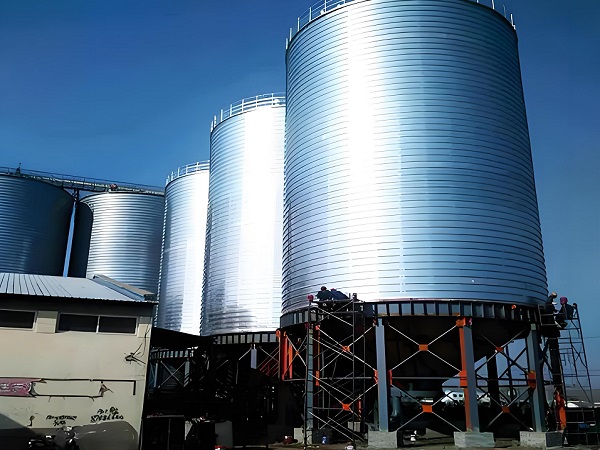
Key Points for Ventilation and Drying in Grain Steel Silo
In today’s society, grain steel silo primarily serve the purpose of storing grain. Therefore, the internal systems of these silos play a crucial role in protecting the grain properly. After a period of storage, we often observe that as the ambient temperature rises, the dust, impurities—especially organic materials—mixed in the grain accelerate its oxidation process, posing a serious threat to safe grain storage. To preserve grain quality and prevent spoilage, we must implement effective ventilation and drying inside the grain steel silos. So, how can we achieve this effectively?

Use Cooling Ventilation
Cooling ventilation serves as one of the most important methods for drying and ventilating grain steel silo. We typically use exhaust fans to create air circulation, which helps lower the internal temperature of the silo. Specifically, we install a large-diameter grain inlet in the center of the silo roof to facilitate grain loading. At the same time, we place a pair of exhaust fan openings symmetrically on the roof to support ventilation and cooling. Inside the silo, we usually install one axial flow exhaust fan. At the bottom, we equip the silo with a perforated floor, allowing airflow—whether cold air for cooling or hot air for drying—to pass through the grain pile.
By installing a ventilation system, we significantly enhance the safety of grain storage. The roof-mounted exhaust fans help us flexibly regulate the temperature in the upper part of the silo, effectively removing heat and moisture from the top and surface layers of grain. This prevents heat damage to the upper grain. Today, this method of cooling ventilation has seen wide adoption across various types of steel silos and has become a reliable way to maintain grain quality.
Apply Ventilation for Moisture Reduction
Ventilation for moisture reduction also plays a key role in the ventilation and drying process of grain steel silo. The goal is to prevent the silo interior from becoming excessively dry. During operation, we ensure sufficient ventilation volume. When the ambient temperature ranges between 10–28°C and humidity stays between 36%–64%, we use a combined blowing and suction method, which can achieve moisture reduction rates above 200%. This approach keeps the grain inside the silo from drying out too much. At present, this method is also commonly used in other types of steel silo storage systems.
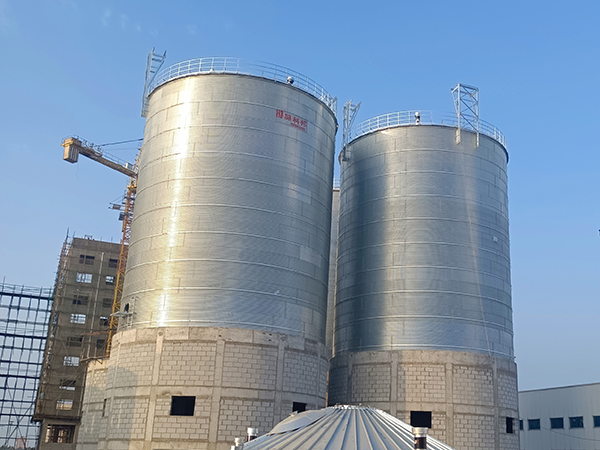
Overall Significance of Ventilation and Drying
In conclusion, to ensure the safe storage of grain in steel silos, we must implement ventilation for both cooling and moisture reduction, along with low-temperature storage. As discussed above, ventilation and drying significantly improve the storage performance of grain steel silo.
Regardless of whether the silos are located in southern or northern regions, both have widely promoted these methods to prevent spoilage of stored grain. Ventilation and drying play a vital role in lowering and balancing grain temperature, preventing condensation, controlling pests, avoiding spontaneous heating, and reducing operational costs. These practices provide strong support for the long-term safe storage of grain.