Hot spots are one of the problems we pay close attention to when designing and operating grain storage silos. A grain bin can look completely normal from the outside while the grain around one small area is already heating, losing quality, or developing mold.
This is especially important in galvanized steel grain silos, where grain may be stored for several months. If a hot spot is detected early, the loss can often be limited. If it is ignored, the affected area can expand and turn a local problem into a large quantity of spoiled grain.
From our engineering experience with grain storage projects, hot spots are rarely caused by temperature alone. In most cases, they are related to grain moisture, poor airflow, biological activity, condensation, insects, or uneven grain conditions.
What Is a Hot Spot in Stored Grain?
A hot spot is a localized area inside a grain storage silo where the grain temperature is significantly higher than the surrounding grain.
For example, if most of the grain mass is around 20–22°C but one sensor suddenly records 28–30°C, that area needs attention even if the average grain temperature still appears acceptable.
The important point is that the average silo temperature can hide a local problem.
A typical hot spot may develop around:
- The upper grain surface
- The center of the grain mass
- The wall area
- The bottom section
- Areas with high-moisture grain
- Locations where grain fines have accumulated
- Areas with poor aeration
- Places affected by condensation
Once microorganisms or insects become active, their biological activity produces additional heat. The temperature then rises further, creating a cycle that can quickly damage the grain.

Why Hot Spots Cause Grain Loss
The problem is not simply that the grain becomes warm.
As temperature and moisture increase, several things can happen at the same time:
- Microbial activity increases.
- Insect activity becomes more active.
- Respiration of grain and microorganisms increases.
- Moisture can migrate within the grain mass.
- Mold growth becomes more likely.
- Grain quality and germination rate can decline.
- Affected grain may develop an unpleasant odor or discoloration.
- In severe cases, grain may cake together and become difficult to discharge.
Therefore, preventing hot spots in grain storage silos is also a grain loss prevention measure.
Why Do Hot Spots Develop in Grain Silos?
There is rarely one single cause. During a grain storage project, we normally look at the grain condition, silo filling process, aeration system, weather conditions, and monitoring data together.
1. Grain Is Stored at Excessive Moisture
Moisture is one of the first factors we check.
If grain enters the grain storage silo before it has been adequately dried, the higher moisture content creates a much greater risk of heating.
Wet grain also has a higher tendency to develop microbial activity. Once activity begins, the local temperature rises, which can accelerate further deterioration.
This is why grain drying and grain storage should not be treated as two completely separate operations.
Before loading grain into a silo, we recommend checking:
- Grain moisture content
- Grain temperature
- Presence of damaged kernels
- Foreign material
- Insect activity
- Uniformity of the grain condition
For long-term storage, the target moisture content should be determined according to the grain type, storage period, local climate, and intended end use.
Do not use one moisture target for every crop. Maize, wheat, paddy, soybean and other grains have different storage requirements.
2. Moisture Migration Inside the Silo
This is a common reason why a hot spot appears after the grain has already been stored for some time.
The grain mass is not completely static.
Temperature differences between the grain and surrounding environment can create convection currents inside the silo. Under certain conditions, moisture moves with these air currents and gradually accumulates in specific areas.
A typical seasonal pattern can look like this:
Cold outside temperature → grain temperature difference → internal air movement → moisture migration → localized condensation → grain deterioration
In cold weather, moisture may move toward the colder silo wall and upper sections. During warmer conditions, the pattern can change.
This is why a grain silo that was filled with properly dried grain can still develop a storage problem several weeks or months later.
3. Poor or Uneven Aeration
A grain aeration system is not simply a fan installed under the silo.
The air needs to move through the grain mass at an appropriate rate and distribution.
If airflow is uneven, some areas may receive insufficient cooling. Those areas can become the first locations where temperature begins to rise.
Problems can occur because of:
- Blocked aeration ducts
- Incorrect fan selection
- Insufficient airflow
- Poorly designed air distribution
- Excessive grain fines
- Uneven grain loading
- Grain bridging or compaction
When designing a grain storage silo system, we therefore consider the silo capacity, grain type, grain depth, local climate and aeration requirements together.
4. Grain Fines Accumulate in One Area
Fine particles, broken kernels, husks and other small materials do not always distribute evenly throughout the silo.
During filling, fines can concentrate in the center of the grain pile.
This creates a problem because fines reduce the void spaces between kernels. Air then has greater difficulty passing through the affected area.
The result can be:
More fines → restricted airflow → poor cooling → increased biological activity → higher temperature
For this reason, grain cleaning before storage is not only about improving grain appearance. It also contributes directly to safer storage.
In larger grain storage projects, we usually pay particular attention to the relationship between the grain cleaner, bucket elevator, conveyor, silo filling system and aeration system.
5. Insects and Microorganisms Generate Heat
Insects can create surprisingly serious local heating.
A small insect population may initially appear insignificant. But under favorable temperature and moisture conditions, insect activity can increase rapidly.
Microorganisms can have a similar effect.
Their activity generates heat. The increased temperature then creates better conditions for further biological activity.
This creates a positive feedback loop:
Moisture → biological activity → heat → more biological activity → higher temperature
Once this cycle becomes established, simply waiting for the grain to cool naturally is usually not a reliable solution.
6. Condensation on the Silo Roof or Wall
A galvanized steel silo has good structural durability, but the steel wall itself does not eliminate condensation.
If warm, moist air contacts a sufficiently cold steel surface, condensation can occur.
This moisture may then enter the grain near the wall or roof area.
The risk is higher when:
- Warm grain is loaded into a cold silo
- Day and night temperatures change sharply
- Outdoor humidity is high
- The silo is poorly ventilated
- Grain temperature differs substantially from outside temperature
For this reason, the roof space and upper grain surface should not be ignored during routine inspections.
How to Detect a Hot Spot Before It Becomes Serious
The most effective approach is early detection.
We normally recommend combining grain temperature monitoring, regular inspection and operational records rather than relying on a single method.
1. Install Grain Temperature Sensors
Temperature cables installed at different positions and heights allow operators to monitor the grain mass from several points.
A useful monitoring arrangement should provide information from:
- Center of the silo
- Intermediate radial positions
- Near-wall areas
- Different grain depths
- Upper and lower sections
The exact number and arrangement of sensors should be determined according to silo diameter, grain depth and project requirements.
The purpose is not simply to know the average temperature.
The more important question is:
Is one location becoming warmer than the surrounding grain?
A gradual temperature increase at one sensor can be more important than a small change in the overall average.
2. Look for Temperature Trends, Not Only Absolute Values
A single temperature reading does not tell the whole story.
For example:
| Observation | What It May Indicate |
|---|---|
| All sensors remain stable | Grain condition is probably stable |
| Whole silo temperature gradually changes | Seasonal or aeration-related change |
| One sensor rises steadily | Possible developing hot spot |
| Several nearby sensors rise | Larger localized problem |
| Temperature rises together with moisture | High risk of deterioration |
| Temperature rises rapidly | Immediate investigation required |
The rate of change matters.
If one location increases several degrees while surrounding sensors remain stable, we would investigate that location instead of waiting for the overall silo temperature to rise.

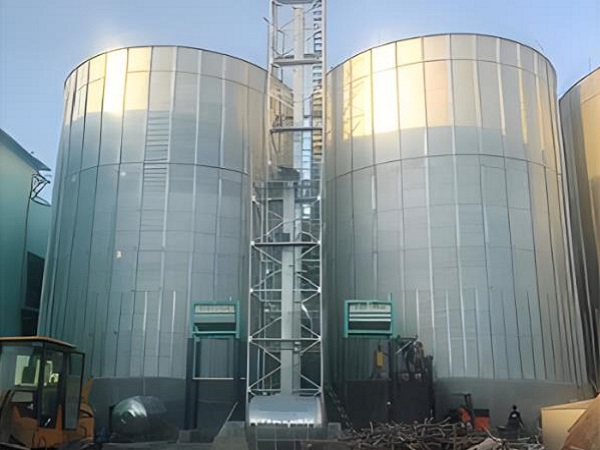
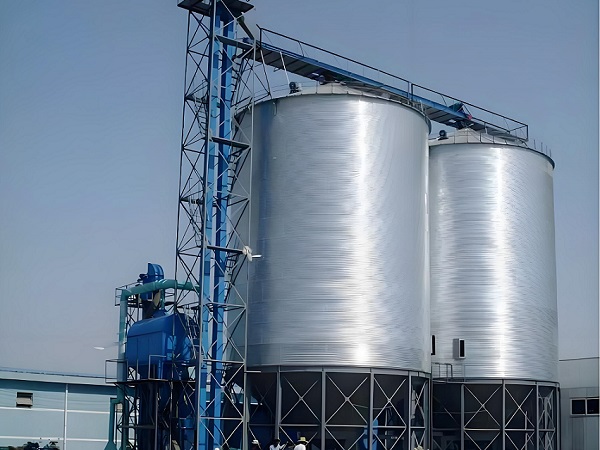
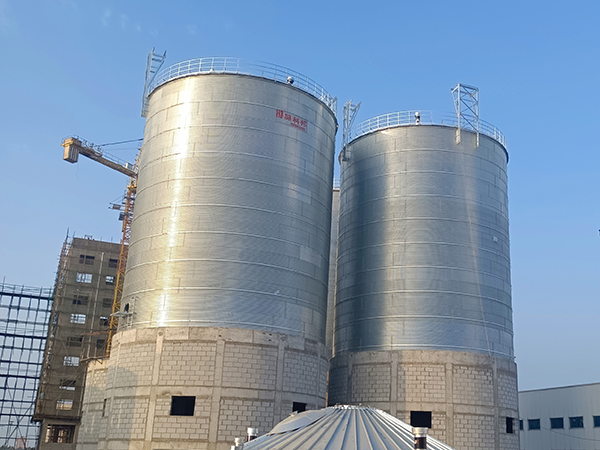
galvanized steel grain silos
What to Do When a Hot Spot Is Found
Finding a hot spot is only the first step. The response needs to be controlled.
Step 1: Confirm the Temperature Reading
Before starting major operations, check whether the reading is reliable.
Compare:
- The affected sensor
- Nearby sensors
- Previous temperature records
- Ambient temperature
- Aeration operating condition
If possible, verify the area using another measurement method.
A faulty sensor can produce a false alarm, while a missed sensor problem can allow a real hot spot to develop unnoticed.
Step 2: Identify the Location and Possible Cause
Do not immediately assume that every hot spot requires the same treatment.
Ask:
- Is the affected area near the wall?
- Is it near the center?
- Is it close to the top?
- Is the grain moisture higher in this area?
- Is there excessive fine material?
- Has the aeration system been operating normally?
- Was the grain loaded at different moisture levels?
- Could insects be involved?
The location often gives useful clues.
For example, a hot spot near the top may require a different response from a hot spot deep in the center of the grain mass.
Step 3: Start Aeration When Conditions Are Suitable
If the grain needs cooling, operate the aeration system with suitable outside air.
However, turning on the fan continuously without considering outside air conditions is not always the correct solution.
The air temperature and relative humidity should be considered before aeration.
The objective is to move an appropriate amount of air through the grain and gradually reduce the grain temperature without creating another moisture problem.
For this reason, the aeration fan, air ducts and silo perforated floor should be designed as one system.
Step 4: Turn or Move the Grain if Necessary
If aeration cannot sufficiently control the problem, mechanical grain movement may be required.
Grain can be transferred out of the silo and returned through the handling system, depending on the silo design and project configuration.
This can help:
- Break up compacted areas
- Redistribute moisture
- Mix temperature differences
- Reduce localized concentration of fines
- Expose affected grain for inspection
If the affected grain is already severely damaged, however, moving it through the system without inspection may simply distribute the problem.
Step 5: Remove Severely Deteriorated Grain
If grain has developed obvious mold, strong odors, severe insect infestation, caking or significant discoloration, it should be isolated and assessed.
Do not mix obviously deteriorated grain back into good-quality grain simply to avoid disposal losses.
A relatively small quantity of damaged grain is easier to remove than a complete silo of contaminated grain.
This is one reason why early hot spot detection can directly reduce grain storage losses.
How COBAN Approaches Hot Spot Prevention in Grain Storage Silos
When we look at a galvanized steel grain silo project, we do not consider the silo body alone.
The storage result depends on how several systems work together:
Grain drying → grain cleaning → conveying → silo filling → aeration → temperature monitoring → discharge
A good silo needs to support the operator in controlling the grain after it enters storage.
1. Galvanized Steel Silo Structure
Galvanized steel sheets provide corrosion resistance and are suitable for long-term grain storage applications.
But the steel shell itself does not prevent hot spots.
The silo needs to be combined with appropriate aeration, monitoring and grain management systems.
This distinction is important when comparing different grain storage silos.
2. Temperature Monitoring System
A temperature monitoring system gives operators information from inside the grain mass rather than relying only on external observations.
We recommend establishing a regular monitoring schedule and recording the readings.
The historical data becomes useful because operators can see whether a particular point is:
- Stable
- Slowly increasing
- Repeatedly heating
- Responding to aeration
- Developing a seasonal pattern
This makes grain storage management much more practical than checking the silo only when a problem becomes visible.
3. Aeration System
Aeration should be matched to the silo and grain being stored.
The main components normally include:
- Aeration fan
- Air ducts
- Perforated floor or aeration channels
- Air inlet/outlet arrangement
- Control system
The objective is to distribute cooling air through the grain mass as evenly as practical.
A large silo with an undersized or poorly matched aeration system can still experience hot spots even when the silo structure itself is well manufactured.
4. Proper Grain Filling
The filling process also affects storage performance.
If excessive fines accumulate in the center, airflow may become restricted.
For this reason, we pay attention to the material flow path and the way grain enters the silo.
Where project conditions require it, grain distribution equipment can be used to improve the distribution of incoming material.
A Practical Hot Spot Prevention Routine
For long-term grain storage, prevention is much cheaper than trying to recover badly damaged grain.
A practical operating routine can include the following:
Before Filling
- Check grain moisture.
- Check grain temperature.
- Clean excessive fines and foreign material.
- Inspect the empty silo.
- Check aeration ducts and fan condition.
- Check temperature sensors.
- Confirm discharge equipment is working normally.
During Filling
- Avoid mixing grain with significantly different moisture conditions without proper assessment.
- Watch for excessive fines accumulation.
- Avoid storing visibly wet or damaged grain together with good-quality grain.
- Keep records of the grain source, moisture and loading date.
During Storage
- Monitor grain temperature regularly.
- Compare current readings with historical readings.
- Pay attention to individual sensor increases.
- Inspect the roof and upper grain area when appropriate.
- Operate aeration according to actual weather and grain conditions.
- Check for insect activity.
- Record all aeration and grain movement operations.
When a Hot Spot Appears
- Confirm the reading.
- Locate the affected zone.
- Determine the likely cause.
- Start suitable aeration.
- Increase monitoring frequency.
- Move the grain if necessary.
- Remove severely deteriorated grain.
- Check the surrounding grain after treatment.
Hot Spot Prevention: Silo Design vs. Daily Operation
It is tempting to think that hot spots are mainly a silo manufacturing problem. In actual grain storage projects, that is rarely the complete picture.
| Factor | Effect on Hot Spot Risk |
|---|---|
| Grain moisture | High moisture greatly increases deterioration risk |
| Grain temperature | High initial temperature makes cooling more difficult |
| Grain cleaning | Excessive fines can restrict airflow |
| Silo aeration | Poor airflow can leave warm areas untreated |
| Temperature monitoring | Early detection reduces response time |
| Grain loading | Uneven material distribution can affect airflow |
| Weather | Temperature and humidity influence grain conditions |
| Insect control | Insects can create localized heating |
| Storage period | Longer storage requires closer monitoring |
| Operator response | Early action can prevent a small problem becoming a major loss |
This is why we normally approach grain storage silo design as a complete system rather than simply selecting a silo capacity.
The Main Lesson: Do Not Wait for a Hot Spot to Become Visible
A hot spot inside stored grain does not normally appear overnight.
In many cases, the temperature begins increasing gradually before the operator notices any smell, mold or visible grain damage.
That gives the storage operator an opportunity to intervene.
A reliable grain storage silo system should therefore provide three things:
- Good grain condition before storage
- Controlled airflow for cooling
- Continuous information from inside the grain mass
The galvanized steel silo provides the storage structure, but safe long-term grain storage depends on the complete system around it.
From our engineering experience, the most effective strategy is simple: dry the grain properly, keep the grain clean, monitor temperature trends, manage aeration according to conditions, and respond to abnormal readings early.
A few hours of attention when a temperature trend first appears can prevent weeks of grain deterioration and a much larger financial loss.