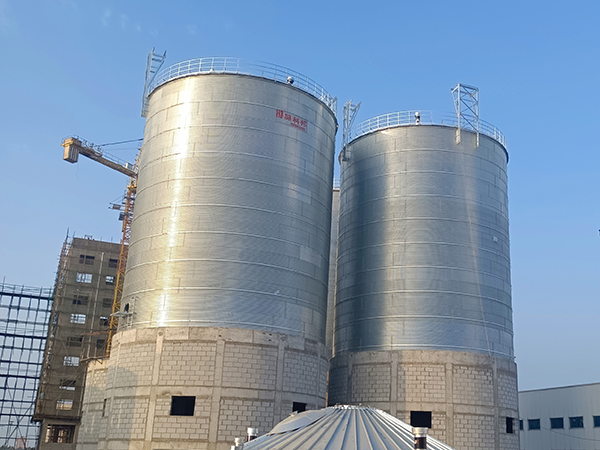
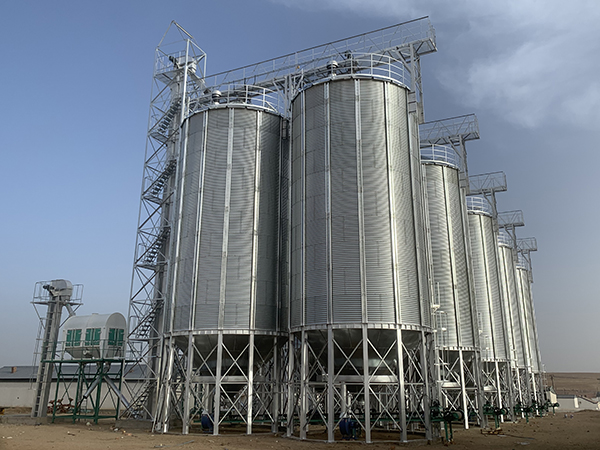
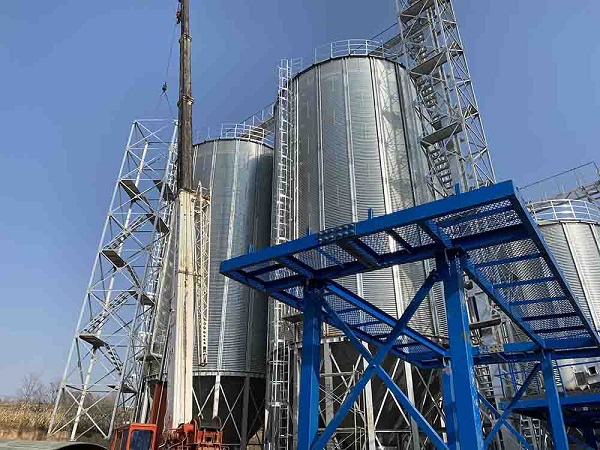
External dimensions measurement
Silo external dimensions measurement must take into account both accuracy and efficiency. Basic parameters include silos height, diameter (circular silos) or side length (square silos), wall thickness and inlet and outlet dimensions.

Height measurement
Use a total station or laser rangefinder to set reference points at the top and bottom of the silo, and obtain accurate height values through vertical distance measurement. For ultra-high silos, segmented measurements and accumulation are required to ensure data continuity.
Diameter/side length measurement
For circular silos, it is recommended to use a laser scanner or tape measure to measure multiple points and take the average value to eliminate local deformation errors; for square silos, the distance from the midpoint of each side to the diagonal point needs to be measured to verify its squareness.
Wall thickness detection
Use ultrasonic thickness gauges to evenly distribute points along the circumference and height of the silo, focus on monitoring joints and high-incidence areas of corrosion, and establish a database of wall thickness changes.
Volume Calculation and Verification
Volume is a core parameter in silo design, necessitating calculation that integrates geometric shape with actual filling characteristics.
Geometric Volume Calculation
Based on measured dimensions, calculate the volume of circular silos using the cylinder formula V=πr2h, and for rectangular silos, use the cuboid formula V=a×b×h, where a and b are side lengths, and h is height.
Effective Volume Correction
Account for the angle of repose of materials, wall friction coefficients, and the conical section at the silo top. Refine calculations through finite element simulations or actual material pile height measurements to align with real storage capacities.
Periodic Verification
Cross-check volume discrepancies by integrating material in/out records with regular inventory data, optimizing the calculation model.

Structural Health Monitoring
Silos endure static material loads and dynamic impacts over time, necessitating regular structural integrity monitoring.
Inclination Detection
Leverage total stations or tilt sensors to monitor silos perpendicularity changes, providing early warnings of foundation settlement risks.
Crack and Deformation Monitoring
Employ crack width gauges and 3D laser scanning to periodically scan silo wall surfaces, identifying crack propagation and local deformations.
Vibration Analysis
Install accelerometers to monitor vibration responses during material loading and unloading, assessing risks of structural fatigue damage.