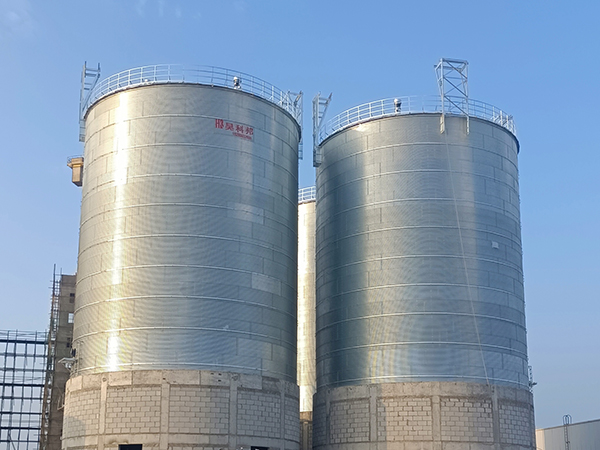
To help everyone manage their warehouse assets better, I have summarized this practical guide on the cleaning and maintenance of grain silo based on my actual operation experience.

Why must grain silo be clean regularly?
Many people think that silos are fully enclosed and that once the grain goes in, it is safe. In fact, this is not the case. During long-term storage, a micro-ecological environment will form inside the silo.
1. Residues are invisible “bombs” : Grains like corn are highly prone to absorbing moisture and clumping when they stick to walls or are piled up in corners. These old residues will mold, and the mycotoxins produced will directly contaminate the newly stored grains, leading to a decline in the quality of the entire grain warehouse.
2. Space and efficiency loss: Don’t underestimate the “dead corners” accumulated on the inner walls. The thick adherent layer will occupy the actual storage. What is more troublesome is that the uneven residues will change the gravity distribution during unloading and even bring unbalanced pressure to the silo structure, posing a safety hazard.
3. The breeding ground for pests and diseases: Dust, impurities and residues of old grains are the favorite breeding grounds for weevil insects and moths. If not clean up thoroughly, these pests will spread rapidly through the ventilation system.
Before commencing work: Preparations for cleaning the silo
Cleaning silos is a high-risk operation and one must never rush into it.
Before commencing, strict safety training must be provided to the workers, especially regarding the risks of oxygen deficiency and dust explosion in confined space operations.
- Material transportation: Empty the stored grain as much as possible. When transporting, handle with care to reduce the breakage rate, as broken grains are more prone to moisture and mold.
- Tool inspection: Prepare an industrial vacuum cleaner, high-pressure air gun, scraper, and disinfectant that meets the standards.
- Ventilation and noise reduction: Turn on the ventilation system to ensure that the oxygen content inside the warehouse meets the standards and expel the accumulated harmful gases.
 Vibrating cleaning screen
Professional Tools: Introduction to Grain Cleaning Equipment
A workman who wants to do his job well must first sharpen his tools. Modern granary management has long bid farewell to the simple broom.
1. Grain cleaning screen (impurity cleaning screen) : This is the first line of defense for entering and leaving the warehouse. It is sorted by particle size and specific gravity. High-quality grain cleaning screens (such as drum type or vibrating type) have a compact structure and low noise, and can efficiently remove leaves, chaff and stones from corn.
2. Double-drum cleaning screen vs. vibrating cleaning screen: * For processing rice or corn with high impurity content, the double-drum screen separates through centrifugal force, resulting in a large output.
In pursuit of fine dust removal and light impurity cleaning, vibrating screens offer better performance and lower energy consumption.
3. Auxiliary system: Don’t forget the accompanying pulse dust removal equipment. It can ensure that the cleaning site is not “dusty” and also meets the modern environmental protection emission requirements.

Common main methods for cleaning silo
Depending on the scale of the silo and the degree of pollution, we usually choose different solutions:
1. Mechanical cleaning method (preferred) : Utilize scraper conveyors and heavy-duty vacuum cleaners. This method is the most efficient. It can quickly remove the adherents on the wall and reduce the time for manual entry into the warehouse.
2. Manual cleaning method: For small silos or mechanical dead corners. Although it is laborious, it excels in precision and can thoroughly clean the ventilation openings and the measuring holes.
3. High-pressure air flow cleaning method: Suitable for large-scale vertical silos. Using strong air flow to blow away dust in dead corners is highly efficient, but during operation, pressure must be strictly controlled to prevent excessive dust concentration from causing danger.
4. Water washing cleaning method (special circumstances) : Only used when severe mold or cross-contamination occurs. Remember: After water washing, thorough forced drying must be carried out; otherwise, the remaining moisture will be the trigger for the next mold growth.
5. When should the silo be given a “bath”?
There’s no need to wait until problems arise to clean it up. As a practitioner, you can make a judgment through the following signs:
- Material flow obstruction: Unsmooth unloading or interrupted feeding usually indicates that there is already severe caking or wall sticking inside.
- Abnormal energy consumption: An increase in the current of the conveyor or fan indicates that the accumulated materials have increased the operating resistance.
- Odor and visual abnormalities: A musty smell appears at the discharge port, or the grain temperature monitoring system shows an abnormal increase in local temperature (often due to heat release from mold).
- Routine cycle: Even if it seems normal, we still recommend conducting a thorough check-up every quarter or each time the warehouse is empty and materials are switched.
6. Maintenance and care after cleaning: This is the real skill
Cleaning thoroughly is just the first step. The subsequent maintenance will determine how much repair cost you can save.
Pit and discharge port
Focus on inspecting the rainproof facilities. If water seeps into the outdoor pit, rotten grain will accumulate in the scraper conveyor. The grille at the discharge port should be cleaned every shift to prevent foreign objects such as packaging bags and iron wires from damaging the subsequent equipment.
Scraper conveyor and elevator:
1. Scraper conveyor: Check the chain tension weekly. If the vertical spacing is less than 10cm, it must be adjusted immediately to prevent chain breakage.
2. Elevator: It is the “heart” of the grain silo. Special attention should be paid to the integrity of the buckets. If continuous damage is found, they must be repaired immediately; otherwise, it will cause lifting imbalance.
Grain condition monitoring calibration
Currently, many warehouses use 485 communication monitoring. It is recommended to calibrate the temperature and humidity collection points once every quarter. Only when the data is accurate can you sleep soundly.
Three-way fittings and chutes
Corn is hard, and chutes are prone to wear through. During daily inspections, it is necessary to pay more attention to whether there are any “missed materials” to prevent different types of grains from being stored together.
Summarize experience
There is no shortcut to maintaining food. Regular cleaning is not only for hygiene, but also to protect your expensive mechanical equipment and the food wealth you have painstakingly saved.
If you are looking for more efficient grain cleaning screen equipment or need a customized silo cleaning solution, please feel free to contact our technical experts. We can provide you with detailed parameter plans and industry case references.