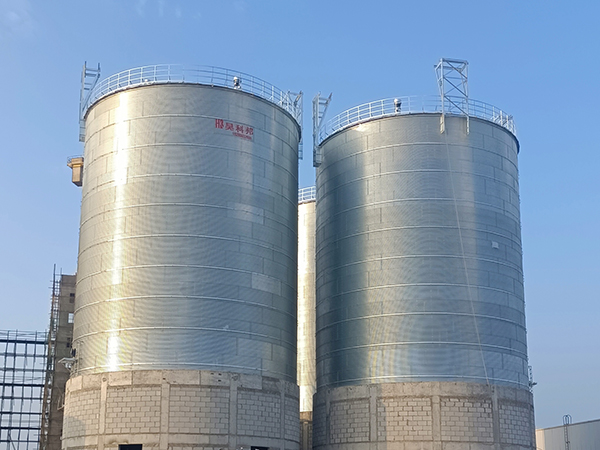
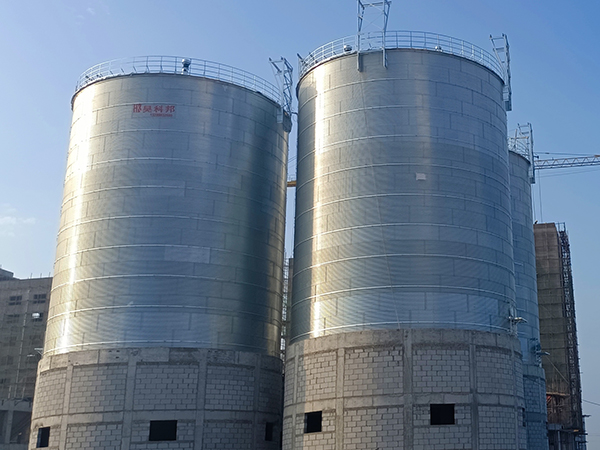
The importance of rice silo insulation
As the core facility for grain storage, the insulation performance of rice silos directly affects the quality and storage cycle of rice. According to statistics, the risk of rice mildew will increase by 30% for every 5°C increase in temperature. Therefore, reasonable rice silo insulation measures can effectively reduce energy consumption losses. They can also prevent grain deterioration caused by temperature difference condensation.

Comparison of mainstream insulation methods
Interlayer filling method
By filling rock wool or polyurethane foam (with a recommended thickness of 10–15 cm) between the inner and outer walls of the cement structure rice silo, operators can reduce the temperature difference fluctuation in the silo by 60%, as confirmed by actual measurements. After a grain depot in Hunan Province adopted this method, the moisture content of rice remained consistently stable. Throughout the year, it was maintained at 13.5%±0.3%.
External wrapping technology
The outer surface of the rice silo is wrapped with an aluminum foil reflective film, combined with a 0.5mm thick PVC waterproof layer. A case study of a Jiangsu enterprise showed a significant cooling effect inside the silo. During extreme high temperatures in summer, the temperature inside the silo can be 8-12℃ lower than the ambient temperature.
Intelligent temperature control system
Temperature and humidity sensors are installed in traditional rice silos to link ventilation equipment and heating belts. When the silo temperature is detected to be lower than 5℃, the heating is automatically started, and when it is higher than 20℃, the circulating fan is turned on to achieve temperature control throughout the season.

Construction precautions
Operators should use special sealant to treat the joints of the insulation layer to avoid the “cold bridge effect.”
Adding a double-layer sunshade shed on the top of the rice silo can reduce direct solar heat radiation.
The integrity of the moisture-proof layer should be checked before the rainy season every year. This helps prevent the insulation material from absorbing water and failing.
Economic benefit analysis
Take a 500-ton rice silo as an example. The initial insulation renovation cost is about 20,000 to 30,000 yuan, but it can reduce the drying energy consumption by 40%. According to the current electricity price, the investment can be recovered in 18 months. At the same time, the rice loss rate can be reduced from 3% to below 0.8%.
Future development trend
The new gas-controlled rice silo has begun to pilot phase change energy storage materials, using the phase change heat absorption characteristics of paraffin and other substances in the range of 15-18℃ to achieve zero energy consumption temperature control. A certain test warehouse in Guangdong has achieved a breakthrough result. The temperature difference remained within ±1℃ for 72 hours.