Common Problems Before the Next Harvest and How to Solve Them
| Common Problem | Recommended Solution | What the Farmer Should Do |
|---|---|---|
| Old grain remains inside the silo | Completely empty and clean the silo | Remove residues from the floor, corners, outlets and equipment |
| Grain dust and foreign material accumulate | Deep-clean accessible areas | Use a suitable vacuum and remove compacted residues |
| Water stains, rust or mold appear | Find and repair the moisture source | Check roof, seals, openings, floor and drainage |
| Insects are found in old residues | Clean first and apply an approved treatment if required | Remove the source before introducing new grain |
| Aeration airflow is poor | Clean and test the aeration system | Check floor openings, ducts, fan and connections |
| Temperature sensors give abnormal readings | Test or replace faulty sensors | Check all cables and sensor readings before filling |
| Conveyors or sweep auger show wear | Repair or replace worn components | Test the unloading system while the silo is empty |
| Structural damage is visible | Arrange professional assessment and repair | Do not load grain until serious structural problems are resolved |
This approach helps the operator focus on problems that can actually affect the next storage cycle instead of completing a long checklist without understanding why each item matters.
1. Problem: Old Grain and Dust Are Still Inside
A silo can look empty while several kilograms or even much more of grain remain around the floor, discharge outlet, aeration openings, sweep auger, wall joints and other low points.
These residues can become a source of insects, mold and contamination when the next crop is loaded.
Solution
The silo should be physically cleaned after the previous crop has been discharged.
For a flat-bottom silo, pay particular attention to:
- Floor perimeter
- Center discharge
- Under and around the sweep auger
- Aeration floor
- Wall joints
- Discharge gates
For a hopper-bottom silo, inspect the hopper, transition section and discharge outlet.
How the Farmer Should Operate
First empty the silo using the normal unloading system. Then remove remaining grain and dust from accessible areas. A suitable industrial vacuum is generally preferable to simply blowing dust around with compressed air.
The goal is simple:
No old grain residue should be left in areas where it can mix with the next crop or provide a place for insects to survive.

2. Problem: Moisture or Mold Appears Inside the Silo
Moisture is one of the problems that should never be solved by cleaning alone.
If the same area repeatedly shows wet grain, mold, rust or water stains, there is probably an underlying moisture source.
Solution
Find the source before the next crop is loaded.
Check:
- Roof joints
- Roof vents
- Access doors
- Manholes
- Grain inlet
- Cable penetrations
- Damaged seals
- Floor and drainage areas
A small sealing problem around a roof opening can allow rainwater into the silo. Moisture around the lower section may require investigation of the floor or drainage conditions.
How the Farmer Should Operate
Clean the affected area and allow it to dry. Then determine where the moisture is entering.
Find the source → repair the source → clean the residue → confirm the area is dry.
Do not simply clean the same wet area every season.
3. Problem: Insects Are Found Before the New Crop Arrives
Old grain residues can provide a suitable location for insects and stored-grain pests to remain between harvests.
Finding insects in an empty silo is therefore a warning that cleaning has not been sufficient or that contaminated residues remain somewhere in the storage system.
Solution
Remove the physical source first.
Inspect the floor edges, joints, old grain deposits, discharge areas, equipment housings and other places where residues can accumulate.
If treatment is required, use only an appropriate approved product and follow its label, local regulations and safety requirements.
How the Farmer Should Operate
The basic sequence should be:
Remove residues → clean → inspect → treat if required → prepare the silo for new grain.
Chemical treatment should not replace proper cleaning.
4. Problem: The Aeration System Has Not Been Used for Several Months
A fan may start normally after several months of inactivity, but that does not prove that the entire aeration system is ready.
Dust or grain residues can block air passages, while belts, bearings, connections or other components may have deteriorated during the off-season.
Solution
Test the complete aeration system before loading.
Check the:
- Aeration floor
- Air channels
- Fan
- Motor
- Duct connections
- Belts and bearings
- Roof vents
How the Farmer Should Operate
Start the fan according to the equipment operating procedure. Listen for unusual noise or vibration and check for obvious airflow restrictions.
The purpose is not simply to confirm that the fan turns on, but to confirm that the storage system can provide the required airflow through the grain.
5. Problem: Unloading Equipment Fails After the Silo Is Full
A failed conveyor, worn bearing or damaged sweep auger becomes much more difficult to deal with when the silo is full.
This is why mechanical maintenance should be completed before harvest.
Solution
Test the grain handling equipment while the silo is empty.
Depending on the installation, check:
- Center discharge
- Slide gates
- Screw conveyors
- Belt conveyors
- Sweep auger
- Motors
- Gearboxes
- Bearings
- Couplings
How the Farmer Should Operate
Run the equipment according to its operating procedure and listen for abnormal noise or vibration.
If a bearing, belt, chain, flighting or other serviceable component shows excessive wear, replace it before harvest.
A small repair before harvest is much easier than an emergency repair when the silo is full.
6. Problem: Temperature Monitoring Is Not Reliable
Temperature monitoring becomes important once grain is inside the silo, but the system should be tested before loading.
A damaged cable or faulty sensor may not be obvious until the first temperature readings are taken.
Solution
Test the complete monitoring system before the new crop enters the silo.
Check:
- Temperature cables
- Sensors
- Connections
- Control system
- Communication
- Abnormal readings
How the Farmer Should Operate
Compare the sensor readings and investigate any obviously abnormal result.
If a sensor is damaged or unreliable, repair or replace it before loading.
There is little value in having a temperature monitoring system if the operator cannot trust its readings.
What COBAN Can Provide for Grain Silo Preparation
For farms planning a new grain storage project or replacing an existing storage system, silo preparation should also be considered during the original system design.
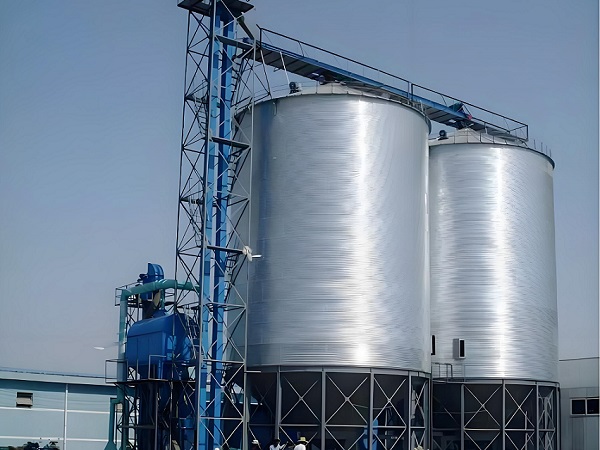
COBAN can provide the main grain storage equipment and related engineering support needed for a complete grain silo project, including:
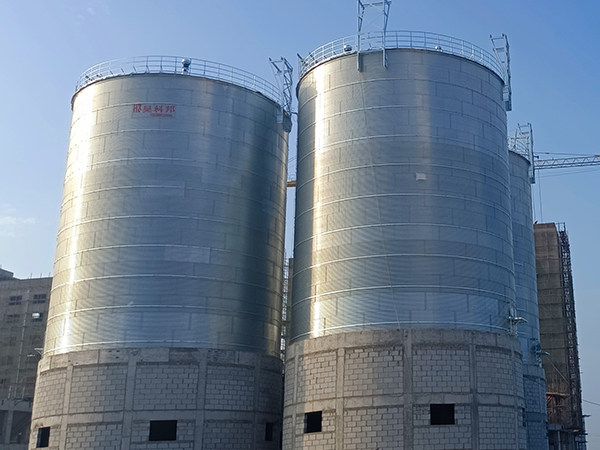
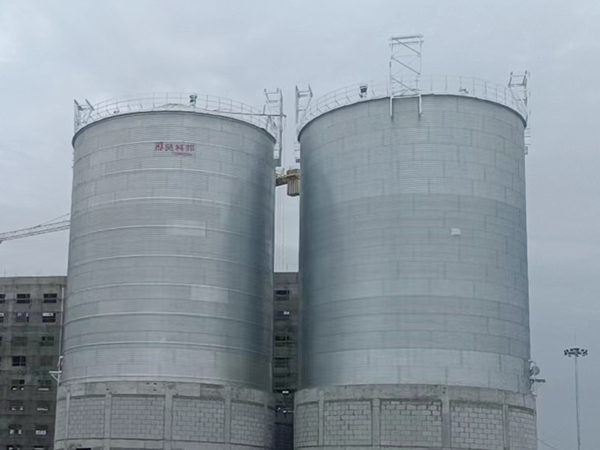
Grain Silo Structure
The silo can be designed according to the required storage capacity, grain type, site conditions and operating requirements.
Aeration System
The aeration system can be configured according to the silo size and storage requirements, including fans, air ducts and related components.
Temperature Monitoring
Temperature monitoring equipment can be integrated into the silo system so that operators can monitor grain conditions during storage.
Grain Loading and Unloading
The silo can be matched with suitable grain conveying and discharge equipment, including elevators, conveyors, distributors and unloading systems.
Installation and Commissioning Support
For complete projects, COBAN engineers can provide installation guidance, equipment commissioning and operator training so that the storage system can be put into operation correctly.
The advantage of planning these components together is that the silo, aeration, temperature monitoring and grain handling equipment are considered as one storage system rather than several unrelated machines.
A Practical Pre-Harvest Procedure for Farmers
Farmers do not need to wait until the day before harvest to prepare the silo.
A better schedule is:
Several Weeks Before Harvest
1. Empty the silo
Remove all remaining grain from the previous storage cycle.
2. Clean thoroughly
Remove grain residues and dust from the floor, walls, outlets and equipment.
3. Look for moisture and insects
Find the source of water entry and deal with any stored-grain pest problem.
4. Inspect the structure
Look for deformation, corrosion, damaged bolts, seals and roof problems.
One to Two Weeks Before Harvest
5. Service the equipment
Check fans, conveyors, sweep augers, motors, bearings and discharge equipment.
6. Test monitoring equipment
Confirm that temperature sensors and related controls are working.
7. Complete necessary repairs
Do not leave mechanical or structural problems until harvest begins.
Before the First New Grain Arrives
8. Carry out a final check
Confirm that the silo is:
- Empty of previous grain
- Clean
- Dry
- Free of obvious insect activity
- Structurally sound
- Properly ventilated
- Ready for aeration
- Ready for loading and unloading
- Equipped with working temperature monitoring
Only then should the silo be considered ready for the new harvest.
The Main Principle: Prepare Before You Need the Silo
The purpose of a pre-harvest inspection is not simply to make the silo look clean.
It is to identify problems while the silo is empty and there is still time to solve them.
A leaking roof can be repaired. A worn bearing can be replaced. A blocked aeration channel can be cleaned. A faulty temperature sensor can be changed.
These jobs become much more difficult when several hundred or several thousand tons of grain are already inside.
For farmers preparing for the next harvest, the practical sequence is therefore:
Empty → Clean → Find Problems → Repair → Test → Load.
A properly prepared grain silo gives the next crop a clean and controlled starting point and reduces the chance that a preventable equipment or storage problem will interrupt the harvest operation.