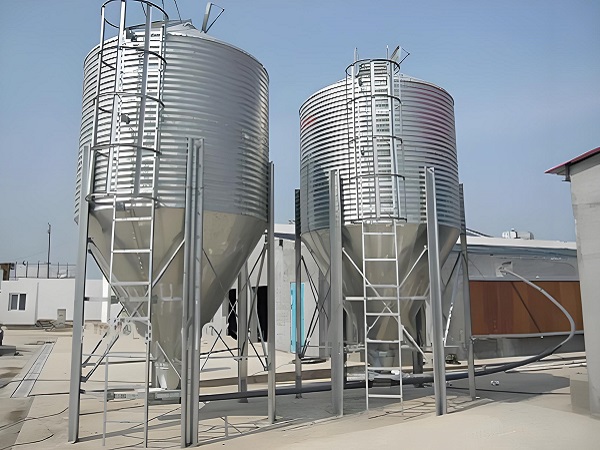
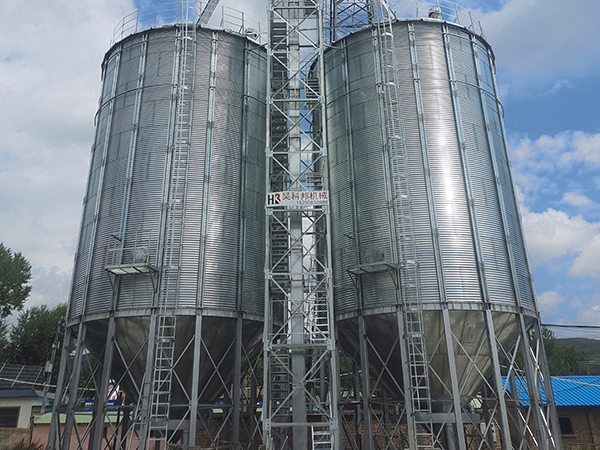
When planning a maize processing plant, grain storage should be designed around the factory’s actual production needs. The plant must receive enough maize, keep it in suitable condition and supply the milling line without unnecessary interruptions.
At COBAN, we do not determine the silo capacity from the factory output alone. We first check daily raw maize consumption, delivery frequency, incoming grain moisture and the number of days the plant needs to operate without another delivery.
These figures help us determine how many silos are required and which supporting equipment should be included in the project.
1. How Much Maize Storage Capacity Does a Processing Plant Need?
The first step is to calculate the amount of raw maize consumed by the milling plant each day.
The finished flour output is not equal to the incoming maize weight. Some material is removed during cleaning and milling, while other fractions may be sold separately as by-products.
For preliminary planning, the calculation is:
Raw maize consumption = Finished flour output / Milling extraction rate
For example, a maize flour factory plans to produce 72 tons of flour per day. If the assumed extraction rate is 75%, the estimated raw maize requirement is 96 tons per day.
The actual extraction rate must be confirmed according to the milling process and final product specifications.
Example of a maize storage capacity calculation
| Item | Design figure |
|---|---|
| Daily flour production | 72 tons |
| Assumed extraction rate | 75% |
| Daily raw maize consumption | 96 tons |
| Required storage period | 18 days |
| Calculated grain inventory | 1,728 tons |
| Preliminary nominal silo capacity | About 1,950 tons |
The nominal capacity is slightly higher than the calculated inventory to provide an initial operating allowance. The final margin should depend on delivery delays, purchasing arrangements, usable silo capacity and the customer’s stock management policy.
A plant that buys maize mainly during the harvest season may need to store grain for several months. A factory with reliable deliveries every few days may require less storage.
The storage period should therefore be agreed upon before the silo dimensions are finalized.
2. How Many Grain Silos Should Be Installed?
Once the required capacity is known, the next decision is how to divide the storage inventory between silos.
For a plant requiring approximately 1,950 tons of nominal storage, COBAN could compare the following arrangements.
| Silo arrangement | Total nominal capacity | Main consideration |
|---|---|---|
| 2 x 1,000-ton silos | 2,000 tons | Fewer units and a relatively simple layout |
| 3 x 700-ton silos | 2,100 tons | Greater flexibility for different deliveries |
| 4 x 500-ton silos | 2,000 tons | More options for separating grain batches |
These are preliminary configurations for comparison, not finalized equipment specifications.
For a factory buying maize from several suppliers, three silos may be worth considering. Grain from different deliveries can be stored separately when its moisture or quality needs to be checked before mixing.
For a factory receiving grain of consistent quality from a reliable supplier, two larger silos may be sufficient.
More silos do not automatically mean a better solution. Each additional silo affects the equipment layout, foundations, conveying routes and project cost. The arrangement should match the way the factory purchases and uses maize.

3. Which Silo Type Is Suitable for a Maize Processing Plant?
The two main options to consider are flat-bottom steel silos and hopper-bottom steel silos.
Flat-bottom grain silos
Flat-bottom silos are commonly considered for large grain inventories and longer storage periods. They are suitable for evaluating bulk storage requirements at commercial maize mills and industrial processing facilities.
The design should include appropriate aeration, temperature monitoring, grain discharge equipment and access for maintenance.
For a plant storing several weeks or months of maize, flat-bottom silos may provide a practical starting point for the main storage area.
Hopper-bottom grain silos
Hopper-bottom silos discharge grain through a conical bottom. They can be useful for smaller storage duties, working bins and applications where gravity-assisted discharge is important.
However, the supporting structure and foundation must be designed for the selected capacity. At larger capacities, these requirements can increase the overall investment.
For a maize processing plant, we would assess the main inventory separately from any smaller working-storage requirement near the milling line. A hopper-bottom silo may be useful for the latter, but only when the production process justifies it.
4. What Equipment Is Needed for a Complete Maize Storage System?
A grain silo cannot operate efficiently without suitable receiving, conveying and discharge equipment.
The equipment arrangement should be planned as one connected system.
| Equipment | Function |
|---|---|
| Truck receiving pit | Receives maize delivered by trucks |
| Pre-cleaning machine | Removes coarse impurities before storage |
| Bucket elevator | Lifts grain to the required height |
| Belt or chain conveyor | Transfers maize between equipment |
| Grain distributor | Directs maize into the selected silo |
| Grain dryer | Reduces moisture when incoming maize requires drying |
| Aeration fans | Circulate air through stored grain under suitable conditions |
| Temperature monitoring system | Helps identify unusual grain temperature changes |
| Discharge conveyor | Transfers stored maize to the processing section |
One detail deserves attention during design: the receiving capacity and the milling plant’s consumption rate are not necessarily the same.
For example, a factory may consume 96 tons of maize per day but receive several truckloads within a few hours. If the receiving pit and conveying system are too small, trucks may have to wait even when the silos have sufficient empty space.
We therefore check the expected peak delivery rate separately from the hourly maize demand of the milling line.
5. How Does Maize Moisture Affect Grain Storage Design?
Incoming moisture can change the equipment required for a maize storage project.
Dry maize and wet maize should not automatically follow the same storage procedure. Grain entering long-term storage at excessive moisture may deteriorate, particularly in warm conditions.
For many long-term maize storage applications, approximately 13% to 14% moisture is a useful preliminary reference. The appropriate target depends on storage duration, grain temperature, local climate and quality requirements.
Before selecting a dryer, we need to establish three things:
- The typical moisture content of maize when it arrives at the factory.
- The quantity of wet maize received each day.
- The target moisture content required before long-term storage.
For example, maize arriving at 19% moisture may require a drying stage before it can be stored for an extended period. The required dryer capacity depends on the incoming tonnage, moisture reduction, available operating hours and fuel supply.
Aeration also requires attention to local weather. In hot and humid regions, operating fans continuously does not necessarily improve grain conditions. The ventilation strategy must consider outside air temperature, relative humidity and grain temperature.
The silo, dryer and aeration system should therefore be evaluated together rather than selected independently.
6. How Should Silo Discharge Match the Milling Line?
A factory may have sufficient maize in storage but still experience interruptions if the discharge equipment cannot supply the milling line at the required rate.
Suppose a plant consumes 96 tons of raw maize per day and operates for 16 hours.
Its average maize demand during operation is:
96 / 16 = 6 tons per hour.
This figure is a starting point for equipment selection, not the final conveyor rating. The design must also consider peak production demand, equipment availability, maintenance requirements and the operating margin.
During project planning, we check the complete route from the silo outlet to the milling section, including conveyors, elevators, transfer points and controls.
If one conveyor serves as the only route for supplying the factory, its capacity and maintenance access deserve particular attention. A small equipment failure can interrupt production even when thousands of tons of maize remain in storage.
Where continuous production is important, the customer should also evaluate whether an alternative conveying route or additional working inventory is justified.
7. What Information Is Needed Before Finalizing the Silo Design?
Before preparing the detailed layout and quotation, COBAN needs to understand the plant’s operating conditions.
| Information required | Purpose |
|---|---|
| Daily flour output | Establishes the production requirement |
| Milling extraction rate | Estimates raw maize consumption |
| Required storage period | Determines the target inventory |
| Incoming maize moisture | Establishes the need for drying |
| Delivery frequency | Helps size the receiving system |
| Available installation area | Determines silo positioning and layout |
| Existing equipment | Identifies machines that can be integrated |
| Project location | Helps assess climate and structural requirements |
For an existing factory, we also need to identify the actual reason for expanding storage.
The plant may run out of dry maize during harvest season. Alternatively, the silos may have enough capacity, but the receiving system cannot unload trucks quickly enough. In another situation, the discharge conveyor may not keep up with milling production.
These problems require different solutions. Adding storage capacity alone will not resolve every grain handling bottleneck.
8. How COBAN Develops a Maize Storage Solution
At COBAN, the project begins with the customer’s grain flow and production requirements. We then develop a suitable arrangement of storage silos and supporting equipment.
Depending on the project scope, the solution can include:
- Galvanized steel grain silos for bulk maize storage.
- Truck receiving and pre-cleaning equipment.
- Bucket elevators, conveyors and grain distributors.
- Grain dryers where moisture reduction is required.
- Aeration and temperature monitoring equipment.
- Silo discharge equipment connected to the milling process.
- Installation guidance, commissioning and operator training as agreed in the contract.
The engineering work also needs to consider silo spacing, foundation loads, local wind and seismic conditions where applicable, maintenance access and the connection between the storage system and the milling plant.
For a new factory, it is better to coordinate the silo layout with the processing building and truck access before construction begins.
For an existing factory, the proposed system must fit the available space and work with any equipment that can be retained.
Our objective is to provide a storage arrangement that suits the customer’s production process, rather than simply supplying a predetermined number of tons of silo capacity.
Frequently Asked Questions
How much maize storage does a 72-ton-per-day flour mill need?
Assuming a 75% extraction rate, a plant producing 72 tons of flour per day requires approximately 96 tons of raw maize daily. For 18 days of inventory, the calculated requirement is 1,728 tons. A preliminary nominal silo capacity of around 1,950 tons can be evaluated, subject to the actual storage and purchasing plan.
Is it better to install two large silos or three smaller silos?
Two larger silos may simplify the layout and reduce the number of storage units. Three smaller silos offer greater flexibility when grain quality, moisture or delivery sources vary. The final choice depends on operating needs and total project cost.
Does every maize processing plant need a grain dryer?
No. A dryer is necessary when the incoming maize moisture and intended storage conditions require moisture reduction. The decision should be based on actual grain moisture and the quantity that needs drying, not on silo capacity alone.
What affects the price of a maize grain storage project?
The main factors include total storage capacity, silo type, steel specifications, foundation requirements, receiving equipment, conveyors, cleaning and drying systems, automation, installation scope and transportation.
Can COBAN provide a complete grain storage system for a maize processing plant?
COBAN can develop a project-specific proposal covering steel grain silos and associated grain handling equipment. The final scope depends on the customer’s production requirements, site conditions and requested level of project integration.
Final Recommendation
Before choosing a grain silo, establish how much raw maize the plant consumes each day, how long the grain needs to remain in storage and what moisture condition it will have when it arrives.
These figures provide the starting point for selecting silo capacity and determining the required receiving, drying and conveying equipment.
With this information, COBAN can develop a preliminary grain storage layout and equipment proposal suited to the actual operating needs of the maize processing plant.