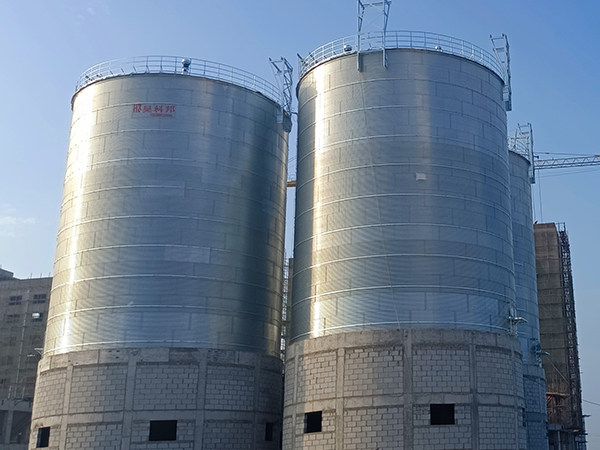
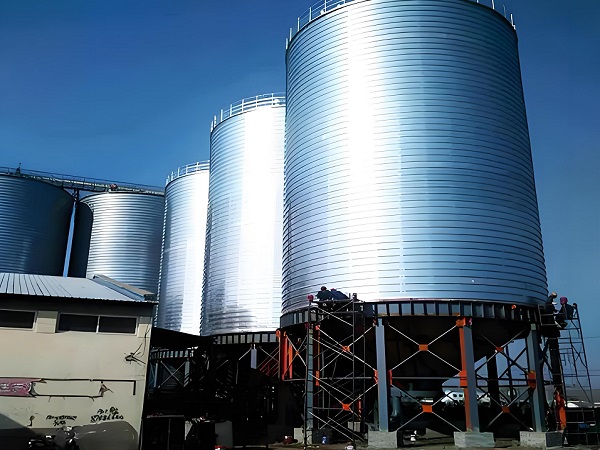
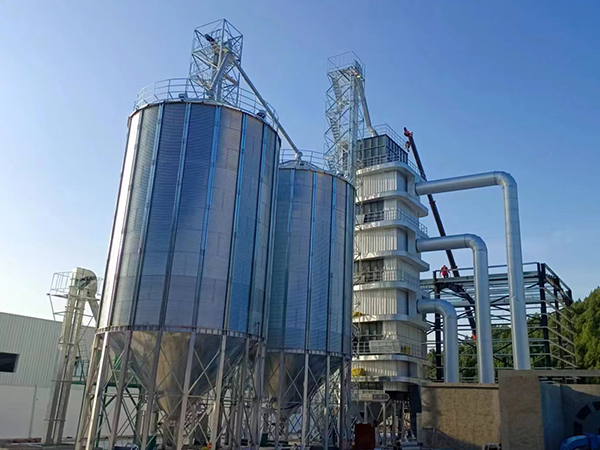
Designing an aeration system for large-scale grain silos is not a simple equipment selection task—it is a fluid dynamics + thermodynamics + storage engineering problem. For capacities ranging from 1,000 tons to 20,000 tons, the system must ensure uniform airflow distribution, controlled pressure loss, and stable grain temperature across large vertical grain columns.
From a silo engineering standpoint, improper aeration design is one of the most common causes of:
- uneven grain cooling
- moisture migration
- condensation inside silo walls
- localized spoilage (hot spots)
- excessive energy consumption
This guide provides a structured engineering approach used in industrial projects delivered by companies such as COBAN Machinery.
1. Core Design Objective of Aeration Systems
The aeration system is designed to achieve three engineering goals:
1.1 Uniform Air Distribution
Air must pass evenly through the entire grain mass without channeling or dead zones.
1.2 Controlled Airflow Rate (Critical Design Variable)
Airflow is the most important parameter in silo aeration design.
Typical engineering targets:
- Cooling storage: 0.1–0.2 m³/min per ton
- Active conditioning: 0.2–0.5 m³/min per ton
- Hot climate/high moisture grain: up to 0.6 m³/min per ton
1.3 Static Pressure Balance
The fan must overcome:
- Grain resistance (major factor)
- Perforated floor resistance
- Duct losses
- Outlet pressure losses
Typical design range:
- Small silos: 300–800 Pa
- Medium silos: 800–1500 Pa
- Large deep silos (15–30m grain height): 1500–3000+ Pa

2. Step-by-Step Aeration System Design Method
Step 1: Determine Grain Type and Bulk Density
Different grains create different airflow resistance.
| Grain Type | Bulk Density (kg/m³) | Airflow Resistance |
|---|---|---|
| Wheat | 750–820 | Medium |
| Corn (Maize) | 700–750 | High |
| Rice | 550–650 | Very High |
| Soybean | 720–770 | Medium-High |
👉 Higher resistance = higher required fan pressure.
Step 2: Calculate Total Airflow Requirement
Formula:
Q=C×W
Where:
- Q = total airflow (m³/min)
- C = airflow rate (m³/min per ton)
- W = silo capacity (tons)
Example Calculations
Case A: 1,000T silo (wheat)
Assume:
- C = 0.15 m³/min/ton
Q=0.15×1000=150 m³/min
✔ Required airflow: 150 m³/min
Case B: 5,000T silo (corn)
Q=0.2×5000=1000 m³/min
✔ Required airflow: 1,000 m³/min
Case C: 20,000T silo (multi-silo system)
Q=0.18×20000=3600 m³/min
✔ Required airflow: 3,600 m³/min
3. Fan Selection Engineering Logic
Fan selection depends on both airflow (Q) and static pressure (P).
3.1 Fan Sizing Equation (Conceptual)
- Total system airflow must be split into multiple fans
- Each fan operates at optimal efficiency range (70–85%)
Example: 5,000T Silo System
Required:
- 1,000 m³/min total airflow
- 1,200 Pa static pressure
Recommended configuration:
- 4 × centrifugal fans
- Each fan:
- 250 m³/min
- 1,200–1,500 Pa
- 5.5–7.5 kW motor
3.2 Large System (20,000T Silos)
Instead of one system:
- Divide into multiple silo units (e.g., 5 × 4,000T silos)
Each silo:
- 700–800 m³/min airflow
- 6–10 fans per silo
- Zoned control system
4. Air Distribution System Design
4.1 Full Floor Aeration (Preferred Method)
Used in modern steel silos:
- Perforated galvanized steel floor
- Uniform air plenum below floor
- Air resistance controlled through hole pattern design
Advantages:
- Best uniformity
- Low maintenance
- Suitable for large silos
4.2 Duct-Based Aeration System
Used in older or retrofit systems:
- Radial or longitudinal ducts
- Higher risk of uneven airflow
4.3 Engineering Rule for Floor Open Area
Typical perforation ratio:
- 6% – 12% open area
Too low → airflow restriction
Too high → uneven pressure distribution
5. Static Pressure Calculation Model
Total system pressure:
P_{total} = P_{grain} + P_{floor} + P_{duct} + P_{loss}
Typical breakdown:
- Grain resistance: 60–75% of total pressure
- Floor system: 10–20%
- Duct + fittings: 10–15%
Example: 10,000T silo
- Grain resistance: 1,200 Pa
- Floor loss: 250 Pa
- Duct loss: 200 Pa
✔ Total required fan pressure:
P_{total} = 1650 , Pa
6. Fan Quantity Optimization Strategy
Instead of using one large fan:
Engineering best practice:
- Multiple medium-sized fans > single large fan
Advantages:
- Redundancy (system reliability)
- Flexible operation zones
- Energy optimization
- Easier maintenance
Example Configurations
1,000T silo:
- 2–4 fans (3–5.5 kW each)
5,000T silo:
- 6–12 fans (5.5–7.5 kW each)
20,000T system:
- 20–40 fans distributed across silo network
7. Control System Design (Smart Aeration)
Modern systems use PLC-based automation:
Key control inputs:
- Grain temperature sensors (vertical cables)
- Ambient temperature & humidity
- CO₂ monitoring (advanced systems)
- Time-based ventilation cycles
Control logic example:
- If grain temperature > 18°C → fan ON
- If ambient humidity > 75% → delay ventilation
- Night cooling priority mode
8. Energy Consumption Estimation
Formula:
E = P_{total} × t
Where:
- P = total motor power (kW)
- t = operating hours
Example (5,000T silo):
- 8 fans × 5.5 kW = 44 kW
- Operating 6 hours/day
E=44×6=264 kWh/day
Cost comparison insight:
Aeration energy cost is typically:
- < 1% of grain value protection benefit
- Prevents 2–5% annual grain loss
9. Common Design Mistakes (Engineering Failure Cases)
9.1 Undersized fan pressure
→ Air cannot penetrate deep grain layers
9.2 Oversized airflow rate
→ Surface drying, moisture migration upward
9.3 Poor floor sealing
→ Air leakage reduces efficiency by 20–40%
9.4 Uneven fan distribution
→ Hot spots in silo center or corners
10. Engineering Design Summary Table
| Silo Capacity | Airflow (m³/min) | Pressure (Pa) | Fan Count |
|---|---|---|---|
| 1,000T | 120–180 | 500–1000 | 2–4 |
| 5,000T | 800–1200 | 1000–1600 | 6–12 |
| 10,000T | 1500–2200 | 1200–2000 | 12–25 |
| 20,000T | 3000–4000 | 1500–3000 | 25–40 |
11. Conclusion
Designing aeration systems for large grain silos is a precise engineering discipline that combines:
- airflow mechanics
- grain physics
- thermal dynamics
- industrial automation
For capacities from 1,000T to 20,000T, the key success factor is not just selecting powerful fans, but achieving balanced airflow distribution and correct static pressure design.
In modern industrial grain storage projects, companies like COBAN Machinery integrate aeration design into full silo engineering packages to ensure long-term grain safety, energy efficiency, and operational stability.