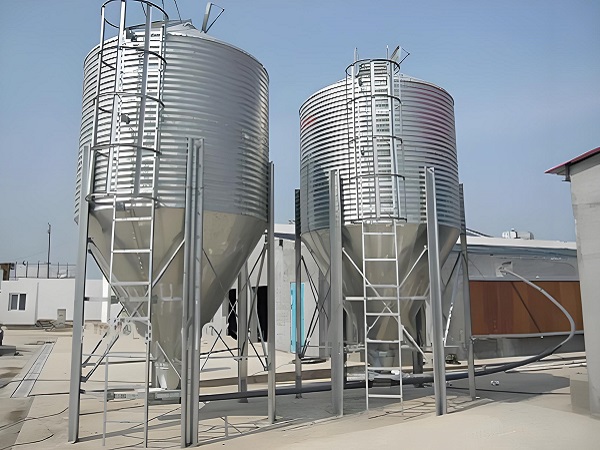
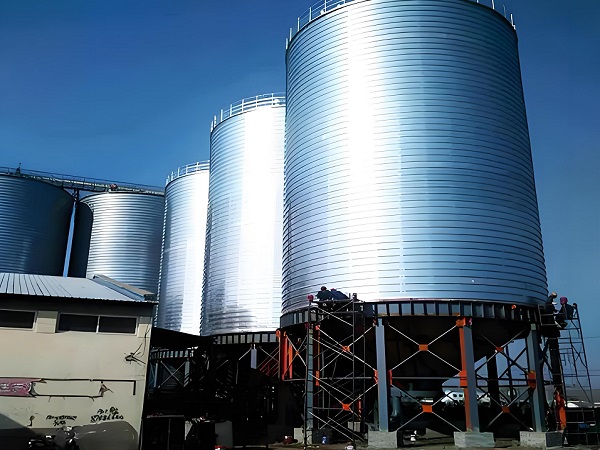
When planning a grain silo project, many customers start with one simple question:
“How many tons of storage capacity do I need?”
However, storage capacity is only one part of the design.
A 1,000-ton silo for maize, a 1,000-ton silo for paddy, and a 1,000-ton silo for soybean meal may require completely different configurations.
The reason is simple: different storage materials have different characteristics.
Moisture content, particle size, bulk density, storage period, flowability, temperature sensitivity, and final usage all affect the silo design.
Choosing the wrong configuration may lead to problems such as:
- Grain heating
- Mold growth
- Uneven moisture distribution
- Difficult unloading
- Excessive investment in unnecessary equipment
A well-designed grain silo project should match the storage material, operating method, and future business requirements.
This article explains how to configure a grain storage system according to different raw materials.
1. Why Different Materials Need Different Grain Silo Configurations?
A grain silo is not only a steel storage structure. It is a complete storage solution consisting of:
- Silo body
- Aeration system
- Temperature monitoring system
- Loading and unloading equipment
- Cleaning equipment
- Control system
Different grains create different challenges during storage.
For example:
- Maize is more likely to develop hot spots because of higher moisture variation.
- Paddy requires better moisture management after drying.
- Soybean requires careful handling because broken kernels affect quality.
- Powder materials such as soybean meal need special discharge designs because they do not flow like grain.
Therefore, the correct question is not:
“Which silo size should I buy?”
The better question is:
“What storage conditions does my material require?”

2. Maize Storage Silo Configuration
Typical applications:
- Feed mills
- Grain trading companies
- Agricultural farms
- Commercial grain storage centers
Maize is one of the most common materials stored in grain silos worldwide, especially in Africa, South America, and Southeast Asia.
However, maize storage requires careful moisture and temperature management.
Characteristics of maize storage:
| Storage Challenge | Required Solution |
|---|---|
| High moisture after harvest | Grain drying before storage |
| Easy temperature increase | Temperature monitoring |
| Long storage period | Proper aeration |
| Seasonal purchasing | Larger storage capacity |
Recommended configuration:
Basic farm storage:
- Galvanized steel grain silo
- Aeration system
- Access ladder and inspection door
Suitable for:
- Small farms
- Livestock farms
- Seasonal grain storage
Commercial maize storage:
Recommended additional equipment:
- Temperature monitoring cables
- Grain cleaning machine
- Bucket elevator
- Belt conveyor
- Automatic grain level system
For commercial maize storage, the goal is not only to store grain but also to maintain consistent quality throughout the storage period.
3. Wheat Storage Silo Configuration
Wheat is widely stored for:
- Flour production
- Grain trading
- Food processing
Compared with maize, wheat has smaller particles and higher requirements for cleanliness.
Wheat storage characteristics:
| Characteristic | Design Consideration |
|---|---|
| Small grain size | Better sealing performance |
| Sensitive to moisture | Proper ventilation |
| Food-grade usage | Cleaning before storage |
| Long-term storage | Temperature control |
Recommended configuration:
A standard wheat storage project usually includes:
✓ Flat bottom silo for long-term storage
✓ Aeration system
✓ Temperature monitoring system
✓ Grain cleaning equipment
For flour mills, cleaning equipment before storage is especially important because impurities can affect final flour quality.
4. Paddy Storage Silo Configuration
Paddy storage is common in:
- Philippines
- Vietnam
- Thailand
- Myanmar
- Indonesia
Unlike maize and wheat, paddy usually requires closer cooperation between drying and storage.
Freshly harvested paddy often contains excessive moisture and should not be directly stored without proper drying.
Paddy storage challenges:
| Challenge | Solution |
|---|---|
| High moisture after harvesting | Paddy dryer before storage |
| Uneven moisture | Proper drying process |
| Risk of heating | Aeration system |
| Long storage period | Temperature monitoring |
Recommended paddy storage system:
A complete solution usually includes:
Paddy Dryer → Cleaning System → Grain Silo → Rice Processing
Recommended equipment:
- Batch grain dryer or continuous grain dryer
- Paddy cleaning machine
- Storage silo
- Ventilation system
- Temperature monitoring system
For rice-producing regions, the drying system is often as important as the silo itself.
5. Soybean Storage Silo Configuration
Soybean is different from common cereal grains because of its high oil content.
It is mainly used for:
- Oil extraction
- Animal feed production
- Food processing
Soybean storage characteristics:
- Sensitive to temperature
- Easily damaged during handling
- Requires careful discharge control
Recommended configuration:
For soybean storage, customers should consider:
✓ Low-speed conveying equipment
✓ Temperature monitoring system
✓ Proper aeration
✓ Gentle loading and unloading design
High-speed transportation may cause excessive kernel breakage, reducing commercial value.
6. Feed Mill Raw Material Storage Configuration
Many feed factories do not only store grain. They also store various raw materials such as:
- Corn
- Wheat
- Soybean meal
- Rice bran
- DDGS
- Other additives
These materials have different physical properties.
Soybean Meal Storage
Soybean meal is widely used in animal feed production.
However, compared with whole grains, soybean meal has:
- Lower flowability
- Higher tendency to form bridges
- More dust generation
Recommended configuration:
- Hopper bottom silo
- Larger outlet design
- Vibration assistance if necessary
- Dust collection system
A traditional flat bottom silo may not always be the best choice for powder-like materials.
Rice Bran and Bran Storage
Bran materials usually have:
- Low bulk density
- High dust generation
- Poor flow characteristics
Recommended:
- Hopper silo
- Dust collection equipment
- Proper conveying system
7. Choosing Between Flat Bottom Silo and Hopper Bottom Silo
The storage material and operation method determine the silo structure.
Flat Bottom Silo
Best for:
- Maize
- Wheat
- Paddy
- Soybean
- Long-term storage
Advantages:
- Lower cost for large capacity
- Suitable for thousands of tons of storage
- Better investment efficiency
Disadvantages:
- Requires unloading equipment
- More suitable for larger projects
Hopper Bottom Silo
Best for:
- Frequent loading and unloading
- Feed factory raw material storage
- Small and medium capacity storage
Advantages:
- Faster discharge
- Less residue inside silo
- Easier cleaning
Disadvantages:
- Higher initial investment
8. How Climate Conditions Affect Silo Configuration
The same material may require different designs in different countries.
For example:
A maize silo in a dry region and a maize silo in a tropical region should not use exactly the same configuration.
Tropical and humid areas:
Recommended:
- Stronger aeration system
- Temperature monitoring
- Better corrosion protection
- Moisture control equipment
Suitable regions:
- Southeast Asia
- West Africa
- South America coastal areas
Dry regions:
Focus on:
- Dust control
- Temperature difference management
- Proper sealing
Suitable regions:
- Middle East
- North Africa
9. Example Configurations for Different Customers
Case 1: Small Farm Storing Maize
Requirement:
- Store 200 tons maize
- Use grain for animal feed
Recommended:
- 200-ton silo
- Basic aeration system
- Manual operation
No need for:
- Full automation
- Complex conveying system
Case 2: Feed Factory Storing Multiple Raw Materials
Requirement:
- Daily feed production
- Stable raw material supply
Recommended:
- Multiple silos
- Temperature monitoring
- Conveying system
- Automatic control
Materials:
- Corn
- Wheat
- Soybean meal
Case 3: Commercial Rice Storage Center
Requirement:
- Store harvested paddy
Recommended:
- Paddy dryer
- Cleaning equipment
- Multiple grain silos
- Temperature monitoring
The storage system should be designed together with the drying process.
10. How COBAN Helps Customers Design the Right Grain Silo Project
At COBAN, silo design starts from the customer’s actual storage requirements rather than only the storage capacity.
Before recommending equipment, we evaluate:
- What material will be stored?
- What is the moisture content?
- How long will it be stored?
- How often will loading and unloading happen?
- What is the local climate condition?
- Is future expansion required?
Based on these factors, we provide a suitable combination of:
- Grain silos
- Aeration systems
- Temperature monitoring
- Conveying equipment
- Cleaning machines
- Drying systems
The purpose is to avoid both problems:
Over-investment in unnecessary equipment
and
Under-investment that causes storage losses.
Conclusion: The Best Grain Silo Configuration Depends on the Material
Different storage materials require different silo solutions.
Maize needs strong temperature and moisture management.
Wheat requires good cleanliness and stable storage conditions.
Paddy needs close integration between drying and storage.
Soybean and feed ingredients require special attention to handling and discharge.
A successful grain silo project is not simply about choosing a larger silo. It is about creating a storage system that matches the material, climate, and business operation.
Choosing the right configuration at the beginning can reduce operating costs, protect grain quality, and improve the long-term return on investment.