Structural form classification: process differences determine application boundaries
Prefabricated steel silo
In engineering practice, the modular silo structure using high-strength bolts to connect standard components has obvious technical and economic characteristics. The design capacity of a single silos of this structural form is usually controlled within 3,000 tons. Its core advantages are: the amount of steel can be reduced by 15%-20% compared with traditional welded silos, and the on-site construction period can be shortened by more than 40%.
However, due to the inherent structural characteristics of bolted connections, the air tightness index of the silos body is maintained in the range of 0.5-1.0mm/s. This technical parameter is difficult to meet the air tightness requirements of long-term storage of dusty materials such as fly ash and cement. Therefore, this type of structural form is mainly suitable for industrial application scenarios with relatively low air tightness requirements. Examples include grain transit storage and temporary material yards.

Spiral steel plate silo
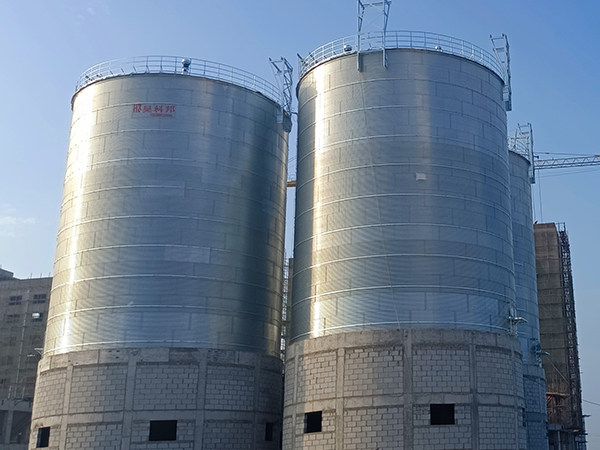
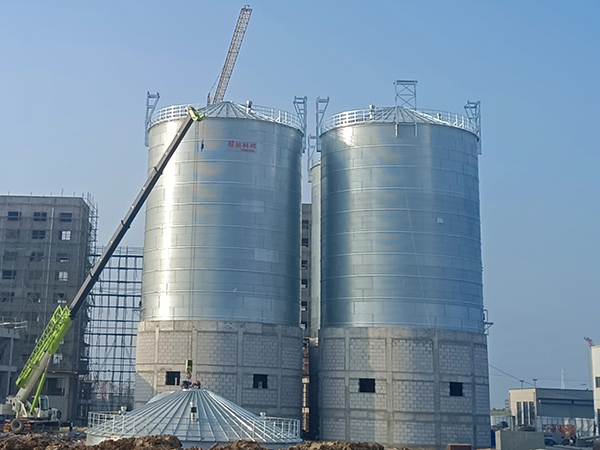
The continuous spiral rib structure formed by the cold-bending biting process gives the silos excellent seismic resistance. According to actual measurements, this type of silos can withstand a 9-degree earthquake without structural damage. Its 30-40mm wide biting reinforcement ribs increase the silos wall’s bearing capacity by 3 times, making it particularly suitable for powder storage in earthquake-prone areas. However, the thickness limit of double-sided galvanized steel plates (2.5-6.0mm) means that the capacity of a single silo usually does not exceed 30,000 tons, and the non-removable nature increases the cost of transformation.
Welded steel plate silo
As the mainstream solution in the industry, its single silo capacity has exceeded 100,000 tons, and the welding process has enabled the air tightness index to reach below 0.1mm/s. The sedimentation-type complete discharge system developed by Shandong Dingli Company increases the powder discharge rate to 99.8% through the design of an annular pressure relief groove. However, the corrosion risk caused by welding residual stress needs to be paid special attention to. Anti-corrosion coating testing should be conducted every 3 years. The focus should be on monitoring coating adhesion changes in the weld’s heat-affected zone.
Note: While understanding the technical structure is crucial, choosing the right silo also requires a balance between budget and performance. For a detailed breakdown of costs and ROI, you can read our guide on Advantages and Disadvantages of Various Steel Silos.
Classification of functional requirements: Process adaptation improves storage efficiency
Insulated steel silo
When the sandwich panel structure is used, its K value can be controlled below 0.35W/(m²·K), which is 40% more energy-efficient than traditional concrete silos. In the rice storage scenario, this type of silos can control the fluctuation range of grain temperature within ±2℃, effectively inhibiting the formation of aflatoxin. However, attention should be paid to the electrochemical corrosion of the insulation layer and the metal of the silos wall. It is recommended to use sacrificial anode protection for protection.
Intelligent monitoring steel silo
The fourth-generation steel silo incorporates integrated Internet of Things technology. It achieves real-time monitoring of temperature, humidity, material level, and gas composition via a distributed sensor network. A case involving a cement group shows that the system has increased the powder inventory turnover rate by 25%. Additionally, the response time to abnormal working conditions has been shortened to within 15 minutes. However, attention should be paid to the waterproof and dustproof level of the sensor node. It is recommended to use industrial-grade equipment with IP68 protection level. These advanced monitoring systems are widely used in modern agriculture and industrial logistics. To see how different silo types—from grain bins to industrial towers—are applied across various sectors, check out Understanding Different Types of Silos and Their Applications.

Material property classification: Weather resistance determines service life
Galvanized steel silo
When the thickness of the hot-dip galvanized layer is ≥85μm, its neutral salt spray test time can reach more than 1000 hours. However, attention should be paid to the potential difference corrosion between the zinc layer and the concrete foundation. It is recommended to use epoxy asphalt paint for interface isolation.
Stainless steel silo
In coastal environments with chloride ion concentrations ≤200ppm, the pitting rate of 304L material can be controlled below 0.01mm/a. A case study of a grain and oil group revealed that the silos for this material remained free from structural corrosion throughout its 15-year service life. However, its initial investment cost was 40% higher compared to that of a galvanized silo.
Composite steel silo
The composite structure is lined with a polyethylene layer. Its wear resistance is 5 times higher than that of ordinary carbon steel. In the mineral powder storage scenario, this type of silos can control the material wall hanging rate within 0.5%. This significantly reduces the cost of clearing the warehouse. Attention should be paid to the risk of interlayer peeling. It is recommended to conduct ultrasonic flaw detection every 5 years.
In engineering practice, it is necessary to combine material characteristics, geological conditions, climate environment and other factors for comprehensive selection. For example, double-layer staggered welding technology is recommended in high humidity areas, spiral silos and pile foundation combination is recommended in seismic zones, and fully enclosed intelligent silos should be preferred in areas with strict environmental protection requirements. This technical decision-making system is the core guarantee for modern steel silo projects to achieve safe, economical and efficient storage.
Related Reading to Help Your Selection:
Comparison Guide: Advantages and Disadvantages of Various Steel Silos – Learn about construction periods, cost-effectiveness, and service life differences.
Industry Applications: Understanding Different Types of Silos and Their Applications – A comprehensive look at how silos serve agriculture, industry, and beyond.