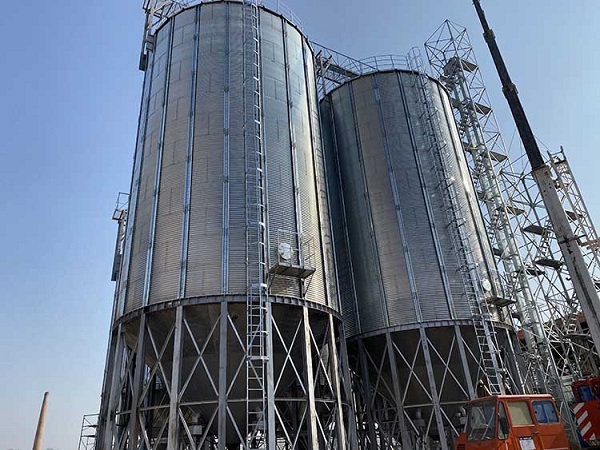
Choosing a silo that suits the scale of your own farm not only affects the quality of the grain but also influences operating costs and long-term sustainable development. This article will systematically elaborate on the structure, types, key selection factors of grain silos, as well as the advantages of Kebang grain silos.

What is a grain silo
Grain silos are closed storage devices specifically designed for storing bulk grains such as corn, wheat, and soybeans, capable of maintaining stable grain quality over a relatively long period. Compared with traditional ground stacking or ordinary warehouses, silos have significant advantages in terms of sealing, moisture resistance, automation level and storage capacity. Their design aims to reduce losses, improve turnover efficiency and lower labor management costs.
Basic Structure of Grain Silo
Modern grain silos are usually composed of the following parts:
Cylinder structure
Including outer wall panels, reinforcing ribs and connecting bolts, it is the main load-bearing structure of the silo. Its materials and manufacturing processes directly affect the durability and corrosion resistance of the silo.
Top cover system
The top is usually designed in a conical or arc shape to ensure rainwater drainage and enhance the overall structural strength.
Bottom structure
It is divided into two types: flat bottom and hopper bottom. The flat bottom is suitable for large-capacity storage, while the bottom of the hopper enables smoother grain unloading.
Ventilation and control system
It includes ventilation ducts, fans, temperature monitoring, electrical control and other auxiliary facilities, which are used to adjust the temperature and humidity inside the cylinder and prevent mildew and insect damage.
Feeding and discharging system
It is composed of conveyors, elevators, unloading hoppers, etc., to achieve automatic grain loading and unloading, and improve operational efficiency.

Types of Grain Silo
According to the differences in materials and structures, grain silos are mainly classified into the following categories:
Galvanized grain silos
Galvanized steel plate silos are currently the most widely used grain storage solution in the international market due to their high strength, convenient assembly and outstanding cost performance.
Flat-bottomed silo
It is suitable for large farms, grain processing plants and trade storage centers. It has a large capacity and a stable structure. It can be combined with a flat scraper conveyor to achieve efficient unloading and is very suitable for long-term storage.
The bottom silo of the hopper
The bottom is in a conical structure and relies on gravity to achieve automatic unloading, reducing residue. It is more suitable for seed storage, feed mills, and scenarios that require frequent discharging.
Stainless steel grain silo
This product is made of food-grade stainless steel and has excellent corrosion resistance, especially suitable for high humidity and high salt environments. It can meet the strict hygienic standard requirements for the storage of coastal areas and special agricultural products, ensuring the safety of stored grains.
Key Factors to Consider When Choosing Grain Silo
Choosing the right grain silo requires considering a variety of factors to ensure a balance between storage needs, budget and future expansion plans.
Material type
Galvanized steel plates are suitable for most conventional agricultural grain storage scenarios. If the environment is highly corrosive or food safety standards are strict, stainless steel silos have more advantages.
Dimensions of grain silo
The size of silos should be configured based on the annual output of the farm, the turnover frequency and the expected growth plan. Small farms are generally equipped with a capacity of 50 to 500 tons, while medium and large-scale planting bases or traders often choose solutions with a capacity of over a thousand tons.
Cost analysis
The overall cost includes the price of the silo body, infrastructure construction, transportation, installation and subsequent maintenance expenses. When making a choice, attention should be paid to the unit storage cost and the overall investment payback period.
Environmental conditions
Including factors such as temperature, humidity, wind, altitude, etc. Ventilation systems need to be strengthened in areas with high humidity, temperature control monitoring equipment needs to be installed in areas with high temperatures, and structural reinforcements need to be strengthened in areas with strong winds.
Maintenance and long-term sustainability
A quality silo should have low maintenance requirements, reliable corrosion protection and a design with easily replaceable parts. Sustainability also involves energy consumption control, intelligent management and scalability.
Advantages of Kebang Grain Silo
As an industry supplier, Kebang Grain silos have multiple advantages in product design, manufacturing processes and project services:
High-strength materials and precision manufacturing
Kebang silos are made of high-strength galvanized steel plates and automated forming technology, ensuring high structural accuracy of the panel, strong wind resistance and a long service life.
Multiple specifications are available
From small hopper silos to large flat-bottom silos, the capacity coverage is wide and can be customized according to the scale of the farm and industry applications.
Optimized ventilation and monitoring system
Intelligent temperature control probes, ventilation equipment and automatic control modules are adopted to ensure the stability of grain storage and reduce the risk of mold.
Fast installation and global service
The modular design reduces the construction period and is suitable for rapid assembly on overseas sites. Perfect pre-sale consultation, technical support and after-sale service ensure the smooth delivery of the project.
Outstanding cost-effectiveness
kebang relies on its excellent manufacturing capabilities and supply chain advantages to create cost-effective grain storage solutions for customers, effectively reducing their long-term operating costs and maximizing value.
Conclusion
Selecting appropriate grain silos for farms is crucial to ensuring grain quality, reducing losses and improving operating efficiency. Materials, structure, capacity, environment and life cycle costs need to be comprehensively considered to formulate a scientific procurement plan. With high-quality materials, excellent performance and comprehensive services, Kebang grain silos are suitable for farms and processing enterprises of all sizes, injecting higher stability and economic benefits into the grain storage business.