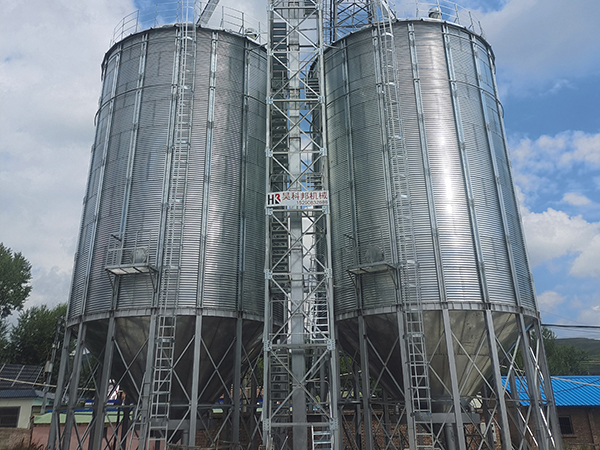
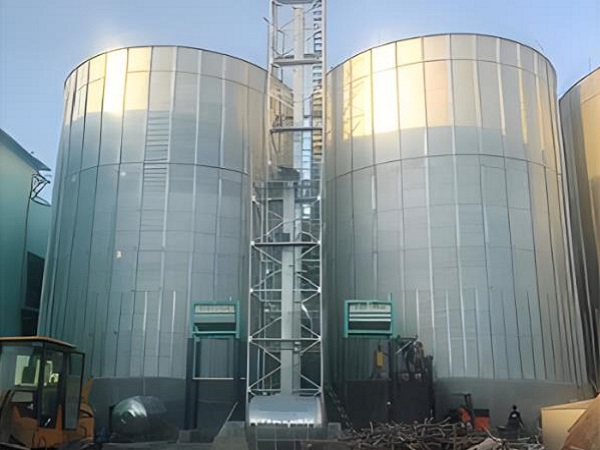
When customers contact us about a grain silo project, one of the first questions they usually ask is:
“How many tons can this silo store?”
It looks like a simple question. Many people expect a quick answer based only on the silo diameter or the model number.
For example:
“Give me a 15-meter silo. How many tons can it hold?”
However, after years of working on grain storage projects, I have learned that this question is not as simple as it sounds.
A grain silo does not store “tons”. It stores space.
The silo itself provides a certain internal volume, while the grain determines how much weight can be placed inside that space.
A 2,000 m³ silo does not always mean 1,500 tons of storage capacity. The final capacity depends on what grain is stored, the grain density, moisture content, filling method, and even how the customer manages inventory.
When we design grain storage systems for farms, grain traders, rice mills, and feed factories, the first calculation we make is not selecting a silo model from a catalogue.
We start with one question:
How much usable storage volume does the customer actually need?
This article explains how engineers calculate grain silo storage capacity and what factors should be considered before choosing a silo size.

Silo capacity calculation method
Why Grain Silo Capacity Calculation Is More Complicated Than It Looks
In many commercial discussions, silo capacity is shown as a single number:
- 500 ton silo
- 1,000 ton silo
- 5,000 ton silo
- 10,000 ton silo
This is convenient for communication, but technically it is only an approximate value.
The actual storage capacity changes depending on the grain.
For example, imagine two silos with exactly the same structure:
- Same diameter
- Same height
- Same roof design
One silo stores wheat.
The other stores sunflower seeds.
The physical space is identical, but the stored weight can be very different.
The reason is bulk density.
| Grain Type | Approximate Bulk Density | Weight Stored in 1 m³ |
|---|---|---|
| Wheat | 720-800 kg/m³ | Higher storage weight |
| Maize (Corn) | 680-750 kg/m³ | Medium-high storage weight |
| Paddy Rice | 550-620 kg/m³ | Lower storage weight |
| Soybean | 700-780 kg/m³ | Higher storage weight |
| Barley | 600-680 kg/m³ | Medium storage weight |
| Coffee Bean | 550-650 kg/m³ | Lower storage weight |
This is why an experienced silo engineer will always ask:
“What product will you store?”
before confirming capacity.
The Basic Relationship Between Volume and Capacity
The calculation principle is straightforward:
Grain storage capacity = silo volume × grain bulk density
But calculating silo volume requires understanding the silo structure.
A typical galvanized steel grain silo includes:
- Cylindrical body
- Conical roof
- Sometimes hopper bottom or cone bottom section
Each part contributes to the total storage volume.
In engineering calculations, we usually separate them instead of treating the silo as one simple shape.
How Engineers Calculate the Internal Volume of a Grain Silo
1. Cylindrical Body Calculation
The main storage area of a flat-bottom grain silo is the cylindrical section.
The formula is:
Volume = π × r² × h
Where:
- π = 3.1416
- r = silo radius
- h = silo sidewall height
For example:
A customer needs a medium-size maize storage silo.
The proposed silo design:
| Parameter | Value |
|---|---|
| Silo Diameter | 14 m |
| Radius | 7 m |
| Sidewall Height | 16 m |
The cylinder volume:
3.1416 × 7² × 16
= 3.1416 × 49 × 16
= approximately 2,463 m³
At this stage, we only know the available space inside the steel body.
We still need to consider the roof and grain density.

The Roof Volume Is Often Ignored, But It Matters
One common mistake I see from inexperienced buyers is calculating only the cylinder volume.
They forget that grain also occupies part of the roof space.
A standard grain silo roof is normally conical.
When grain is filled from the center inlet, it naturally forms a pile under the roof.
Depending on:
- roof angle
- grain type
- filling method
- grain flow characteristics
the roof section can add a meaningful amount of storage volume.
For large silos, ignoring roof volume can create a difference of dozens or even hundreds of tons.
For example:
| Storage Section | Volume |
|---|---|
| Cylindrical body | 2,463 m³ |
| Roof grain space | 260 m³ |
| Total usable volume | 2,723 m³ |
Now the engineer has a more realistic storage volume.
Converting Cubic Meters Into Tons
After calculating the volume, we convert it into grain weight.
The formula:
Storage Capacity (tons) = Storage Volume (m³) × Grain Density (tons/m³)
Let’s continue with the previous example.
Assume the customer stores maize.
Average maize density:
0.72 tons/m³
Therefore:
2,723 m³ × 0.72
= approximately 1,960 tons
So this silo can store around:
1,900-2,000 tons of maize
under normal conditions.
If the same silo stores paddy rice:
2,723 × 0.58
= approximately 1,580 tons
The silo has not changed.
Only the grain has changed.
This is the reason why professional silo quotations always specify the reference grain.
A Real Calculation Example: Choosing Silos for a Maize Storage Project
A few years ago, we received an inquiry from a grain trading company that planned to build a maize storage center.
Their annual purchase volume was around 12,000 tons.
At first, they wanted:
“One large silo with 12,000-ton capacity.”
From a storage perspective, this was possible.
But after discussing their operation, we found that one large silo was not the best solution.
Their purchasing process was not continuous.
They received maize from different suppliers with different moisture levels.
They also needed to separate:
- Newly harvested maize
- Dried maize
- Export-quality maize
Instead of one large silo, we designed:
| Silo Quantity | Capacity Each | Total Storage |
|---|---|---|
| 4 units | 3,000 tons | 12,000 tons |
This design gave them better management flexibility.
They could:
- Store different batches separately
- Reduce mixing problems
- Empty one silo while others remained operational
- Perform maintenance without stopping the whole system
From an engineering perspective, silo capacity is not only about maximum storage.
It is also about how the customer operates the facility.
Why Actual Grain Storage Capacity Is Usually Lower Than Theoretical Capacity
One thing I always explain to customers is that the number calculated on paper is not always the same as the amount of grain they will load during daily operation.
In engineering design, we usually separate two concepts:
Theoretical capacity
and
Working capacity
Theoretical capacity means the maximum volume calculated from silo dimensions.
Working capacity means the amount of grain that can realistically be stored while maintaining safe operation.
The difference exists because a grain silo is not designed to be filled to 100% without considering operating conditions.
A practical grain storage system needs space for:
- Aeration airflow
- Temperature control
- Grain expansion
- Safe inspection
- Loading and unloading operation
For most commercial projects, engineers normally recommend leaving a reasonable safety margin.
| Capacity Type | Meaning | Typical Application |
|---|---|---|
| Theoretical Capacity | Maximum calculated volume | Engineering calculation |
| Rated Capacity | Manufacturer reference capacity | Product specification |
| Working Capacity | Recommended daily operation capacity | Actual management |
For example, a silo may have a theoretical capacity of 3,200 tons, but the recommended operating storage may be around 2,900-3,000 tons depending on grain conditions.
Grain Moisture Has a Direct Influence on Storage Capacity
Moisture is one of the most overlooked factors when customers calculate grain silo capacity.
During harvest season, grain often enters storage with higher moisture content.
For example:
- Fresh maize after harvest may have 20%-25% moisture
- Dried maize for long-term storage may have 13%-14% moisture
The weight is different.
The storage behavior is also different.
Higher moisture grain:
- weighs more
- requires more drying
- has higher spoilage risk
- needs stronger aeration management
When designing a storage system, we usually ask customers:
“Are you storing harvested grain directly, or dried grain after processing?”
The answer affects the whole system design.
A maize drying center and a grain trading warehouse may require the same silo size but completely different operating strategies.

grain silo capacity calculation
Why Silo Diameter and Height Must Be Balanced
Many customers believe that making a silo taller is always better because it increases storage capacity.
Technically, a taller silo does provide more volume.
However, the decision is not only about capacity.
A taller silo also affects:
- Steel plate thickness
- Wind load calculation
- Foundation requirements
- Bucket elevator height
- Installation cost
- Maintenance accessibility
During design, engineers usually compare different combinations.
For example:
Option A
| Item | Value |
|---|---|
| Diameter | 12 m |
| Height | 20 m |
| Volume | Approx. 2,260 m³ |
Option B
| Item | Value |
|---|---|
| Diameter | 16 m |
| Height | 14 m |
| Volume | Approx. 2,810 m³ |
Although Option B requires a larger foundation area, it may have advantages:
- Lower height
- Easier maintenance
- Lower lifting requirements
- Better stability in high-wind regions
The best silo design is not always the tallest one.
It is the one that matches the customer’s environment and operation.
Common Grain Silo Capacity Calculation Mistakes
After reviewing many customer inquiries, I found several repeated mistakes.
These mistakes are understandable because silo capacity looks simple from the outside.
However, they can lead to incorrect investment decisions.
Mistake 1: Using Volume as Ton Capacity Directly
Some customers see:
“3,000 m³ silo”
and assume:
“3,000 tons storage.”
This is incorrect.
A cubic meter is a space measurement.
A ton is a weight measurement.
The conversion depends on the grain.
Example:
| Silo Volume | Grain | Approximate Capacity |
|---|---|---|
| 3,000 m³ | Wheat | 2,250 tons |
| 3,000 m³ | Maize | 2,160 tons |
| 3,000 m³ | Paddy Rice | 1,740 tons |
The same silo can have different tonnage.
Mistake 2: Ignoring Future Expansion
Some buyers calculate only the current harvest.
However, grain businesses usually grow.
A farm may produce:
- 5,000 tons today
- 8,000 tons after five years
A grain trader may increase purchasing volume after building better logistics.
When planning a silo project, I usually recommend customers consider:
- expected production growth
- market demand
- future processing capacity
- additional grain varieties
Adding another silo later is possible, but early planning often reduces total project cost.
Mistake 3: Selecting Capacity Based Only on Price
The cheapest silo is not always the most economical choice.
A smaller silo may reduce initial investment, but it can create problems:
- frequent unloading
- higher labor cost
- additional temporary storage
- production interruptions
For commercial facilities, the correct question is not:
“Which silo is cheapest?”
The better question is:
“Which storage system gives the lowest operating cost over 10-20 years?”
How Engineers Select the Right Grain Silo Size
When designing a grain storage project, we normally review several pieces of information.
A typical capacity evaluation includes:
| Information Required | Why It Matters |
|---|---|
| Grain type | Determines density |
| Annual grain volume | Determines total storage demand |
| Harvest period | Determines peak storage requirement |
| Moisture content | Influences drying and storage |
| Loading speed | Determines handling equipment |
| Unloading frequency | Affects silo arrangement |
| Available land | Influences diameter selection |
| Local climate | Affects ventilation design |
The silo itself is only one part of the complete storage system.
A reliable grain storage project also includes:
- Bucket elevators
- Conveyors
- Grain cleaners
- Temperature monitoring system
- Aeration system
- Dust control equipment
- Drying equipment when required
Example: Calculating Storage Capacity for a Rice Mill
A rice mill customer wanted to store paddy rice before milling.
Their requirement:
- Annual paddy purchase: 8,000 tons
- Storage period: 6 months
- Paddy density: approximately 0.58 t/m³
Required storage volume:
8,000 ÷ 0.58
= approximately 13,800 m³
Instead of one large silo, the recommended solution was:
| Equipment | Quantity | Capacity |
|---|---|---|
| Flat bottom silo | 4 units | 2,000 tons each |
| Total storage | 8,000 tons |
This arrangement allowed:
- Separate storage of different paddy varieties
- Easier quality control
- Flexible milling production planning
For rice mills, silo arrangement is often more important than simply reaching the required tonnage.

Grain Silo Capacity
How COBAN Engineers Approach Grain Silo Capacity Calculation
At COBAN, we do not normally start with a silo model.
We start with the customer’s complete process.
Before recommending a silo, our engineering team usually checks:
- What grain will be stored?
- What is the expected annual quantity?
- Is the grain dried before storage?
- How long will it remain inside the silo?
- What is the loading and unloading requirement?
- Is future expansion expected?
Only after understanding these details do we calculate the suitable:
- silo diameter
- silo height
- quantity of silos
- conveying capacity
- auxiliary equipment
This approach helps avoid situations where customers purchase a silo that looks suitable but does not match their actual operation.
Quick Reference: Approximate Grain Silo Capacity Calculation
For preliminary planning, customers can use this simple reference:
| Grain | Density Reference | 1,000 m³ Approximate Storage |
|---|---|---|
| Wheat | 0.75 t/m³ | About 750 tons |
| Maize | 0.72 t/m³ | About 720 tons |
| Soybean | 0.74 t/m³ | About 740 tons |
| Paddy Rice | 0.58 t/m³ | About 580 tons |
| Barley | 0.65 t/m³ | About 650 tons |
Final capacity should always be confirmed according to actual grain conditions and silo design.
Questions I Usually Receive About Grain Silo Capacity
How do I know what size grain silo I need?
Start with your annual grain volume, not the silo size.
Calculate how much grain needs to be stored during the busiest period, then select silo capacity according to your operation.
Does a 5,000-ton silo always store exactly 5,000 tons?
No.
The actual storage depends on grain type, moisture, and design conditions.
A “5,000-ton silo” is usually a reference value based on a specific grain density.
Is one large silo better than several smaller silos?
Not always.
A single large silo may reduce equipment cost, but multiple silos provide better flexibility.
For grain traders, rice mills, and feed factories, several medium-size silos are often easier to manage.
Can I increase silo capacity later?
Yes.
Many grain storage facilities are designed for expansion.
Additional silos can be added if the foundation layout, conveying system, and site planning are considered in advance.
Final Advice from a Silo Engineer
After working on different grain storage projects, I believe the biggest mistake customers make is focusing only on the number written in a quotation.
A grain silo is not simply a steel container.
It is part of a complete grain handling system.
A correct grain silo storage capacity calculation should consider:
- the grain type
- actual bulk density
- moisture condition
- storage period
- future business growth
- handling requirements
The right silo is not the largest one and not the cheapest one.
It is the one that fits the customer’s real production and storage process.
When capacity is calculated correctly at the beginning, the entire grain storage project becomes more reliable, easier to operate, and more economical for many years.